Women wearing protective masks talk to each other on a street, amid the coronavirus disease (COVID-19) outbreak in Kuala Lumpur, Malaysia on December 17, 2020. (Photo by Lim Huey Teng/Reuters)
A South Korean diver wearing a little mermaid costume performs in a tank ahead of the “Chuseok” national holiday, at the Coex Aquarium in Seoul, South Korea, 26 August 2022. Chuseok is the autumn harvest celebration of the Lunar Calendar and is one of Korea's biggest traditional holiday, which falls on 10 Setpember this year. (Photo by Jeon Heon-Kyun/EPA/EFE)
Singer Katie Gavin of American indie pop band MUNA performs onstage at the 2023 Coachella Valley Music and Arts Festival on April 14, 2023 in Indio, California. (Photo by Emma McIntyre/Getty Images for Coachella)
Revellers get into the spirit of the 40th annual Zomercarnaval – summer carnival – in Rotterdam on July 28, 2024. The two-day event is such in integral part of Netherlands tradition it was added to Unesco’s Intangible Cultural Heritage list last year. (Phoot by James Petermeier/ZUMA Press Wire)
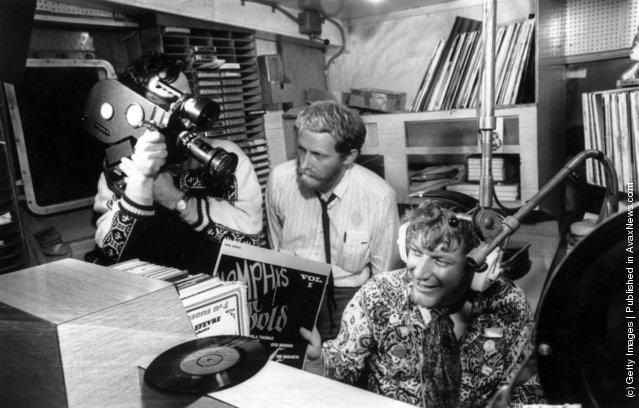
“«Pirate radio» in the UK first became widespread in the early 1960s when pop music stations such as Radio Caroline and Radio London started to broadcast on medium wave to the UK from offshore ships or disused sea forts. At the time these stations were not illegal because they were broadcasting from international waters. The stations were set up by entrepreneurs and music enthusiasts to meet the growing demand for pop and rock music, which was not catered for by the legal BBC Radio services”. – Wikipedia
Photo: The “World in Action” team making a program about the pirate radio ship Caroline, filmed by Paddy Searle, and produced by Mike Hodges. The DJ being filmed is Robbie Dale, and Hodges is standing behind him. (Photo by James Jackson/Evening Standard/Getty Images). 6th September 1967
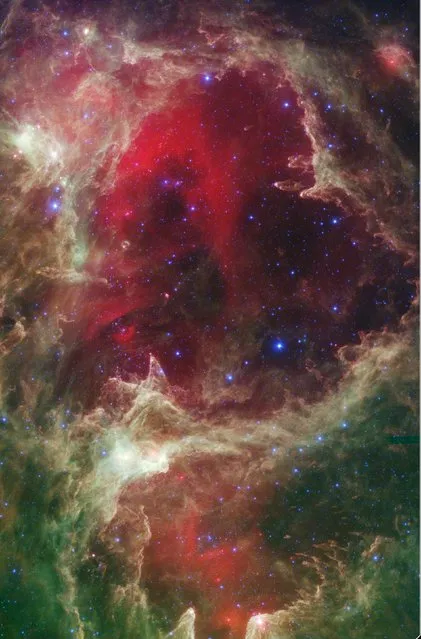
An infrared portrait from NASA's Spitzer Space Telescope which shows generations of stars is seen in this undated NASA handout image released February 14, 2013. In this wispy star-forming region, called W5, the oldest stars can be seen as blue dots in the centers of the two hollow cavities (other blue dots are background and foreground stars not associated with the region). Red shows heated dust that pervades the region's cavities, while green highlights dense clouds. (Photo by NASA/Reuters/JPL-Caltech/Harvard-Smithsonian/Handout)