Loading...
Done
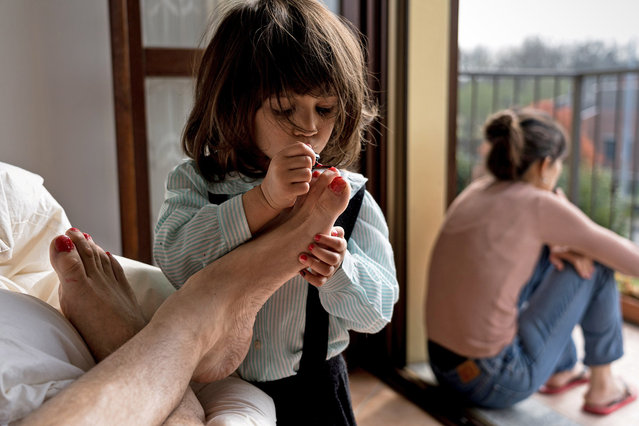
Life in lockdown: Schoolteacher Marzio Toniolo, 35, takes a picture of his two-year-old daughter Bianca painting his toenails as they while away time at home in San Fiorano, one of the original “red zone” towns in northern Italy that has now been extended to the whole country, as his wife, Bianca's mum Chiara Zuddas looks out from their balcony, March 20, 2020. Toniolo has been documenting how his family has dealt with being under quarantine since it began for them in February. (Photo by Marzio Toniolo via Reuters)

Life in lockdown: Schoolteacher Marzio Toniolo, 35, takes a picture of his two-year-old daughter Bianca painting his toenails as they while away time at home in San Fiorano, one of the original “red zone” towns in northern Italy that has now been extended to the whole country, as his wife, Bianca's mum Chiara Zuddas looks out from their balcony, March 20, 2020. Toniolo has been documenting how his family has dealt with being under quarantine since it began for them in February. (Photo by Marzio Toniolo via Reuters)
Details
09 Apr 2020 00:03:00
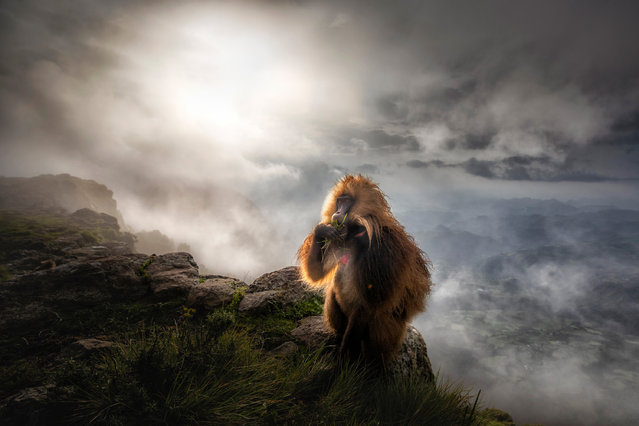
Highly commended, mammals: Gelada after the storm – Marco Gaiotti (Italy). “Gelada baboons are the only monkey species in the world that feed on grasses. They are native to the tableland of Ethiopia. Every morning large family groups wander from their sleeping places in the steep rock face, up to 1,000 metres high, to the feeding grounds at the tablelands. This image clearly depicts their feeding strategy: they pull out bunches of grass, sort the stalks and then lift them to their mouth. This shot was taken towards the end of the rainy season after a heavy storm”. (Photo by Marco Gaiotti/2019 GDT European Wildlife Photographer of the Year)

Highly commended, mammals: Gelada after the storm – Marco Gaiotti (Italy). “Gelada baboons are the only monkey species in the world that feed on grasses. They are native to the tableland of Ethiopia. Every morning large family groups wander from their sleeping places in the steep rock face, up to 1,000 metres high, to the feeding grounds at the tablelands. This image clearly depicts their feeding strategy: they pull out bunches of grass, sort the stalks and then lift them to their mouth. This shot was taken towards the end of the rainy season after a heavy storm”. (Photo by Marco Gaiotti/2019 GDT European Wildlife Photographer of the Year)
Details
31 Oct 2019 00:03:00
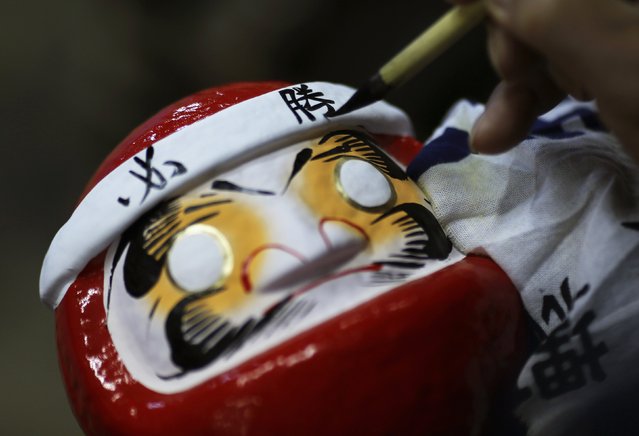
Japanese craftsman Sumikazu Nakata writes the Chinese character of “victory”, which is a part of the phrase “Certain victory”, as he adds the final touches on a Daruma doll, which is believed to bring good luck, at his studio “Daimonya” in Takasaki, northwest of Tokyo November 23, 2014. (Photo by Yuya Shino/Reuters)

Japanese craftsman Sumikazu Nakata writes the Chinese character of “victory”, which is a part of the phrase “Certain victory”, as he adds the final touches on a Daruma doll, which is believed to bring good luck, at his studio “Daimonya” in Takasaki, northwest of Tokyo November 23, 2014. Daruma dolls, representing the Indian priest Bodhidharma, the founder of Zen Buddhism in China, is used to bring luck. It is also a favorite item of election candidates where they traditionally paint only one eye on the doll when they start their campaign and paint the other eye if they win in the election. (Photo by Yuya Shino/Reuters)
Details
24 Nov 2014 13:39:00
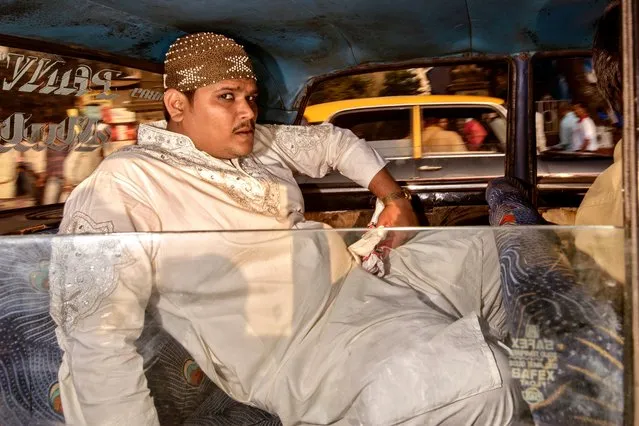
“I’m not scared of breaking the fourth wall”, Wallace has said of the photos where the subject is clearly aware of him taking the shot. “If they are looking at you in a photograph most photographers will think, oh, that’s not a good image. (But) people like to be involved and in the picture. You can see what they are thinking, see them talking”. (Photo by Dougie Wallace/The Guardian)

In Dougie Wallace’s photos of Mumbai taxis, the chatter, yelling, and constant horns of the city are almost audible. A selection of his images is on show at Gayfield Creative Spaces, Edinburgh, as part of the Retina photography festival until 30 July. For four years, the Glasgow-born Wallace focused his photos on one kind of taxi in particular: the Premier Padmini, a 1960s workhorse painted in black and yellow. Locally known as “Kaali-Peeli”, there were once more than 60,000 of them in the Indian city. But thanks to laws restricting pollution, the cars now are fast disappearing from Mumbai’s streets. (Photo by Dougie Wallace/The Guardian)
Details
13 Jul 2016 13:50:00


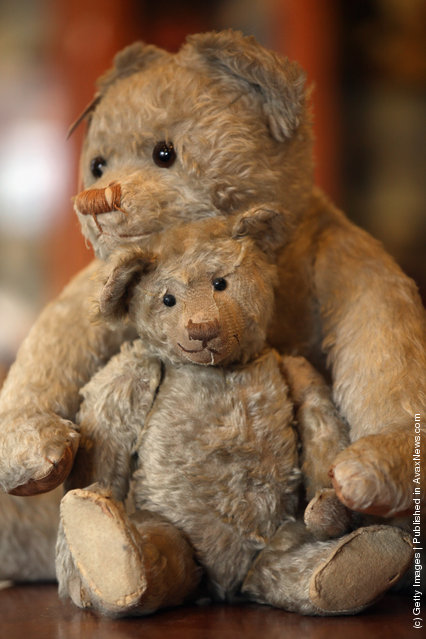
Two Teddy Bears from the 1920's sit on display in the museum section of the Merrythought Teddy Bear shop on April 5, 2011 in Ironbridge, England. Established in 1930, Merrythought has been hand-making Teddy Bears for over 80 years in Shropshire. The family-run company is the last remaining British teddy bear factory and is launching its latest limited edition bear to mark the royal wedding. The Commemorative Royal Wedding bear is limited to 75 and comes after its popular Prince William and Catherine Middleton bears completely sold out. Merrythought has also been selected by the London Olympic Games organisers to produce the official teddy bears of the London 2012 Olympic and Paralympic games. (Photo by Christopher Furlong/Getty Images)
Details
06 Apr 2011 10:27:00
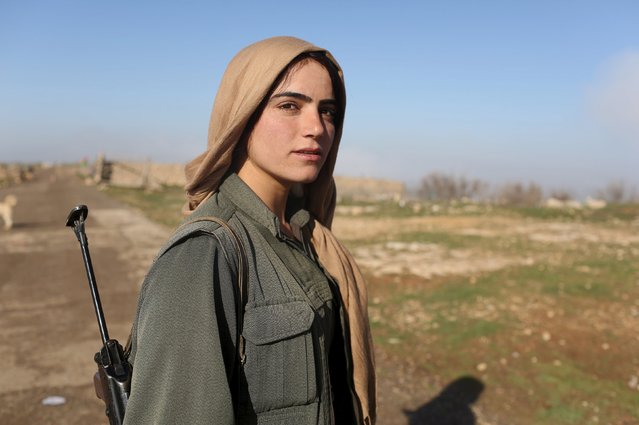
A female Kurdistan Workers Party (PKK) fighter stands near a security position in Sinjar, March 13, 2015. (Photo by Asmaa Waguih /Reuters)

A female Kurdistan Workers Party (PKK) fighter stands near a security position in Sinjar, March 13, 2015. Women fighters at a Kurdistan Workers Party (PKK) base on Mount Sinjar in northwest Iraq, just like their male counterparts, have to be ready for action at any time. Smoke from the front line, marking their battle against Islamic State, which launched an assault on northern Iraq last summer, is visible from the base. Many of the women have cut links with their families back home; the fighters come from all corners of the Kurdish region. (Photo by Asmaa Waguih /Reuters)
Details
02 May 2015 14:44:00
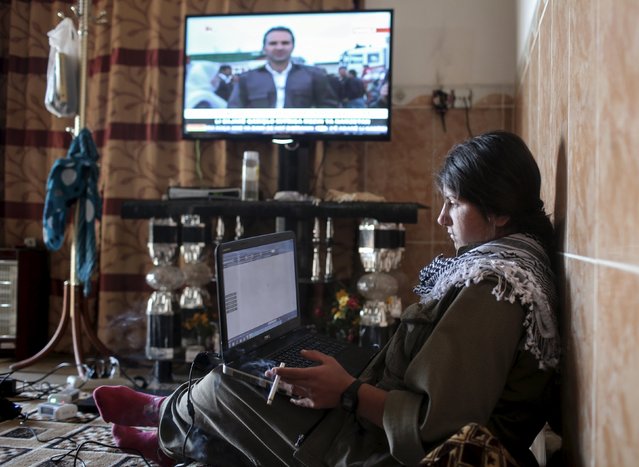
A female Kurdistan Workers Party (PKK) fighter works on her laptop while watching a Kurdish TV station at a base in the Sinjar mountains, March 11, 2015. (Photo by Asmaa Waguih/Reuters)

A female Kurdistan Workers Party (PKK) fighter works on her laptop while watching a Kurdish TV station at a base in the Sinjar mountains, March 11, 2015. Women fighters at a Kurdistan Workers Party (PKK) base on Mount Sinjar in northwest Iraq, just like their male counterparts, have to be ready for action at any time. Smoke from the front line, marking their battle against Islamic State, which launched an assault on northern Iraq last summer, is visible from the base. Many of the women have cut links with their families back home; the fighters come from all corners of the Kurdish region. (Photo by Asmaa Waguih/Reuters)
Details
04 May 2015 09:44:00
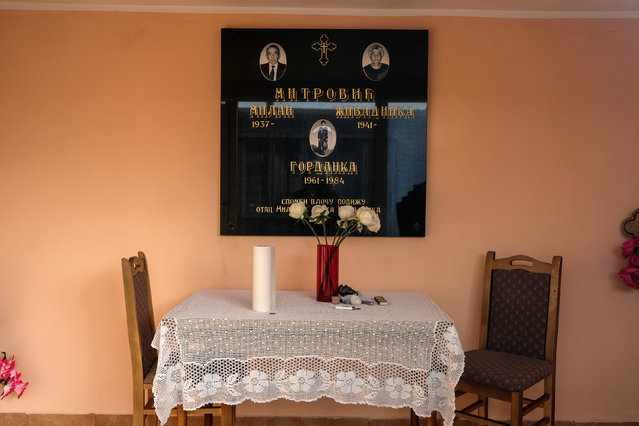
Pictures of deceased people are seen inside a chapel at a cemetery in the village of Smoljinac, Serbia, October 25, 2016. (Photo by Marko Djurica/Reuters)

Pictures of deceased people are seen inside a chapel at a cemetery in the village of Smoljinac, Serbia, October 25, 2016. From a distance, the cemetery in the eastern Serbian village of Smoljinac looks like a residential neighbourhood eerily placed among graves. But once inside the grounds, after passing a section with the usual stone slabs, visitors find rows of small bungalows painted in pastel colours. They have one or two rooms, large windows and ornate plaques – some inside, some outside – memorialising the deceased. These are the burial chapels of Smoljinac, cosy cabins with a furnished room inside, a storage place for wreaths and funeral paraphernalia, and the family crypt below. Some even have electric power inside. (Photo by Marko Djurica/Reuters)
Details
12 Nov 2016 10:37:00