A team of female cadets takes part in a tug-of-war competition at Budyonny Military Academy of the Signal Corps in St Petersburg, Russia on March 7, 2021. (Photo by Peter Kovalev/TASS/Profimedia)
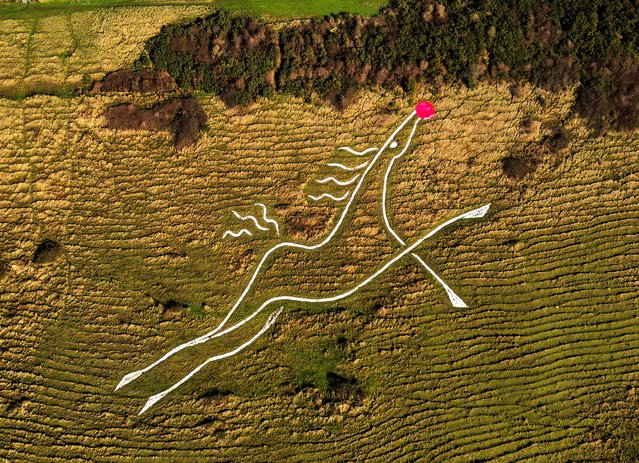
A drone view shows the Folkestone White Horse with a red nose that has been placed to make the landmark overlooking the town look like Rudolph the Red-Nosed Reindeer ahead of Christmas, in Folkestone, Britain, on December 19, 2024. (Photo by Chris J. Ratcliffe/Reuters)
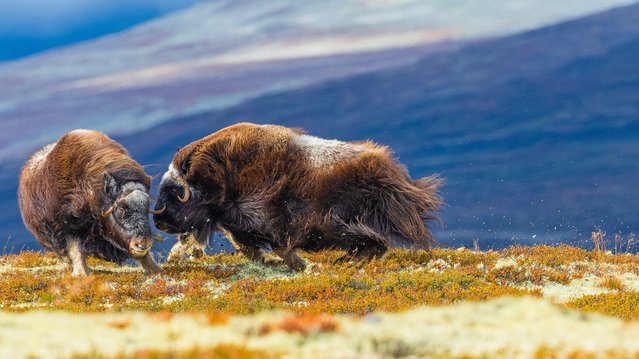
A fight between two female musk oxen, Norway, 2021. The image was captured in Norway’s Dovrefjell national park, where the musk ox (Ovibos moschatus) was reintroduced several years ago for its conservation. It is normal for males of this species to engage in fierce battles during the mating season but unusual for two females. (Photo by Miquel Angel Artús Illana)
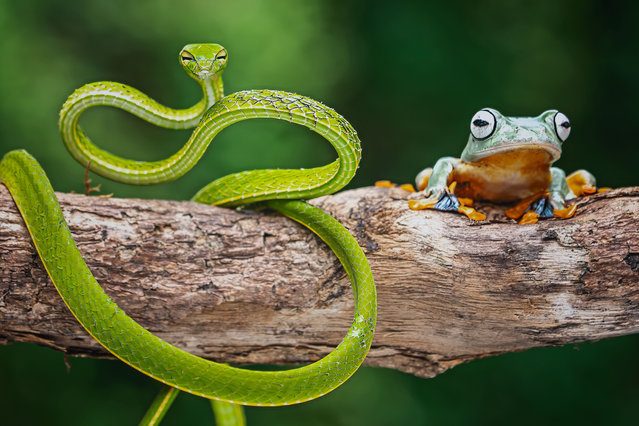
A wildlife photographer captured a rare moment of harmony in the animal kingdom – a snake and a frog calmly share the same branch. The serene scene was spotted by Dzulfikri, 53, in a garden in West Jakarta, Indonesia in May 2025. (Photo by Dzulfikri/Caters News Agency)
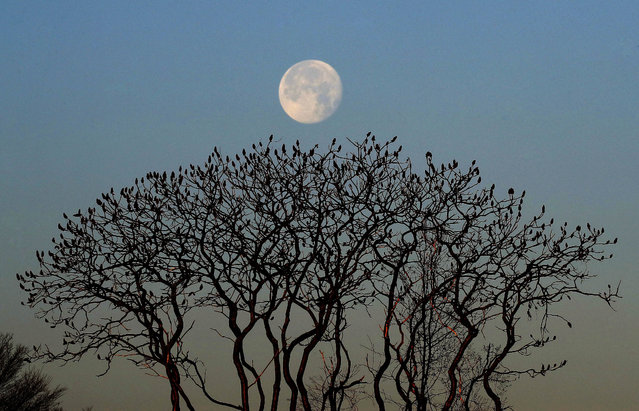
The waning moon sets behind leafless sumac trees on a crisp, clear morning, Thursday, December 15, 2016, in Portland, Maine. Much of the northern Mid-Atlantic and Northeast will stay cold for the next couple of days as the arctic air remains stuck over the northern Appalachians, the National Weather Service said. (Photo by Robert F. Bukaty/AP Photo)
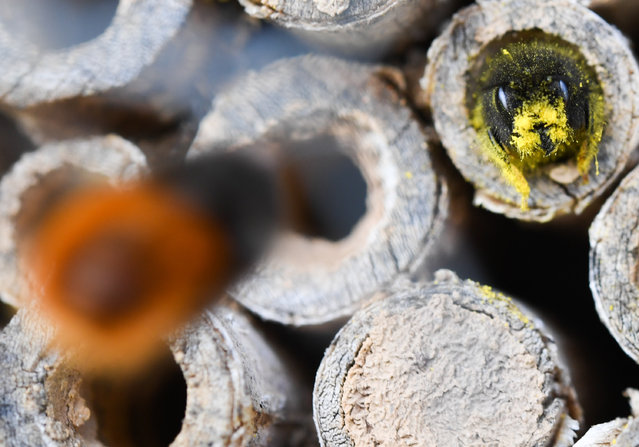
A mason bee deposits its collected pollen in an elderberry stick near Hessen, Germany on March 27, 2020. The food supply is sufficient for the eleven-month development of the brood from the egg to the finished bee. Wild bees are active in March and April and die before their offspring hatch. (Photo by Arne Dedert/dpa)
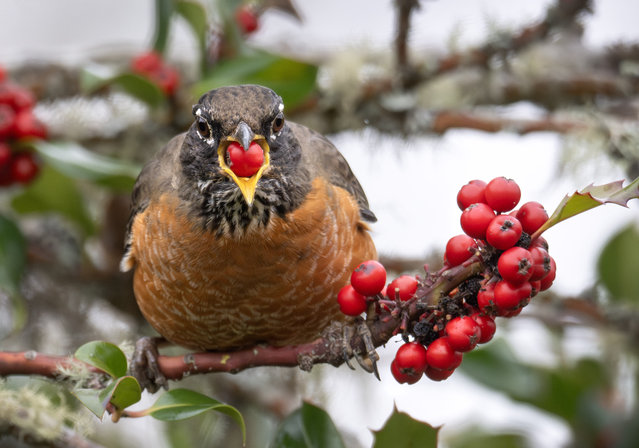
An American robin feeds on holly berries in a thicket near Elkton in southwestern Oregon on November 16, 2024. Many birds can safely consume holly berries, including blackbirds, redwings, and thrushes. There is an old wives tale that if you see a bird eating a berry, it is safe for humans to eat, but this is not true. Birds consume many plants that are poisonous to humans, holly berries included. (Photo by Robin Loznak/ZUMA Press Wire/Rex Features/Shutterstock)