Loading...
Done
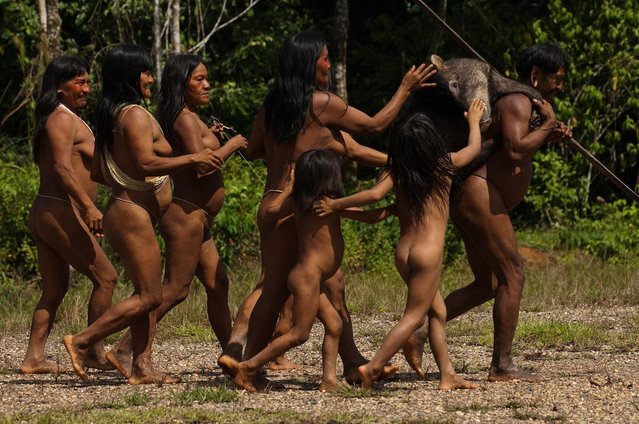
Spectacular images offering insight into the lives of the Huaorani people in the Ecuadorian Amazon have been revealed showing how they use traditional methods to hunt monkeys for food. The stunning pictures were taken by conservation photographer Pete Oxford from Torquay, Devon in the Ecuadorian Amazon. “The Huaorani Indians are a forest people highly in tune with their environment. Many are now totally acculturated since the 1950s by missionaries”, said Pete. “Today they face radical change to their culture to the proximity of oil exploration within their territory and the Yasuni National Park and Biosphere Reserve, they are vastly changed. Some still live very traditionally and for this shoot, through my Huaorani friend, a direct relative of those photographed he wanted to depict them as close to their original culture as possible. They still largely hunt with blow pipes and spears eating a lot of monkeys and peccaries”. The Huaorani are also known as the Waorani, Waodani or the Waos and are native Amerindians. Their lands are located between the Curaray and Napo rivers and speak the Huaorani language. Pete says that during his visit he was welcomed into the group and hopes that ancient cultures can be saved. Here: The tribe were seen celebrating after a hunter returned to camp with a wild pig. (Photo by Pete Oxford/Mediadrumworld.com)

Spectacular images offering insight into the lives of the Huaorani people in the Ecuadorian Amazon have been revealed showing how they use traditional methods to hunt monkeys for food. The stunning pictures were taken by conservation photographer Pete Oxford from Torquay, Devon in the Ecuadorian Amazon. Here: The tribe were seen celebrating after a hunter returned to camp with a wild pig. (Photo by Pete Oxford/Mediadrumworld.com)
Details
20 Jan 2017 07:58:00
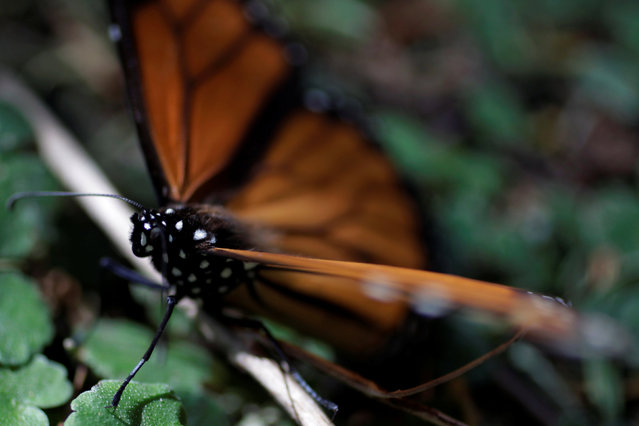
A monarch butterfly rests on the ground at the Sierra Chincua butterfly sanctuary on a mountain in Angangeo, Michoacan November 24, 2016. Angangueo is a town and municipality located in far eastern Michoacán state in central Mexico noted for its history of mining and its location in the Monarch Butterfly Biosphere Reserve. The Monarch Butterfly Biosphere Reserve is a World Heritage Site containing most of the over-wintering sites of the eastern population of the monarch butterfly. The reserve is located in the Trans-Mexican Volcanic Belt pine-oak forests ecoregion on the border of Michoacán and State of Mexico, 100 km (62 miles), northwest of Mexico City. Millions of butterflies arrive in the reserve annually. Butterflies only inhabit a fraction of the 56,000 hectares of the reserve from October–March. (Photo by Carlos Jasso/Reuters)

A monarch butterfly rests on the ground at the Sierra Chincua butterfly sanctuary on a mountain in Angangeo, Michoacan November 24, 2016. Angangueo is a town and municipality located in far eastern Michoacán state in central Mexico noted for its history of mining and its location in the Monarch Butterfly Biosphere Reserve. The Monarch Butterfly Biosphere Reserve is a World Heritage Site containing most of the over-wintering sites of the eastern population of the monarch butterfly. (Photo by Carlos Jasso/Reuters)
Details
26 Nov 2016 10:20:00


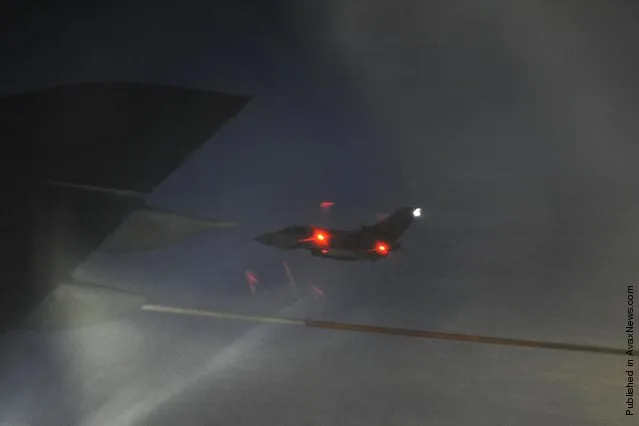
In this handout from the Ministry of Defence, Royal Air Force VC10 and Tristar air-to-air refuelling aircraft support the first UK air combat mission in support of UN Resolution 1973 in flight on March 19, 2011. Col Muammar Gaddafi has vowed a “long war” against the “crusader aggression” after over 100 missiles were fired by the US and UK, during multi-national action aimed at enforcing a UN-mandated no-fly zone. (Photo by SAC Neil Chapman/MoD via Getty Images)
Details
21 Mar 2011 08:39:00
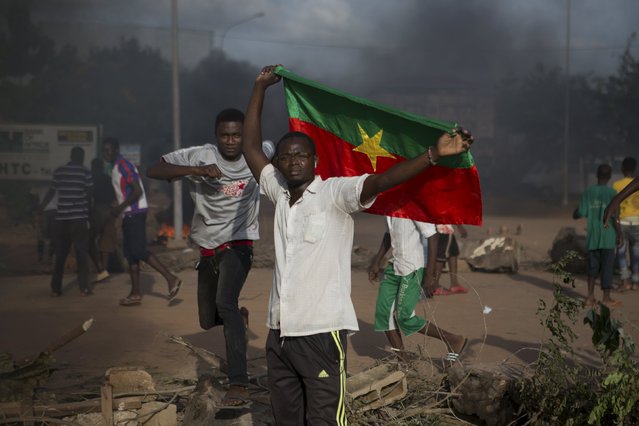
An anti-coup protester holds a Burkinabe flag in Ouagadougou, Burkina Faso, September 18, 2015. (Photo by Joe Penney/Reuters)

An anti-coup protester holds a Burkinabe flag in Ouagadougou, Burkina Faso, September 18, 2015. Security forces in the capital of Burkina Faso fired in the air on Friday to disperse demonstrators who burned tyres and blocked neighborhood streets to protest at a military coup this week that derailed a democratic transition. The head of a military junta in Burkina Faso which took power on Thursday has freed interim President Michel Kafando and two of his ministers, state television said on Friday. (Photo by Joe Penney/Reuters)
Details
21 Sep 2015 11:50:00
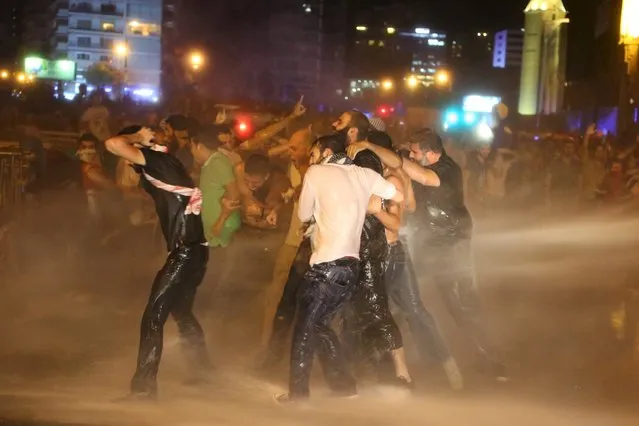
Protesters hold on to each other as they are sprayed with water from police water cannons in Martyr square, downtown Beirut, Lebanon October 8, 2015. (Photo by Aziz Taher/Reuters)

Protesters hold on to each other as they are sprayed with water from police water cannons in Martyr square, downtown Beirut, Lebanon October 8, 2015. Lebanese security forces fired tear gas and water cannons to break up an anti-government protest in Beirut on Thursday, and the country's fractious leaders postponed talks aimed at resolving a political crisis that is feeding public discontent. (Photo by Aziz Taher/Reuters)
Details
11 Oct 2015 08:01:00
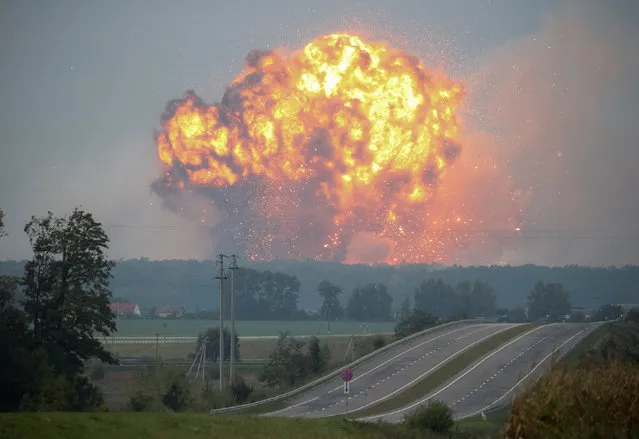
Smoke and flames rise over a warehouse storing ammunition for multiple rocket launcher systems at a military base in the town of Kalynivka in Vinnytsia region, Ukraine September 27, 2017. (Photo by Gleb Garanich/Reuters)

Smoke and flames rise over a warehouse storing ammunition for multiple rocket launcher systems at a military base in the town of Kalynivka in Vinnytsia region, Ukraine September 27, 2017. Ukrainian officials say they have evacuated more than 30,000 people after a fire and ammunition explosions, at the military base on Tuesday. (Photo by Gleb Garanich/Reuters)
Details
28 Sep 2017 07:49:00
Tsuchiura National Fireworks Competition, Tsuchiura City, Ibaraki Prefecture. (Photo by Makoto Igari/Caters News Agency)

These kaleidoscopic images showcase the sheer beauty of the mammoth firework displays held across Japan every summer. The Japanese word for fireworks, hanabi, means fire flower, and each year, local governments in Japan throw around 7,000 festivals, or hanabi taikai. Here: Tsuchiura National Fireworks Competition, Tsuchiura City, Ibaraki Prefecture. (Photo by Makoto Igari/Caters News Agency)
Details
25 Sep 2018 00:01:00
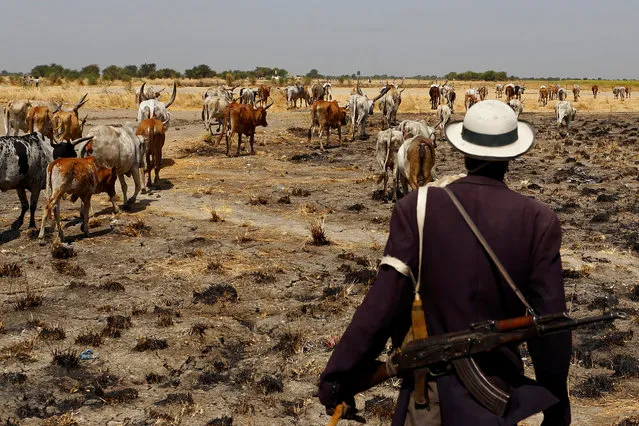
An armed man herds his cattle close to the village of Nimini in northern South Sudan, February 8, 2017. (Photo by Siegfried Modola/Reuters)

An armed man herds his cattle close to the village of Nimini in northern South Sudan, February 8, 2017. In the chaos of South Sudan's civil war, it took three years for Nyagonga Machul to find her lost children. Machul had traveled from her village to the capital when President Salva Kiir, an ethnic Dinka, fired his deputy Riek Machar, a Nuer, in 2013. (Photo by Siegfried Modola/Reuters)
Details
19 Feb 2017 00:04:00