Loading...
Done
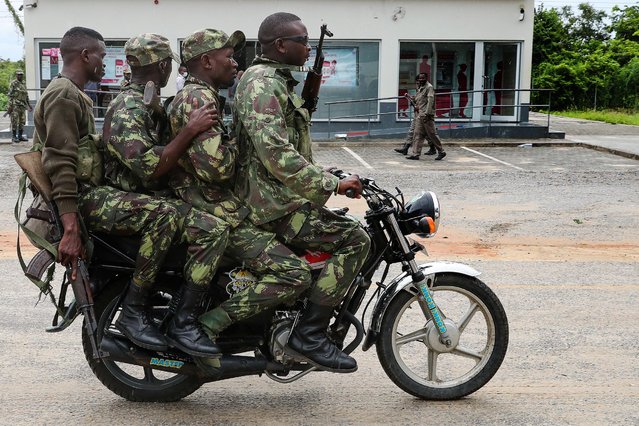
Mozambique army soldiers take a ride on a motorbike in the streets of Palma, Cabo Delgado, Mozambique, 12 April 2021. The violence unleashed more than three years ago in Cabo Delgado province escalated again about two weeks ago, when armed groups first attacked the town of Palma. (Photo by Joao Relvas/EPA/EFE)

Mozambique army soldiers take a ride on a motorbike in the streets of Palma, Cabo Delgado, Mozambique, 12 April 2021. The violence unleashed more than three years ago in Cabo Delgado province escalated again about two weeks ago, when armed groups first attacked the town of Palma. (Photo by Joao Relvas/EPA/EFE)
Details
15 Apr 2021 08:59:00
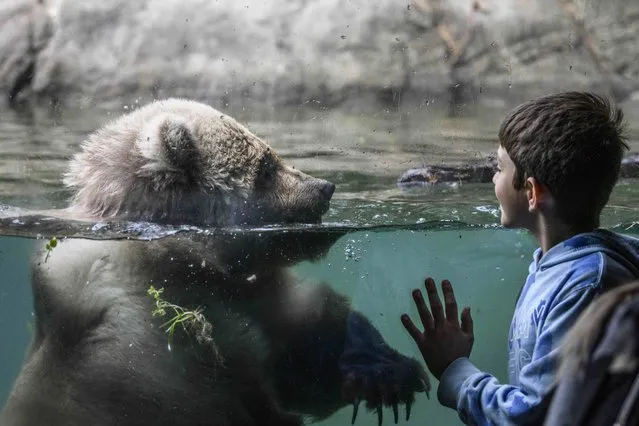
Boy says hello to a swimming bear in Seattle, Washington on October 4, 2022. Fall weather brings out the Animals' playful side as Attendees celebrate World Animal Day with a visit to Woodlawn Park Zoo. (Photo by Shane Srogi/ZUMA Press Wire/Rex Features/Shutterstock)

Boy says hello to a swimming bear in Seattle, Washington on October 4, 2022. Fall weather brings out the Animals' playful side as Attendees celebrate World Animal Day with a visit to Woodlawn Park Zoo. (Photo by Shane Srogi/ZUMA Press Wire/Rex Features/Shutterstock)
Details
12 Oct 2022 04:03:00
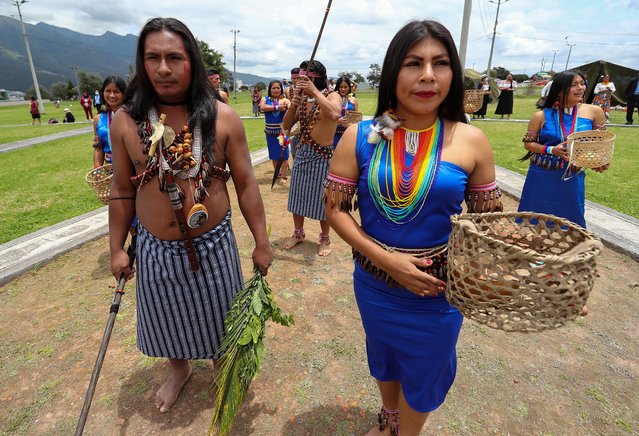
Ecuadorian indigenous people celebrate the festival of the moon or Kulla Raymi, in Quito, Ecuador, 21 September 2021. A circle on the ground made up of fruits and inside the Andean symbol of the chacana, multinational geometric flags and a cross that symbolizes the four cardinal points, were the setting in which the festival of the moon, the Kulla, was commemorated this Tuesday. Raymi, on a hill in Quito. It is one of the four most significant festivities of the Andean agroecological calendar, which commemorates the beginning of life and exalts women as the maximum representation of fertility. (Photo by Jose Jacome/EPA/EFE)

Ecuadorian indigenous people celebrate the festival of the moon or Kulla Raymi, in Quito, Ecuador, 21 September 2021. A circle on the ground made up of fruits and inside the Andean symbol of the chacana, multinational geometric flags and a cross that symbolizes the four cardinal points, were the setting in which the festival of the moon, the Kulla, was commemorated this Tuesday. Raymi, on a hill in Quito. It is one of the four most significant festivities of the Andean agroecological calendar, which commemorates the beginning of life and exalts women as the maximum representation of fertility. (Photo by Jose Jacome/EPA/EFE)
Details
22 Sep 2021 09:01:00
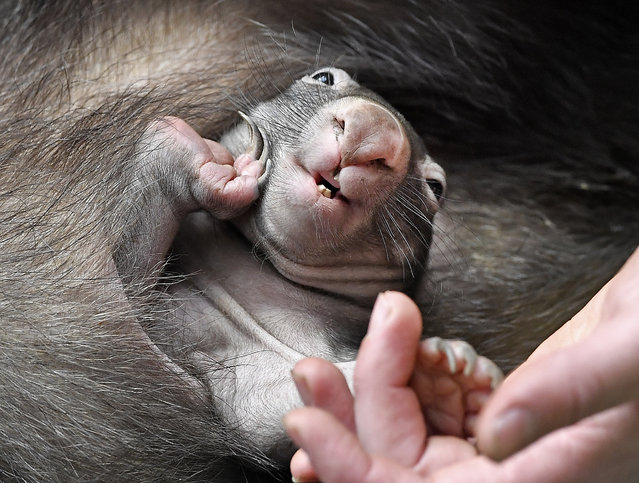
The little new born wombat baby APARI sitting in its mothers pouch at the zoo in Duisburg, Germany, Thursday, March 29, 2018. Wombat mother TINSEL once was found in the pouch of its dead mother on a street in Australia and was raised by zookeepers before she came to Germany. The zoo tried for 40 years in vain to breed a wombat, until APARI was born as the first one last week. (Photo by Martin Meissner/AP Photo)

The little new born wombat baby APARI sitting in its mothers pouch at the zoo in Duisburg, Germany, Thursday, March 29, 2018. Wombat mother TINSEL once was found in the pouch of its dead mother on a street in Australia and was raised by zookeepers before she came to Germany. The zoo tried for 40 years in vain to breed a wombat, until APARI was born as the first one last week. (Photo by Martin Meissner/AP Photo)
Details
01 Apr 2018 00:03:00
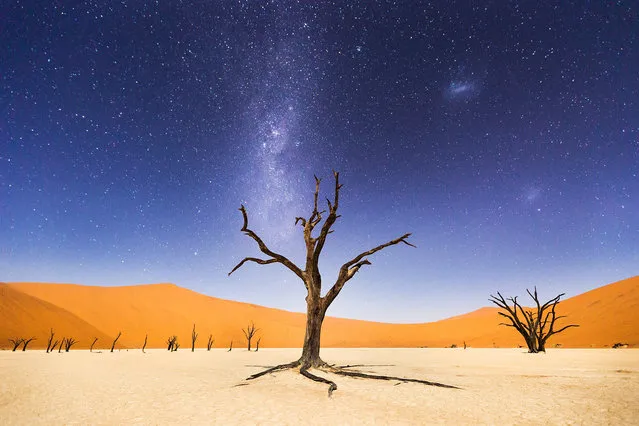
Merit: A Night at Deadvlei. The night before returning to Windhoek, we spent several hours at Deadveli. The moon was bright enough to illuminate the sand dunes in the distance, but the skies were still dark enough to clearly see the milky way and magellanic clouds. Deadveli means “dead marsh. (Photo and caption by Beth McCarley/National Geographic Traveler Photo Contest)

Merit: A Night at Deadvlei. The night before returning to Windhoek, we spent several hours at Deadveli. The moon was bright enough to illuminate the sand dunes in the distance, but the skies were still dark enough to clearly see the milky way and magellanic clouds. Deadveli means “dead marsh. The camelthorn trees are believed to be about 900 years old, but have not decomposed because the environment is so dry. (Photo and caption by Beth McCarley/National Geographic Traveler Photo Contest)
Details
04 Aug 2015 11:50:00
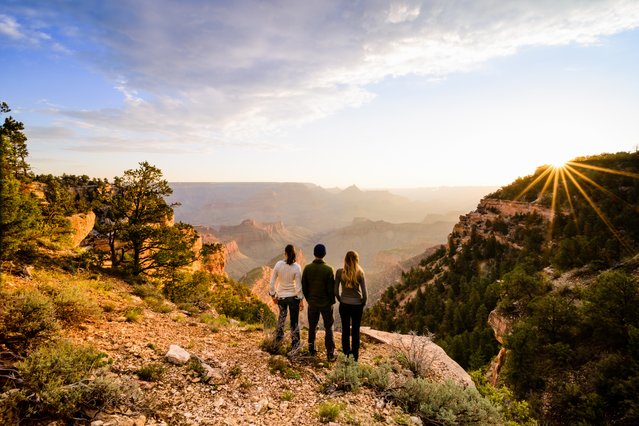
Winner of the National Park Foundation's photo contest; Honorable Mention: Fan Favorite. Grand Canyon National Park, Arizona. Three friends enjoy sunrise over the Grand Canyon. (Photo by Peter Blanchard)

Winner of the National Park Foundation's photo contest; Honorable Mention: Fan Favorite. Grand Canyon National Park, Arizona. Three friends enjoy sunrise over the Grand Canyon. (Photo by Peter Blanchard)
Details
02 May 2014 09:23:00
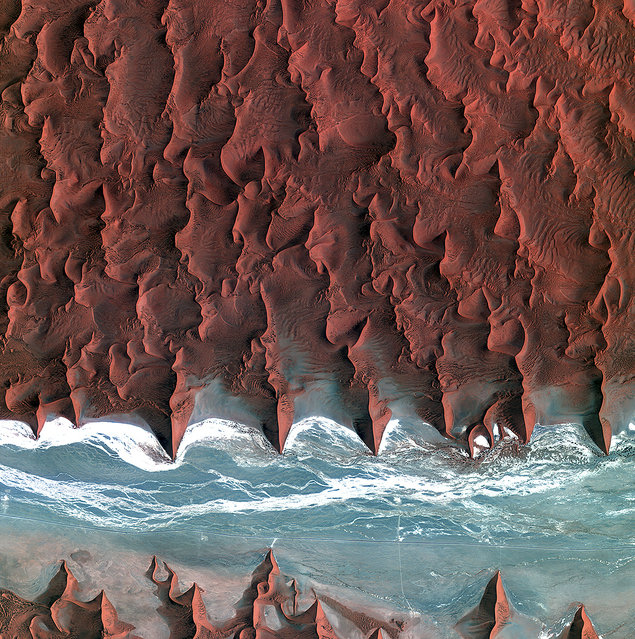
These are the dunes of the Namib Desert, taken by Korea's Kompstat-2 satellite. The blue and white area is the dried riverbed of the Tsauchab river. (Photo by The European Space Agency)

These are the dunes of the Namib Desert, taken by Korea's Kompstat-2 satellite. The blue and white area is the dried riverbed of the Tsauchab river. (Photo by The European Space Agency)
Details
17 Aug 2014 09:13:00
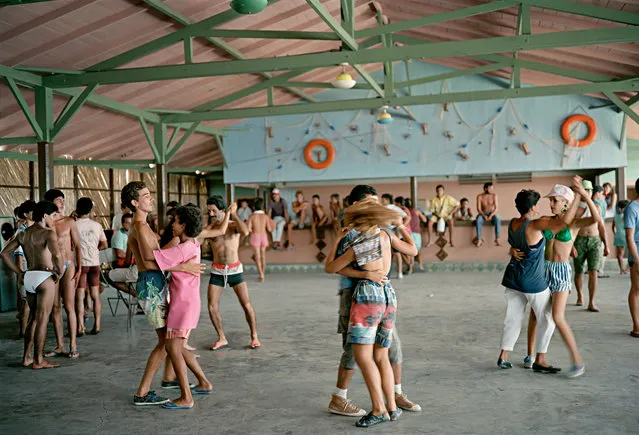
Giovan set out to capture the people’s resilience, during what Fidel Castro, with typical hyperbole, called the “special period”. (Photo by Tria Giovan/The Guardian)

As an American in 1990s Cuba, Tria Giovan risked being branded a traitor. But the photographer continued to visit and, from the dance hall to the hair salon, she captured the resilient spirit of the Cuban people. The 120 images in Tria Giovan’s “The Cuba Archive” are from the period in the 90s when, as an American, travel to Cuba could have seen her branded a traitor, as the country was subject to a US trade embargo. Her trip required lots of planning – and patience. (Photo by Tria Giovan/The Guardian)
Details
21 Sep 2017 09:04:00