Loading...
Done
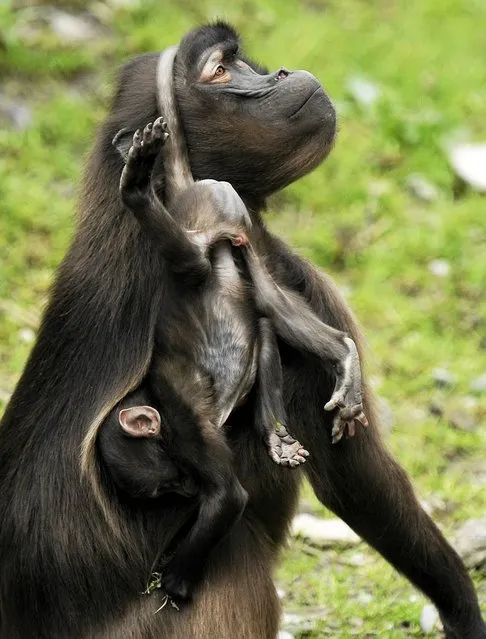
Gelada baboons (Theropithecus gelada) play in their enclosure at the Zoo in Zurich, Switzerland, Wednesday, May 15, 2013. (Photo by Steffen Schmidt/Keystone/AP Photo)

Gelada baboons (Theropithecus gelada) play in their enclosure at the Zoo in Zurich, Switzerland, Wednesday, May 15, 2013. (Photo by Steffen Schmidt/Keystone/AP Photo)
Details
18 May 2013 12:04:00
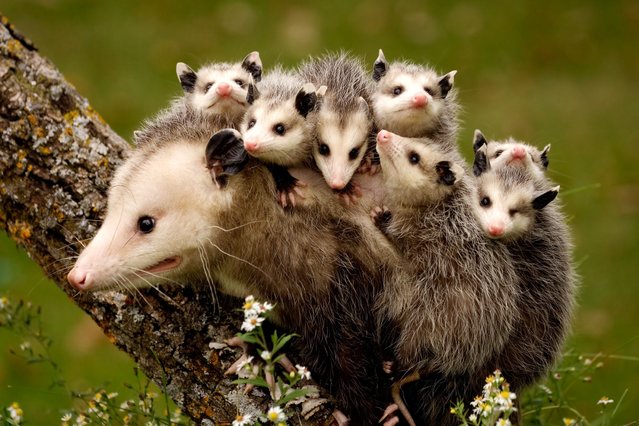
Opossums on their mothers back at a game reserve in Central Minnesota, USA, on September 2, 2013. (Photo by Caters News Agency)

Opossums on their mothers back at a game reserve in Central Minnesota, USA, on September 2, 2013. (Photo by Caters News Agency)
Details
07 Sep 2013 12:05:00
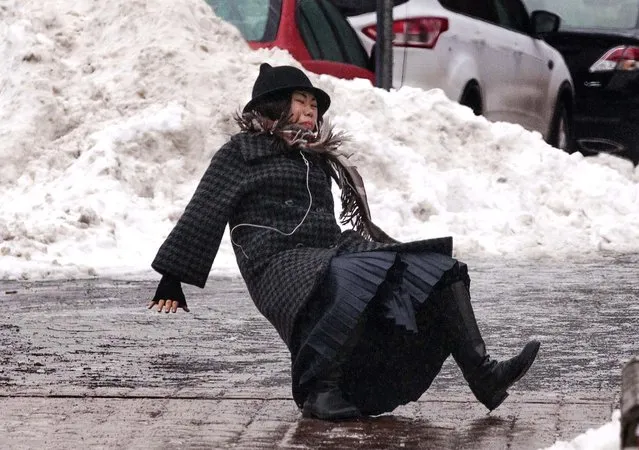
A woman falls while slipping on ice during freezing rain on Roosevelt Island, a borough of Manhattan, in New York January 5, 2014. New York City was hit on Friday by the first severe winter storm of 2014 and was still in the grip of sub-freezing weather on Sunday morning. The woman got up and walked away from the fall. (Photo by Zoran Milich/Reuters)

A woman falls while slipping on ice during freezing rain on Roosevelt Island, a borough of Manhattan, in New York January 5, 2014. New York City was hit on Friday by the first severe winter storm of 2014 and was still in the grip of sub-freezing weather on Sunday morning. The woman got up and walked away from the fall. (Photo by Zoran Milich/Reuters)
Details
07 Jan 2014 08:49:00
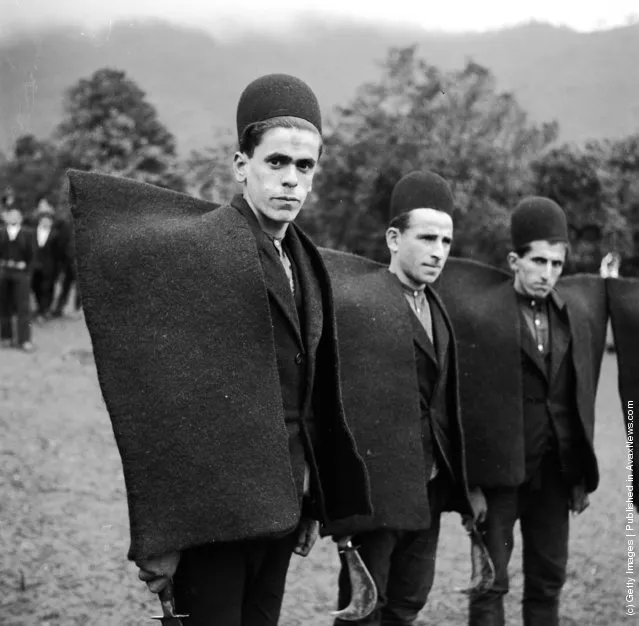
1952:  Shepherds from the north wear their traditional heavy woollen mantles as they stand ready to shear sheep with sycthe-like shears

Shepherds from the north wear their traditional heavy woollen mantles as they stand ready to shear sheep with sycthe-like shears. (Photo by Three Lions/Getty Images). Circa 1952
Details
03 Dec 2011 13:34:00
Salcomp players huddle at the center of the pitch of Arena da Amazonia after winning the Peladao amateur soccer tournament in Manaus, Brazil, Saturday, February 16, 2019. It is the team's second title, the first was in 2011. (Photo by Victor R. Caivano/AP Photo)

Salcomp players huddle at the center of the pitch of Arena da Amazonia after winning the Peladao amateur soccer tournament in Manaus, Brazil, Saturday, February 16, 2019. It is the team's second title, the first was in 2011. (Photo by Victor R. Caivano/AP Photo)
Details
19 Feb 2019 00:03:00
Revellers ride during the 54th annual brass band festival in the Serbian village of Guca August 7, 2014. Every year Guca is swamped by thousands of people taking part in the celebration of brass band music. (Photo by Marko Djurica/Reuters)

Revellers ride during the 54th annual brass band festival in the Serbian village of Guca August 7, 2014. Every year Guca is swamped by thousands of people taking part in the celebration of brass band music. (Photo by Marko Djurica/Reuters)
Details
10 Aug 2014 10:48:00
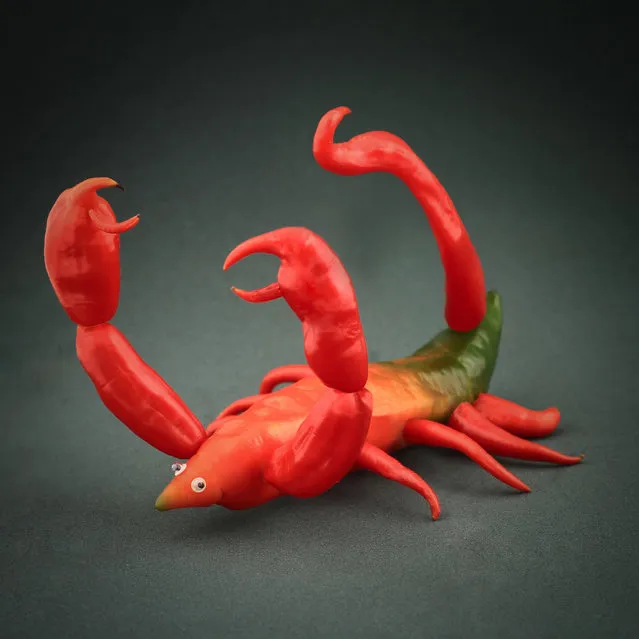
“Red Pepperpion. (Photo by Vanessa Dualib)

“Red Pepperpion. Red Pepperpions are secretive, nocturnal arachilli which can be spotted in kitchens of arid climates all around the world.

Red Pepperpions are equipped with a delicious (and depending on the quantity...deadly!) stinger at the end of its tail. If you happen to get bitten (or if you bite him!) it will produce a burning sensation on your taste nerves.

However, there is no need to worry, since the fact is that his potent stinger is usually only used when hunting or whenever the Pepperpion feels like he might become part of someones meal...

At daylight or when encountering a larger foe, such as a Saucier Chef, they retreat into burrows inside the fridge or hide beneath the oven”. (Photo and comment by Vanessa Dualib)


Details
08 Feb 2013 09:24:00
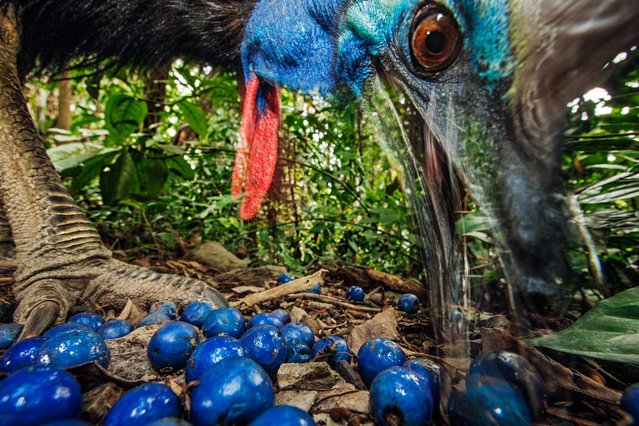
“Cassowaries are large, flightless birds related to emus and (more distantly) to ostriches, rheas, and kiwis”, writes Olivia Judson in the September issue of National Geographic magazine. (Photo by Christian Ziegler/National Geographic)

“Cassowaries are large, flightless birds related to emus and (more distantly) to ostriches, rheas, and kiwis”, writes Olivia Judson in the September issue of National Geographic magazine. How large? People-size: Adult males stand well over five foot five and top 110 pounds. Females are even taller, and can weigh more than 160 pounds. Dangerous when roused, they’re shy and peaceable when left alone. But even birds this big and tough are prey to habitat loss. The dense New Guinea and Australia rain forests where they live have dwindled. Today cassowaries might number 1,500 to 2,000. And because they help shape those same forests – by moving seeds from one place to another – “if they vanish”, Judson writes, “the structure of the forest would gradually change” too. (Photo by Christian Ziegler/National Geographic)
Details
06 Jan 2014 12:21:00