Loading...
Done
Nuclear Football

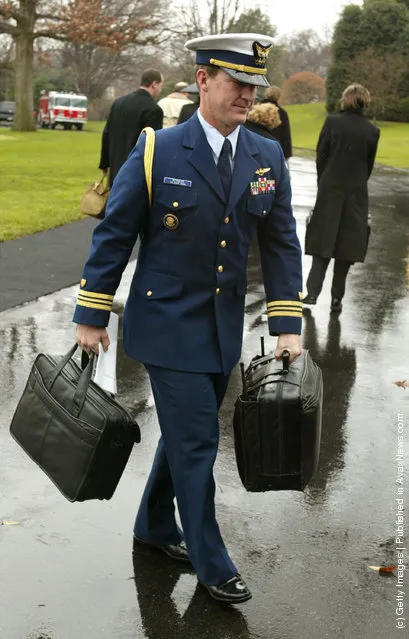
“The nuclear football (also known as the atomic football, the president's emergency satchel, the button, the black box, or just the football) is a briefcase, the contents of which are to be used by the President of the United States of America to authorize a nuclear attack while away from fixed command centers, such as the White House Situation Room. It functions as a mobile hub in the strategic defense system of the United States. It is a metallic Zero Halliburton briefcase carried in a black leather “jacket”. The package weighs around 45 pounds (20 kilograms). A small antenna protrudes from the bag near the handle”. – Wikipedia

Photo: A U.S. Military officer carries the “football”, which carries nuclear launch codes, on South Lawn after returning with U.S. President George W. Bush to the White House January 7, 2002 in Washington, DC. (Photo by Mark Wilson/Getty Images)
Details
06 Aug 2011 12:53:00
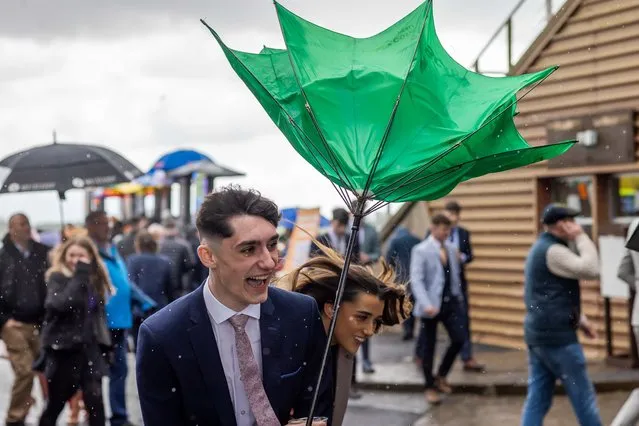
Racegoers shield themselves from the rain and wind at the Fairyhouse Easter Festival in Fairyhouse, Co. Meath, Ireland on April 10, 2023. (Photo by Morgan Treacy/Inpho)

Racegoers shield themselves from the rain and wind at the Fairyhouse Easter Festival in Fairyhouse, Co. Meath, Ireland on April 10, 2023. (Photo by Morgan Treacy/Inpho)
Details
08 May 2023 03:53:00
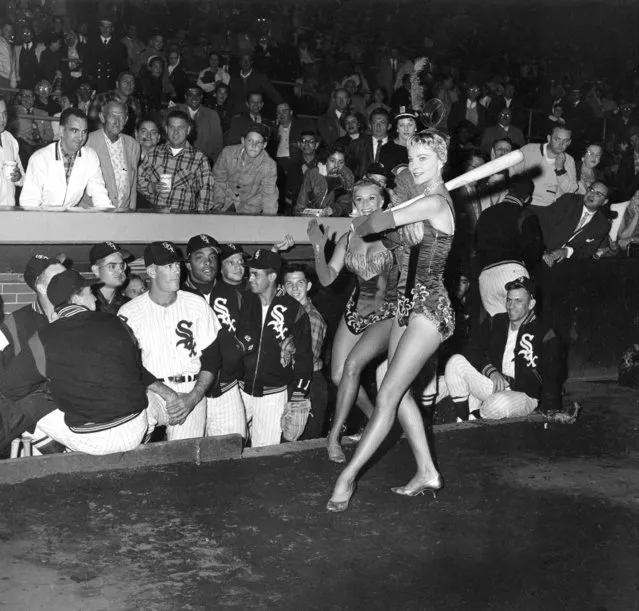
Dancers Marion Krebs and Judy Ness, right, pose as batter and catcher in front of the  Chicago White Sox dugout before start of game with Detroit at Comiskey Park, Chicago, Ill., September 18, 1959. White Sox won, 1-0, to move within two games of clinching the American League pennant. (Photo by AP Photo)

Dancers Marion Krebs and Judy Ness, right, pose as batter and catcher in front of the Chicago White Sox dugout before start of game with Detroit at Comiskey Park, Chicago, Ill., September 18, 1959. White Sox won, 1-0, to move within two games of clinching the American League pennant. (Photo by AP Photo)
Details
19 Sep 2015 12:46:00
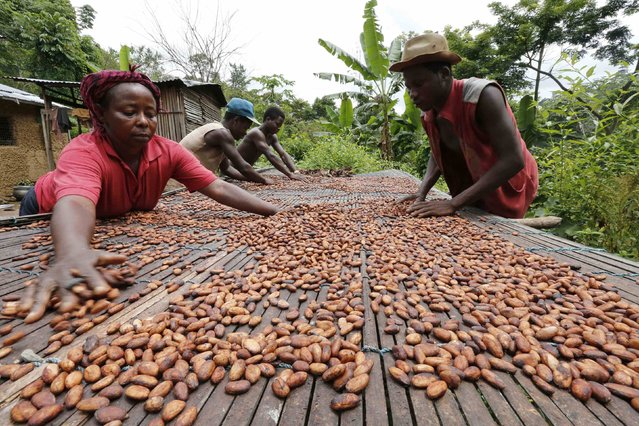
People work with cocoa beans in Enchi June 17, 2014. Picture taken June 17, 2014. Ghana emerged as a success story during the 2000s, when war, political instability and a disastrous liberalization brought Ivory Coast's cocoa sector to its knees. Ghana's output more than tripled from 340,000 tons in the 2001/02 season to a record 1,025,000 tons a decade later. Strict controls cemented its reputation as a producer of top quality beans, establishing a brand that fetches a premium. (Photo by Thierry Gouegnon/Reuters)

People work with cocoa beans in Enchi June 17, 2014. Picture taken June 17, 2014. Ghana emerged as a success story during the 2000s, when war, political instability and a disastrous liberalization brought Ivory Coast's cocoa sector to its knees. Ghana's output more than tripled from 340,000 tons in the 2001/02 season to a record 1,025,000 tons a decade later. Strict controls cemented its reputation as a producer of top quality beans, establishing a brand that fetches a premium. (Photo by Thierry Gouegnon/Reuters)
Details
03 Aug 2014 07:17:00
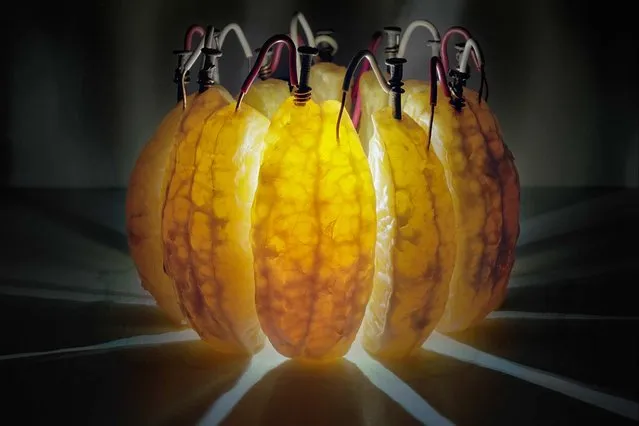
Wedges of an orange generate enough current and electrical juice – 3.5 volts – to power an LED. The fruit’s citric acid helps electrons flow from galvanized nails to copper wire in this 14-hour exposure. This image was published in September’s Visions of Earth, a trio of photos that appear in each issue of National Geographic. (Photo by Caleb Charland/National Geographic)

Wedges of an orange generate enough current and electrical juice – 3.5 volts – to power an LED. The fruit’s citric acid helps electrons flow from galvanized nails to copper wire in this 14-hour exposure. This image was published in September’s Visions of Earth, a trio of photos that appear in each issue of National Geographic. (Photo by Caleb Charland/National Geographic)
Details
06 Jan 2014 12:09:00
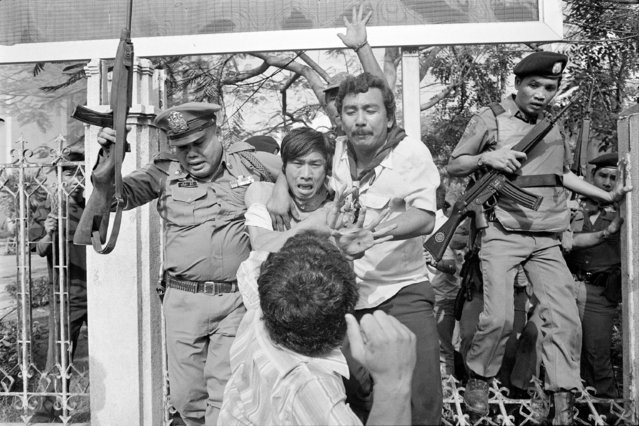
In this October 6, 1976, file photo, a right-wing student, center foreground, draws his arm back to strike a captured and wounded leftist student being taken by police to an ambulance in during a student massacre in Bangkok, Thailand. This year’s anti-government protests are seeking new elections, a more democratic constitution and an end to intimidation of political activists. Their speeches have repeatedly highlighted the 1976 tragedy, piquing the interest of the current generation in what their forebears faced. (Photo by Neal Ulevich/AP Photo/File)

In this October 6, 1976, file photo, a right-wing student, center foreground, draws his arm back to strike a captured and wounded leftist student being taken by police to an ambulance in during a student massacre in Bangkok, Thailand. This year’s anti-government protests are seeking new elections, a more democratic constitution and an end to intimidation of political activists. Their speeches have repeatedly highlighted the 1976 tragedy, piquing the interest of the current generation in what their forebears faced. (Photo by Neal Ulevich/AP Photo/File)
Details
30 Oct 2020 00:03:00
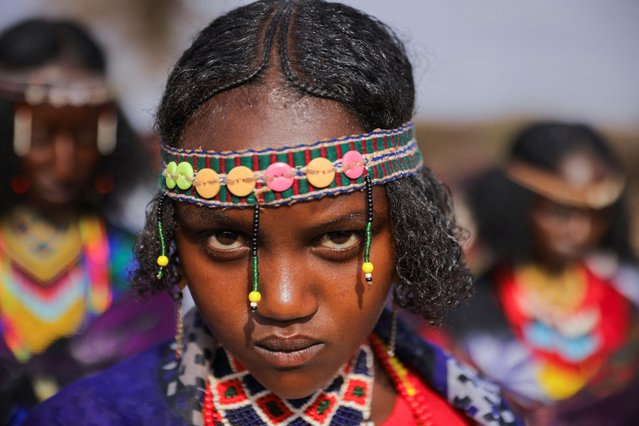
A woman dressed in traditional Oromo costume attends a swearing ceremony of the newly named 72nd Borana Pastoralist chief, “Aba Gada” Guyo Wariyo in Arero, Ethiopia on March 9, 2025. (Photo by Tiksa Negeri/Reuters)

A woman dressed in traditional Oromo costume attends a swearing ceremony of the newly named 72nd Borana Pastoralist chief, “Aba Gada” Guyo Wariyo in Arero, Ethiopia on March 9, 2025. (Photo by Tiksa Negeri/Reuters)
Details
19 Mar 2025 03:52:00
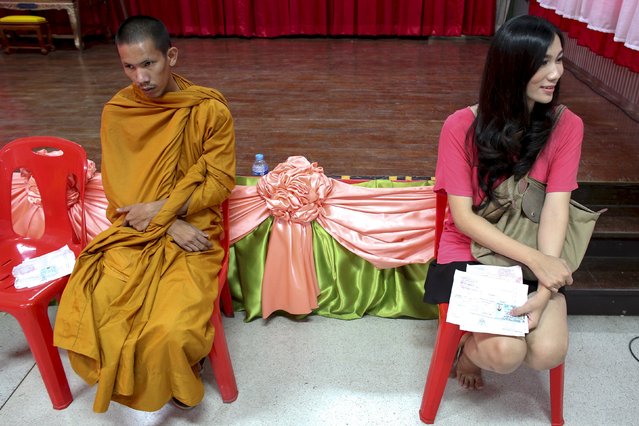
Nopparat (R), a 24-year-old transgender, and a Buddhist monk (L) wait to speak to officers during an army draft held at a school in Bang Na in Bangkok April 3, 2015. Thai men over 21 must serve in the army. Those who volunteer serve six months, but others choose the annual lottery, which goes on for 10 days in recruitment centres around Thailand. Only those not considered physically capable of service, the mentally ill and those who have significantly altered their physical appearance, such as transgenders, are exempt. Picture taken April 3, 2015. (Photo by Athit Perawongmetha/Reuters)

Nopparat (R), a 24-year-old transgender, and a Buddhist monk (L) wait to speak to officers during an army draft held at a school in Bang Na in Bangkok April 3, 2015. Thai men over 21 must serve in the army. Those who volunteer serve six months, but others choose the annual lottery, which goes on for 10 days in recruitment centres around Thailand. Only those not considered physically capable of service, the mentally ill and those who have significantly altered their physical appearance, such as transgenders, are exempt. Picture taken April 3, 2015. (Photo by Athit Perawongmetha/Reuters)
Details
06 Apr 2015 09:54:00