Loading...
Done
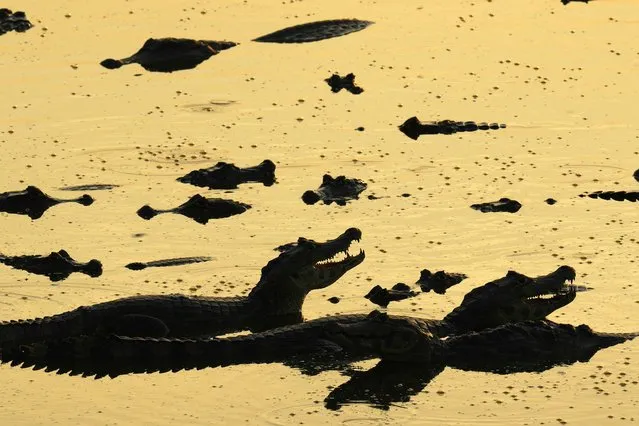
A group of caimans sit on the banks of the almost dried up Bento Gomes River in the Pantanal wetlands near Pocone, Mato Grosso state, Brazil, Wednesday, November 15, 2023. Amid the high heat, wildfires are burning widely in the Pantanal biome, the world's biggest tropical wetlands. (Photo by Andre Penner/AP Photo)

A group of caimans sit on the banks of the almost dried up Bento Gomes River in the Pantanal wetlands near Pocone, Mato Grosso state, Brazil, Wednesday, November 15, 2023. Amid the high heat, wildfires are burning widely in the Pantanal biome, the world's biggest tropical wetlands. (Photo by Andre Penner/AP Photo)
Details
11 Dec 2023 04:51:00
Death comes ripping

Death comes ripping. (Photo by B†essed)
Details
26 Oct 2012 11:24:00
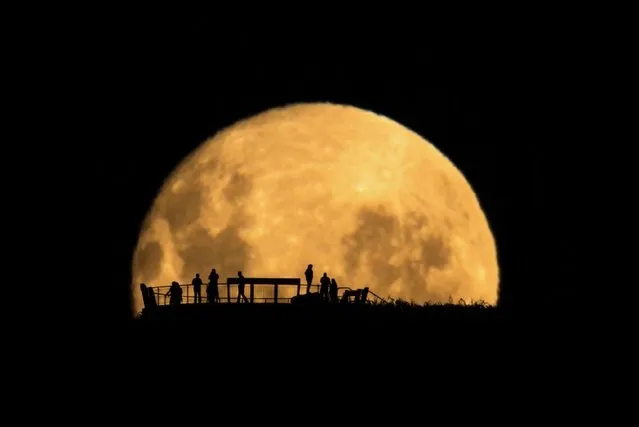
Astronomy Photographer Of The Year 2013 Part1

The Royal Observatory just announced its Astronomy Photographer Of The Year 2013 winners. Australian photographer Mark Gee was chosen among a thousand amateur and professional photographers around the globe to win the top title. His work is part of an exhibition of the winning photographers, which opened on Sept. 19 at the Royal Observatory Greenwich. The Royal Observatory shared with us the winners and notable mentions of the competition. Their descriptions of the prizewinners can be found below the images.
Details
04 Oct 2013 11:45:00
Woman on phone in hotel room. (Photo by DreamPictures/Getty Images)

Woman on phone in hotel room. (Photo by DreamPictures/Getty Images)
Details
21 Nov 2016 10:53:00
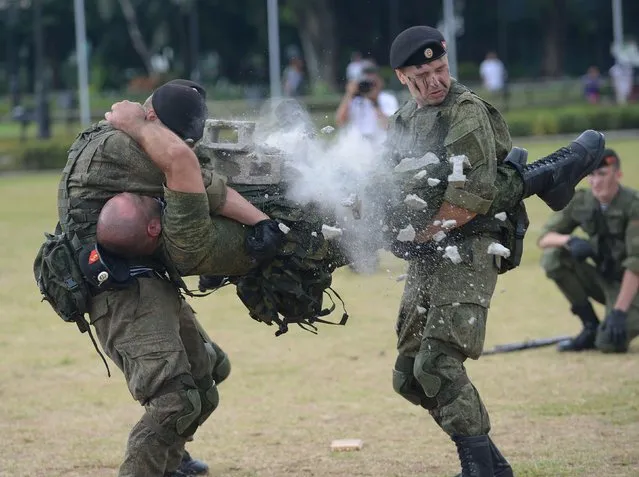
Russian marines attached to the anti- submarine ship Admiral Tributs show their skills during a demonstration at a park in Manila on January 5, 2017, as part of their five- day port- of- call activities in the country' s capital. (Photo by Ted Aljibe/AFP Photo)

Russian marines attached to the anti- submarine ship Admiral Tributs show their skills during a demonstration at a park in Manila on January 5, 2017, as part of their five- day port- of- call activities in the country' s capital. (Photo by Ted Aljibe/AFP Photo)
Details
06 Jan 2017 13:54:00
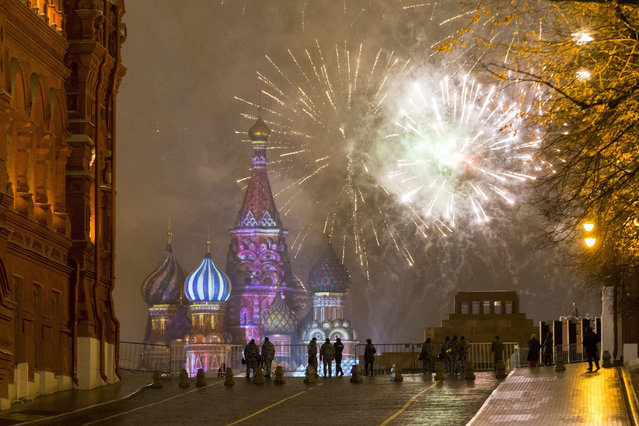
Fireworks explode over the Kremlin in Red Square which was blocked by police during New Year celebrations in Moscow, Russia, Sunday, January 1, 2017. New Year's Eve is Russia's major gift-giving holiday, and big Russian cities were awash in festive lights and decorations. (Photo by Alexander Zemlianichenko Jr./AP Photo)

Fireworks explode over the Kremlin in Red Square which was blocked by police during New Year celebrations in Moscow, Russia, Sunday, January 1, 2017. New Year's Eve is Russia's major gift-giving holiday, and big Russian cities were awash in festive lights and decorations. (Photo by Alexander Zemlianichenko Jr./AP Photo)
Details
02 Jan 2017 12:37:00
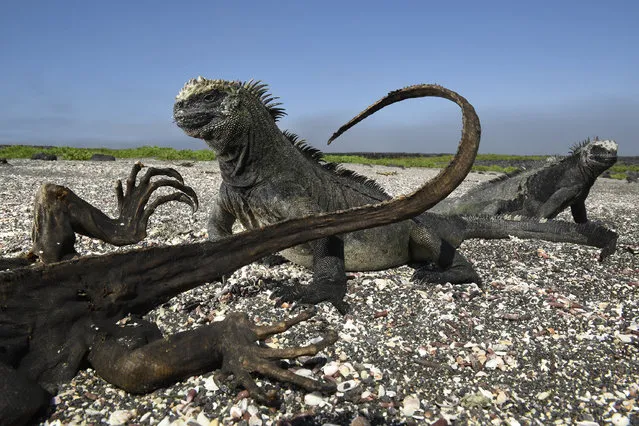
Galapagos – Rocking the Cradle: Four major ocean currents converge along the Galapagos archipelago, creating the conditions for an extraordinary diversity of animal life, April 25, 2016. The islands are home to at least 7,000 flora and fauna species, of which 97 percent of the reptiles, 80 percent of the land birds, 50 percent of the insects and 30 percent of the plants are endemic. The local ecosystem is highly sensitive to the changes in temperature, rainfall and ocean currents that characterize the climatic events known as El Niño and La Niña. These changes cause marked fluctuations in weather and food availability. Many scientists expect the frequency of El Niño and La Niña to increase as a result of climate change, making the Galapagos a possible early-warning location for its effects. (Photo by Thomas P. Peschak for National Geographic/World Press Photo)

Galapagos – Rocking the Cradle: Four major ocean currents converge along the Galapagos archipelago, creating the conditions for an extraordinary diversity of animal life, April 25, 2016. The islands are home to at least 7,000 flora and fauna species, of which 97 percent of the reptiles, 80 percent of the land birds, 50 percent of the insects and 30 percent of the plants are endemic. (Photo by Thomas P. Peschak for National Geographic/World Press Photo)
Details
16 Apr 2018 00:01:00
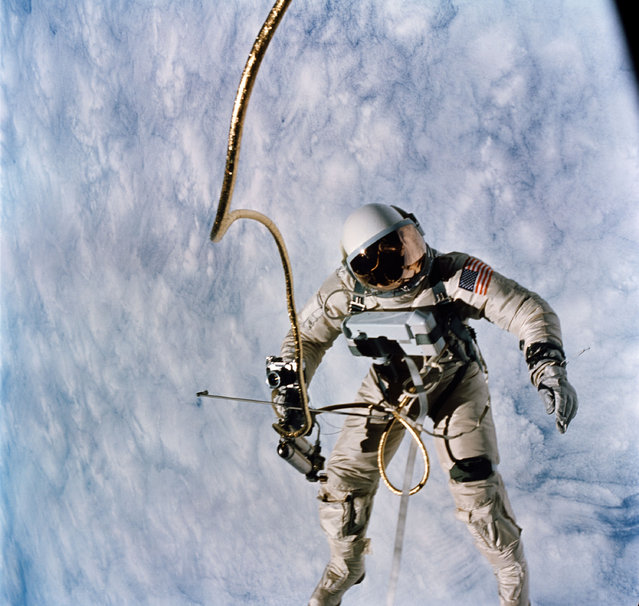
Astronaut Edward H. White II, pilot for the Gemini-Titan 4 (GT-4) spaceflight, floats in the zero-gravity of space during the third revolution of the GT-4 spacecraft on June 3, 1965. White wears a specially designed spacesuit. His face is shaded by a gold-plated visor to protect him from unfiltered rays of the sun. (Photo by NASA)

Astronaut Edward H. White II, pilot for the Gemini-Titan 4 (GT-4) spaceflight, floats in the zero-gravity of space during the third revolution of the GT-4 spacecraft on June 3, 1965. White wears a specially designed spacesuit. His face is shaded by a gold-plated visor to protect him from unfiltered rays of the sun. In his right hand he carries a Hand-Held Self-Maneuvering Unit (HHSMU) that gives him control over his movements in space. White also wears an emergency oxygen chest pack; and he carries a camera mounted on the HHSMU for taking pictures of the sky, Earth and the GT-4 spacecraft. He is secured to the spacecraft by a 25-feet umbilical line and a 23-feet tether line. Both lines are wrapped together in gold tape to form one cord. Astronaut James A. McDivitt, command pilot, remained inside the spacecraft during the extravehicular activity (EVA). Astronaut White died in the Apollo/Saturn 204 fire at Cape Kennedy on January 27, 1967. (Photo by NASA)
Details
22 Jul 2014 12:05:00