Loading...
Done


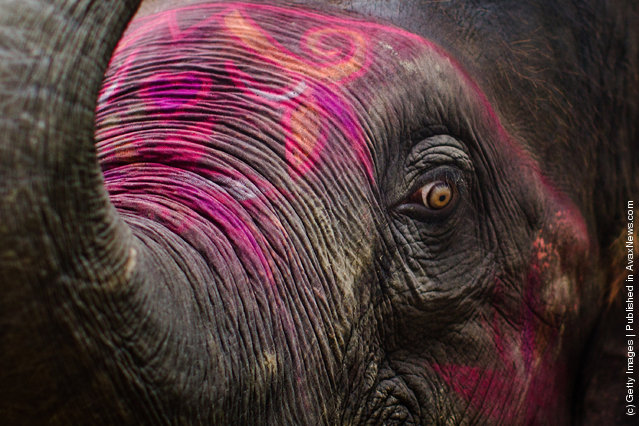
SONEPUR, INDIA - NOVEMBER 15: An elephant is painted in decorative colours during the Sonepur Mela on November 15, 2011 in Sonepur near Patna, India. The cattle fair, held in the Indian state of Bihar, has its origins during ancient times, when people traded elephants and horses across the auspicious river Ganges. The mela used to attract traders from places as distant as Central Asia. It is one of Asia's largest cattle fairs and lasts for a fortnight. (Photo by Daniel Berehulak/Getty Images)
Details
16 Nov 2011 02:42:00
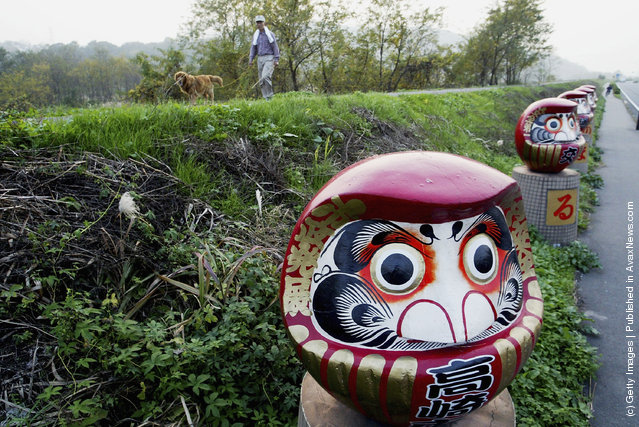
Daruma Dolls

A series of Japanese good luck charms, called “Daruma”, are lined up ahead of the major national elections November 9, 2003 in Takasaki, Japan. The Daruma is said to bring exceptional good luck in all walks of life, but is used especially during election time by all candidates. People think that if they face a difficult situation, as symbolized by the doll that returns to its original position when knocked over, they will always bounce back. (Photo by Koichi Kamoshida/Getty Images)
Details
05 Dec 2011 13:09:00
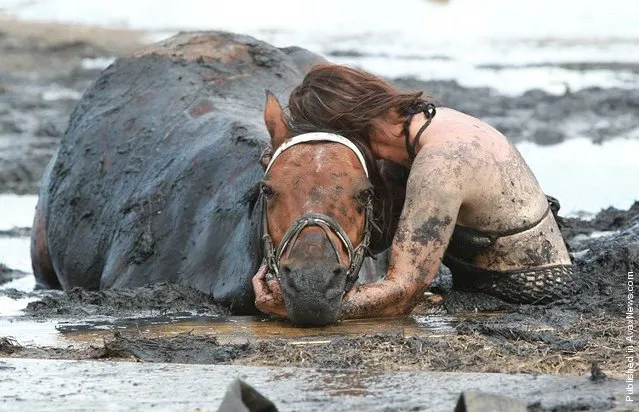
Owner Nicole Graham works with volunteers from CFA and SES tries to dig out her horse 'Astro' who became stuck up to his neck in mud at Avalon Beach

Owner Nicole Graham works with volunteers from CFA and SES tries to dig out her horse “Astro” who became stuck up to his neck in mud at Avalon Beach on February 26, 2012 in Geelong, Australia. The tide was fast-rising, but the rescuers managed to get him out in time. (Photo by Peter Ristevski/Newspix)
Details
01 Mar 2012 09:57:00
A boy sitting with his family looks up at a traditional Chinelo costumed dancer during a celebration 40 days after the birth of Jesus, in Xochimilco on the outskirts of Mexico City, February 2, 2015. (Photo by Edgard Garrido/Reuters)

A boy sitting with his family looks up at a traditional Chinelo costumed dancer during a celebration 40 days after the birth of Jesus, in Xochimilco on the outskirts of Mexico City, February 2, 2015. The tradition of the Chinelo dates back to colonial times and the outfits and masks, which are supposed to resemble the faces of the Europeans and always sport an uptilted beard, became more elaborate between the 1800s and 1900s to make fun of the upper social classes. (Photo by Edgard Garrido/Reuters)
Details
03 Feb 2015 13:09:00
A protester runs from a jet of water shot from a police water cannon in the courtyard of the University of Santiago, during clashes between students and police, in Santiago, Chile, Thursday, May 14, 2015. (Photo by Luis Hidalgo/AP Photo)

A protester runs from a jet of water shot from a police water cannon in the courtyard of the University of Santiago, during clashes between students and police, in Santiago, Chile, Thursday, May 14, 2015. In the capital and other cities across the country, high school and university students marched, for the second time this year, to demand education reform. (Photo by Luis Hidalgo/AP Photo)
Details
15 May 2015 10:49:00
Yan Zhengming (R), 94, and his wife Zhou Suqing (C), 90, attend their wedding ceremony at their home, on the 70th anniversary of their marriage, in Quxian county of Dazhou, Sichuan province, China, May 15, 2015. (Photo by Reuters/Stringer)

Yan Zhengming (R), 94, and his wife Zhou Suqing (C), 90, attend their wedding ceremony at their home, on the 70th anniversary of their marriage, in Quxian county of Dazhou, Sichuan province, China, May 15, 2015. The wedding, organized by local charity groups, was a long-time wish of veteran of the World War Two Yan, who married Zhou 70 years ago, but could not afford to have a wedding ceremony, local media reported. (Photo by Reuters/Stringer)
Details
17 May 2015 11:56:00
A woman (C) shops for an offering at the witch doctor's street in La Paz, July 31, 2015. (Photo by David Mercado/Reuters)

A woman (C) shops for an offering at the witch doctor's street in La Paz, July 31, 2015. According to Andean culture, the all the month of August is a time to give offerings to “Pachamama” to give thanks for their farms and health. The Aymaras use coca leaves, candies, animal fat, llama fetuses, some dried fruits, powdered minerals and alcohol during these rituals. (Photo by David Mercado/Reuters)
Details
02 Aug 2015 12:27:00
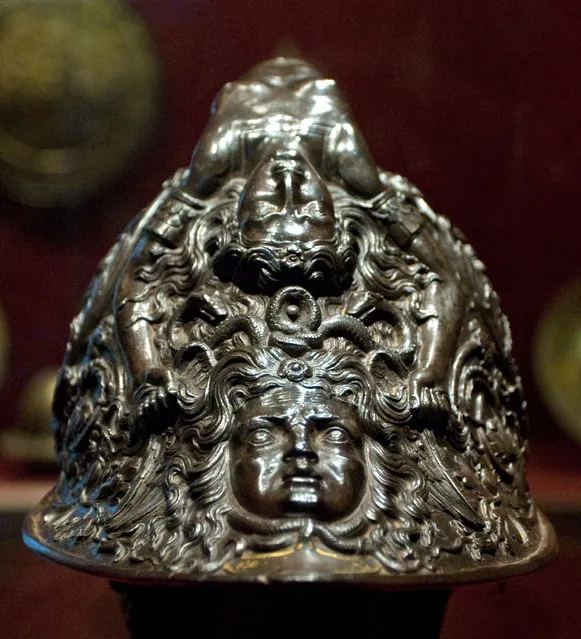
Heroic Armor Of The Italian Renaissance By Filippo Negroli

Filippo Negroli (ca. 1510–1579) was an armourer from Milan. He was renowned as being extremely skilled, and may be considered the most famous armourer of all time. Working together with his younger brothers Giovan Battista (ca. 1511-1591) and Francesco (ca. 1522-1600) in the Negroli family workshop headed by their father Gian Giacomo Negroli (ca. 1463-1543), Filippo was specialized in repoussé of armour, whereas his brother Francesco was renowned for his damascening skills.
Details
21 Aug 2015 10:59:00