Loading...
Done
A grey seal basks under a rainbow on a beach on the Lincolnshire coast, England on November 21, 2017. (Photo by Sean Weekly/Caters News Agency)

A grey seal basks under a rainbow on a beach on the Lincolnshire coast, England on November 21, 2017. (Photo by Sean Weekly/Caters News Agency)
Details
05 Jul 2018 00:01:00
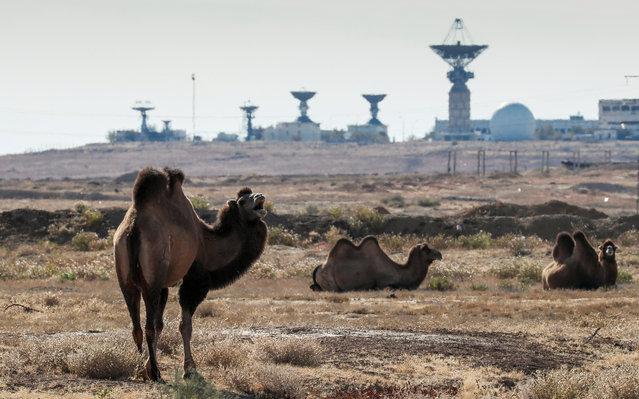
Camels graze in front of a spacecraft tracking station ahead of the Soyuz MS-10 upcoming launch at the Baikonur Cosmodrome, Kazakhstan, October 9, 2018. (Photo by Shamil Zhumatov/Reuters)

Camels graze in front of a spacecraft tracking station ahead of the Soyuz MS-10 upcoming launch at the Baikonur Cosmodrome, Kazakhstan, October 9, 2018. (Photo by Shamil Zhumatov/Reuters)
Details
23 May 2021 07:56:00
Sakura and Kazuhiro, Tokyo, 2015. Kazuhiro is a tattoo artist and Sakura is a photographer. They love cooking, live with their dog and two cats and each have the date of their wedding tattooed to their ring fingers. (Photo by Mami Kiyoshi/Galerie Annie Gabrielli/The Guardian)

Japanese artist Mami Kiyoshi has spent 15 years creating vivid portraits of people surrounded by their belongings – from wine bottles and violins to the odd stray pet. Mami Kiyoshi’s ongoing series “New Reading Portraits” is, in part, a nod to the mise-en-scène found in traditional woodcut printing. Here: Sakura and Kazuhiro, Tokyo, 2015. (Photo by Mami Kiyoshi/Galerie Annie Gabrielli/The Guardian)
Details
04 Aug 2017 08:48:00
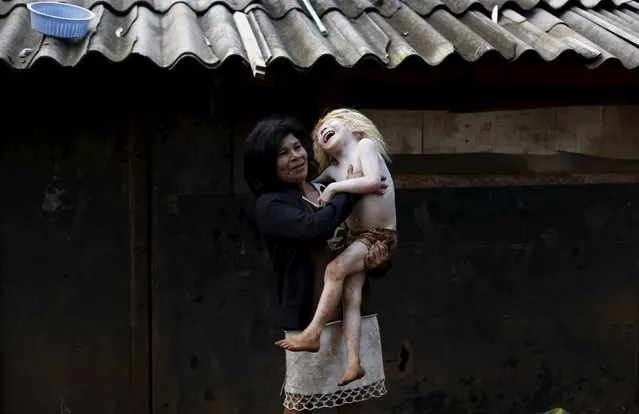
A Guarani Indian woman jokes with her son in the village of Pyau at Jaragua district, in Sao Paulo April 27, 2015. The National Indian Foundation (FUNAI) has recognised 521 hectares of this area as indigenous territory, making it the smallest indigenous reserve in Brazil. Members of the Guarani community have now established a new village outside the demarcation and are being threatened with an eviction through a court order. (Photo by Nacho Doce/Reuters)

A Guarani Indian woman jokes with her son in the village of Pyau at Jaragua district, in Sao Paulo April 27, 2015. The National Indian Foundation (FUNAI) has recognised 521 hectares of this area as indigenous territory, making it the smallest indigenous reserve in Brazil. Members of the Guarani community have now established a new village outside the demarcation and are being threatened with an eviction through a court order. (Photo by Nacho Doce/Reuters)
Details
01 May 2015 12:42:00
People in Need

'The Dutch charity organization Mensen in Nood (people in need) hits the streets with a remarkable campaign. People in need are posing with the typical attributes of consumer culture. The price of a designer handbag (€32) is compared with the price of a whole week of food (€4), The price a pint of beer (€4.50) with the price of 50 liter clean water (€1.50). The pictures were taken by Swedish fashion photographer Carl Stolz.' - Occupy Design UK
Details
29 Jun 2013 11:21:00
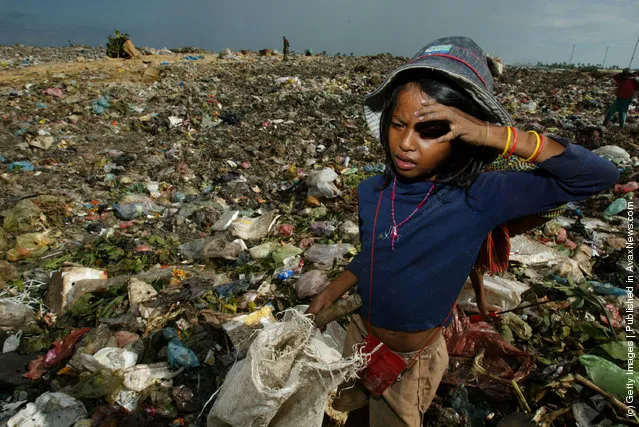
A Cambodian girl goes through the garbage dump looking for things to recycle in order to survive

A Cambodian girl goes through the garbage dump looking for things to recycle in order to survive July 26, 2003 in Phnom Penh, Cambodia. Rampant corruption in this impoverished country has lead to extreme poverty with many Cambodians living below the poverty line. (Photo by Paula Bronstein/Getty Images)
Details
08 Aug 2011 11:50:00
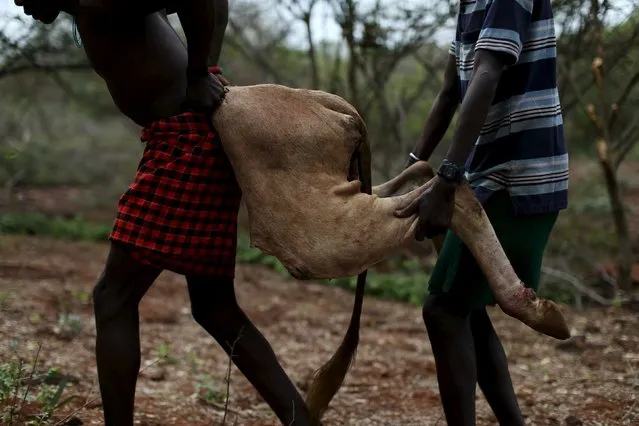
Pokot men carry a part of a carcass of a bull killed by a young man during an initiation ceremony in Baringo County, Kenya, January 20, 2016. (Photo by Siegfried Modola/Reuters)

Pokot men carry a part of a carcass of a bull killed by a young man during an initiation ceremony in Baringo County, Kenya, January 20, 2016. Far from the bustling city of Nairobi, in an isolated corner of Kenya's Rift Valley, young men from the Pokot community spear a bull in a ceremony called Sapana that takes them into adulthood. (Photo by Siegfried Modola/Reuters)
Details
11 Feb 2016 12:52:00


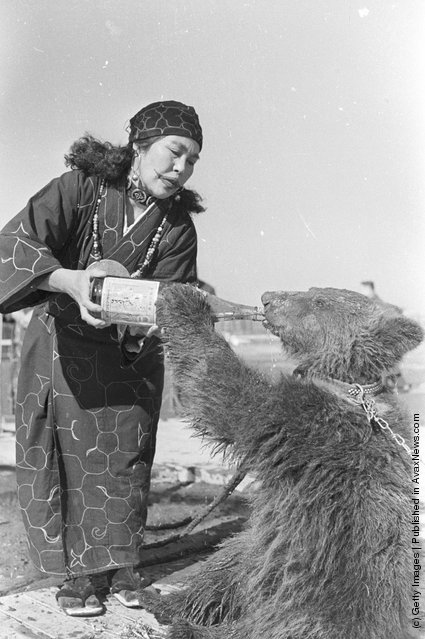
“The Ainu (アイヌ?), also called Aynu, Aino (アイノ), and in historical texts Ezo (蝦夷), are indigenous people or groups in Japan and Russia. Historically they spoke the Ainu language and related varieties and lived in Hokkaidō, the Kuril Islands, and much of Sakhalin. Most of those who identify themselves as Ainu still live in this same region, though the exact number of living Ainu is unknown. This is due to ethnic issues in Japan resulting in those with Ainu backgrounds hiding their identities and confusion over mixed heritages. In Japan, because of intermarriage over many years with Japanese, the concept of a 'pure Ainu' ethnic group is no longer feasible. Official estimates of the population are of around 25,000, while the unofficial number is upwards of 200,000 people”. – Wkipedia

Photo: A captive bear drinking from a large bottle held by an Ainu tribeswoman. (Photo by Evans/Three Lions/Getty Images). Circa 1955

Details
24 Mar 2011 14:01:00