Loading...
Done
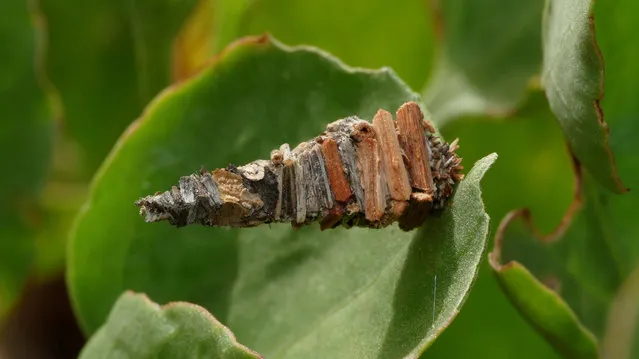
An undated handout photo made available by the Zerynthia Association shows the pupa of an amicta moneiba, a recently discovered species of moth endemic to La Gomera and El Hierro islands in the Canary Islands, Spain (issued 01 July 2020), as those two islands pulled apart from the rest of the Canary Islands 2.5 million years ago. The Institute of Evolutionary Biology of the Spanish National Research Council (CSIC) and the Zerynthia Association have recently discovered two new moth species in El Hierro and La Gomera. (Photo by Yeray Monasterio/Zerynthia/EPA/EFE)

An undated handout photo made available by the Zerynthia Association shows the pupa of an amicta moneiba, a recently discovered species of moth endemic to La Gomera and El Hierro islands in the Canary Islands, Spain (issued 01 July 2020), as those two islands pulled apart from the rest of the Canary Islands 2.5 million years ago. The Institute of Evolutionary Biology of the Spanish National Research Council (CSIC) and the Zerynthia Association have recently discovered two new moth species in El Hierro and La Gomera. (Photo by Yeray Monasterio/Zerynthia/EPA/EFE)
Details
11 Oct 2020 00:01:00
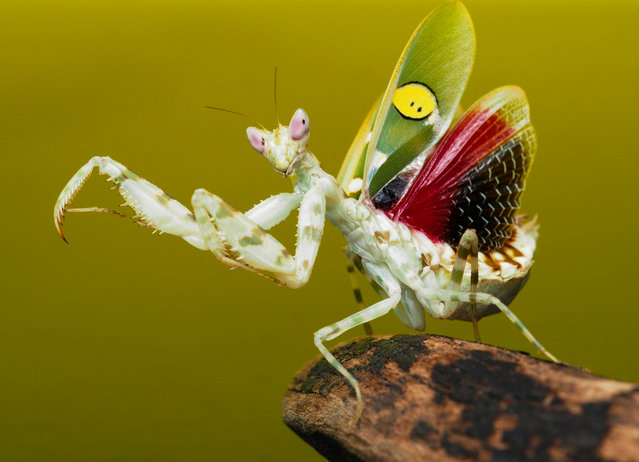
The jewelled flower mantis, commonly found in Asia, is believed to be the inspiration for many martial artists is seen in Jakarta, Indonesia on August 2, 2016. (Photo by Prabu Dennaga/Barcroft Images)

The jewelled flower mantis, commonly found in Asia, is believed to be the inspiration for many martial artists is seen in Jakarta, Indonesia on August 2, 2016. (Photo by Prabu Dennaga/Barcroft Images)
Details
26 Sep 2016 06:52:00
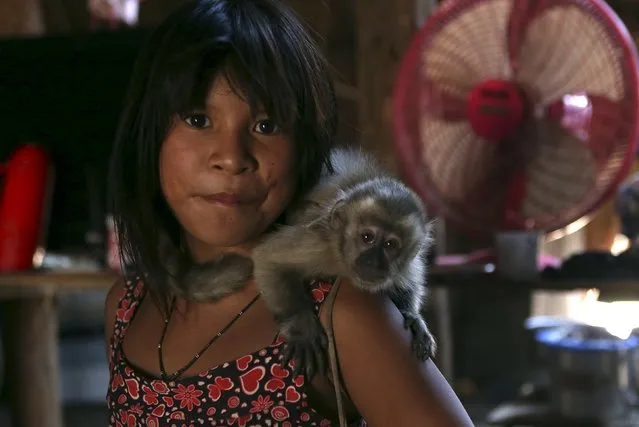
An indigenous girl carries a monkey inside her house in their village at Xingu national park in Mato Grosso, Brazil, October 2, 2015. (Photo by Paulo Whitaker/Reuters)

An indigenous girl carries a monkey inside her house in their village at Xingu national park in Mato Grosso, Brazil, October 2, 2015. The Kamayura tribe consists of around 300 people, and is one of the 16 ethnic groups living in the indigenous Xingu national park. (Photo by Paulo Whitaker/Reuters)
Details
18 Oct 2015 08:03:00
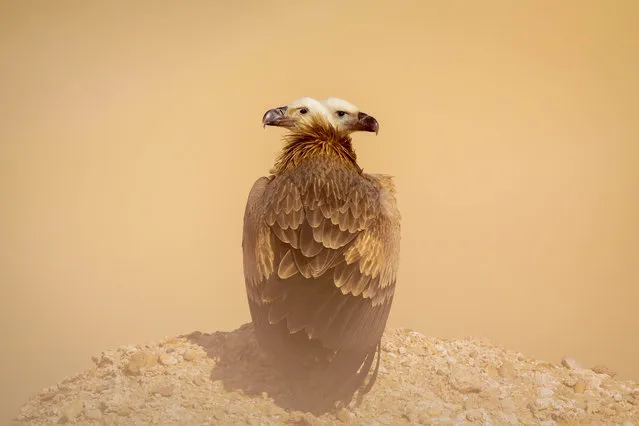
“Double head vulture”. On the day of windy days during raptors migration some people in my country start to catch these tired raptors, so in this day we go to photograph some raptors and we saw these tow tired vultures, so we start to drag them away from the hunters until they reach a good hidden place, to make them safe until they start a new journey. Photo location: Kuwait. (Photo and caption by Mohd Khorshed/National Geographic Photo Contest)

“Double head vulture”. On the day of windy days during raptors migration some people in my country start to catch these tired raptors, so in this day we go to photograph some raptors and we saw these tow tired vultures, so we start to drag them away from the hunters until they reach a good hidden place, to make them safe until they start a new journey. Photo location: Kuwait. (Photo and caption by Mohd Khorshed/National Geographic Photo Contest)
Details
06 Nov 2014 09:40:00
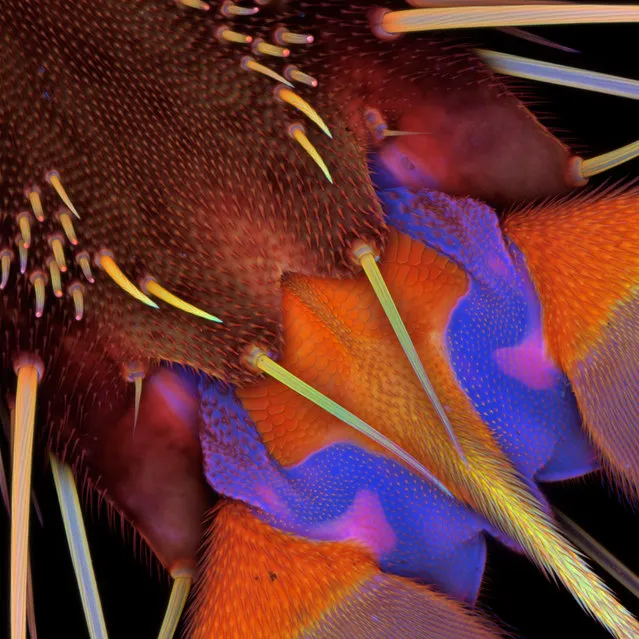
Pretarsus of the third leg of a female drone fly (Eristalis tenax), ventral view, by Dr. Jan Michels, Institute of Zoology, Christian-Albrechts-University of Kiel, Germany. (Photo by Olympus BioScapes)

“Microscope images forge an extraordinary bond between science and art, said Hidenao Tsuchiya, Olympus America's Vice President and General Manager for the Scientific Equipment Group. We founded this competition to focus on the fascinating stories coming out of today's life science research laboratories. The thousands of images that people have shared with the competition over the years reflect some of the most exciting work going on in research today – work that can help shed light on the living universe and ultimately save lives. We look at BioScapes and these beautiful images as sources of education and inspiration to us and the world”. – OlympusBioScapes

Photo: Pretarsus of the third leg of a female drone fly (Eristalis tenax), ventral view, by Dr. Jan Michels, Institute of Zoology, Christian-Albrechts-University of Kiel, Germany. (Photo by Olympus BioScapes)
Details
29 Jul 2012 09:20:00
Jeepneys are seen as an enforcer manages traffic at a busy street in Manila on May 30, 2017. Jeepneys, once hailed as the “King of the Road” and a cultural symbol in the Phillipines to rival New York's yellow taxis, may soon disappear from Manila's gridlocked streets, as authorities move to phase out the Philippines' iconic World War II-era minibuses, citing pollution and safety concerns. (Photo by Noel Celis/AFP Photo)

Jeepneys are seen as an enforcer manages traffic at a busy street in Manila on May 30, 2017. Jeepneys, once hailed as the “King of the Road” and a cultural symbol in the Phillipines to rival New York's yellow taxis, may soon disappear from Manila's gridlocked streets, as authorities move to phase out the Philippines' iconic World War II-era minibuses, citing pollution and safety concerns. (Photo by Noel Celis/AFP Photo)
Details
31 May 2017 07:14:00
French performer Odile De Mainville applies a makeup backstage before the Parisian transvestite cabaret show at “Madame Arthur” in Paris, on September 29, 2023. Open since 1946, Madame Arthur is the oldest transformist cabaret in Paris. Threatened with extinction the cabaret is undergoing a renaissance, attracting younger customers by returning to the fundamentals of the lie: baroque and queer performers who play with genres and conventions, and sing French hits live. (Photo by Joel Saget/AFP Photo)

French performer Odile De Mainville applies a makeup backstage before the Parisian transvestite cabaret show at “Madame Arthur” in Paris, on September 29, 2023. Open since 1946, Madame Arthur is the oldest transformist cabaret in Paris. Threatened with extinction the cabaret is undergoing a renaissance, attracting younger customers by returning to the fundamentals of the lie: baroque and queer performers who play with genres and conventions, and sing French hits live. (Photo by Joel Saget/AFP Photo)
Details
05 Dec 2024 03:23:00
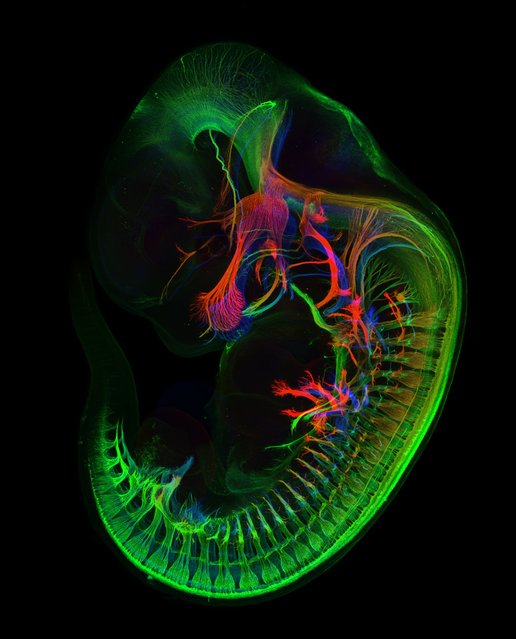
Mr. Zhong Hua, of Johns Hopkins University School of Medicine, took this image of the peripheral nerves (those outside of the brain) in an 11.5-day-old mouse embryo, magnified five times. (Photo by Zhong Hua)

Mr. Zhong Hua, of Johns Hopkins University School of Medicine, took this image of the peripheral nerves (those outside of the brain) in an 11.5-day-old mouse embryo, magnified five times. (Photo by Zhong Hua)
Details
31 Oct 2013 09:39:00