Two dogs sent into outer space by the Soviet Union after their safe return to earth. They spent 22 days in orbit. (Photo by Central Press/Getty Images). 22nd March 1966
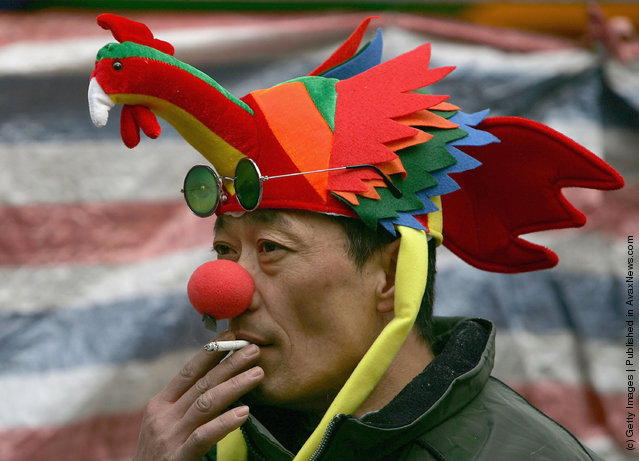
A Chinese vendor wears a rooster hat as he smokes a cigarette at his souvenir stall at a fair at Temple of Earth, on the eve of Chinese New Year February 8, 2005 in Beijing, China. Chinese started February 8, to celebrate the New Year of the Rooster. (Photo by Andrew Wong/Getty Images)
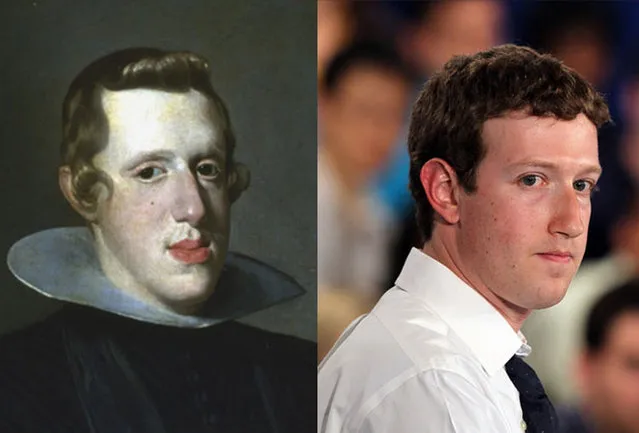
Sometimes your mug isn't as original as you'd like it be. Considering there are over 7 billion people on this earth, someone's bound to be your doppelganger, and these historical figures and celebrities prove just that.
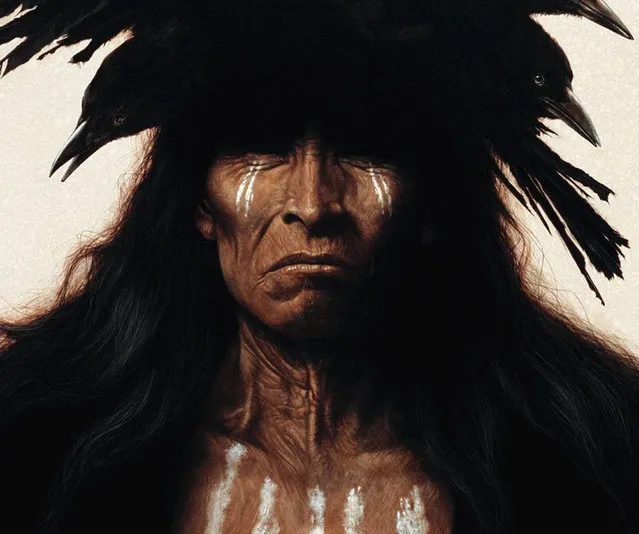
The work of Kirby Sattler is fueled by an inherent interest in the Indigenous Peoples of the Earth. His current images evolve from the history, ceremony, mythology, and spirituality of the Native American
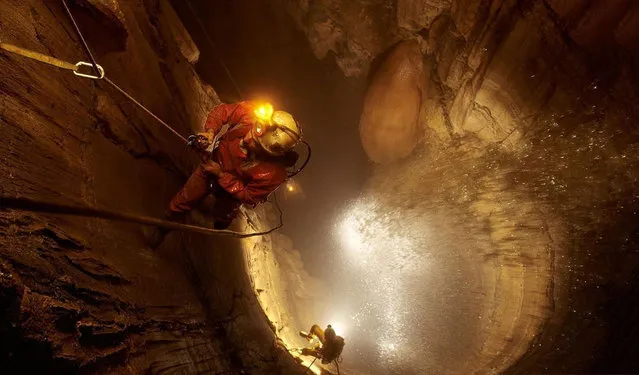
Krubera Cave is the deepest known cave on Earth. It is located in the Arabika Massif of the Gagrinsky Range of the Western Caucasus, in the Gagra district of Abkhazia, a breakaway region of Georgia.
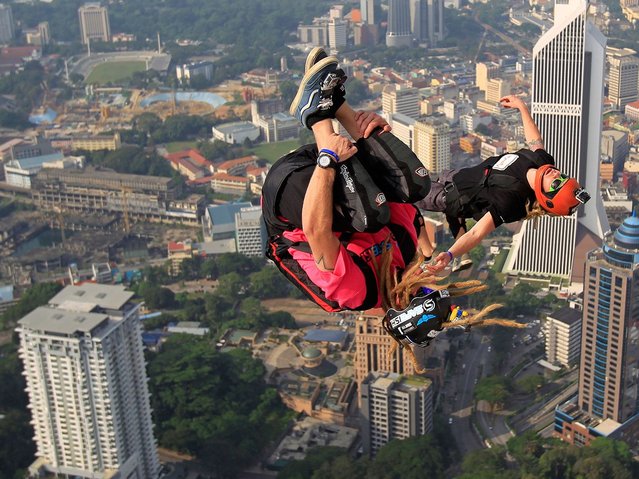
Britain's BASE jumper Sam Hardy lives up to his name after throwing himself off the top of the 335m-high Kuala Lumpur Tower during the KL Tower International Jump in Kuala Lumpur, Malaysia, Saturday, September 27, 2014. BASE stands for the places such jumpers usually jump from: buildings, antennas, spans (bridges) and earth (cliffs). (Photo by Lai Seng Sin/AP Photo)
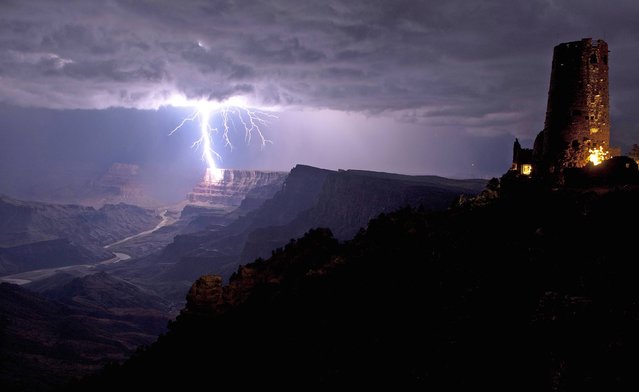
This is the incredible moment a fierce lightning bolt crashed against the Grand Canyon illuminating the steep canyon walls. Shrouded in darkness, the breath-taking landscape was shocked into life as mother nature sent the bolt storming down to Earth. As it cracked against the rocks the bright blue bolt illuminated the South Rim of the canyon, considered one of the Seven Natural Wonders of the World. With just the Desert View Watchtower in the foreground, the lightning was perfectly framed by the canyon which is located in Arizona, USA. (Photo by Travis Roe/U.S. Dept. of the Interior/Caters News)
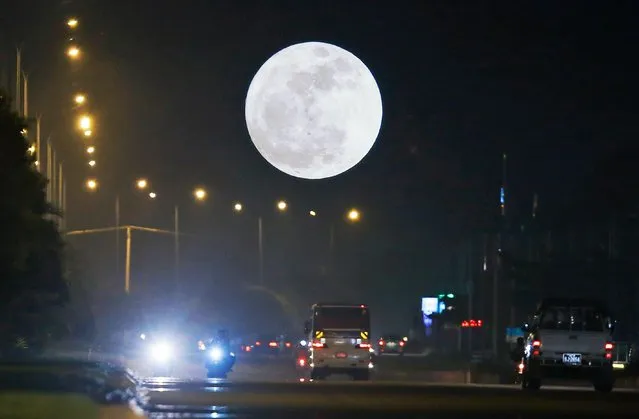
A so-called “Supermoon” dominates the sky while traffic rolls in the streets in Naypyitaw, Myanmar, 03 December 2017. According to the National Aeronautics and Space Administration (NASA) a series of three “Supermoons” – dubbed the “Supermoon trilogy” – will appear in the sky on 03 December 2017, on 01 January 2018 and and 31 January 2018. A “Supermoon” commonly is a full moon at its closest distance to the earth with the moon appearing larger than usual. (Photo by Hein Htet/EPA/EFE)