Loading...
Done
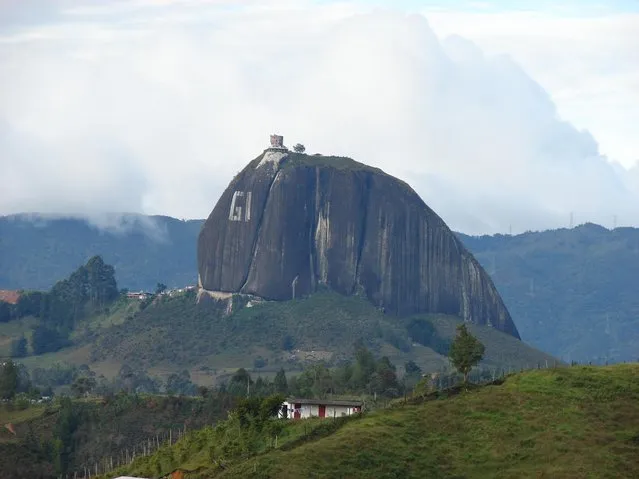
Guatape Rock In Colombia

Guatapé is a town and municipality in Antioquia Department, Colombia. Part of the subregion of Eastern Antioquia. Guatapé is located in the outskirts of Medellín, bordering a reservoir created by the Colombian government for a hydro-electric dam, built in the late 1960s. This quaint town is the gathering place for "Las Vegas", or the small farms of the area. It is also a growing area of recreation for citizens of Medellín, and aims to be a tourist destination for foreign travellers.
Guatapé was founded in 1811, by the Spaniard Don Francisco Giraldo y Jimenez. The name "Guatapé", comes from the Quechua language, related to "stones and water". The area was visited by the conquistadors circa 1551.
Details
25 Dec 2013 09:18:00
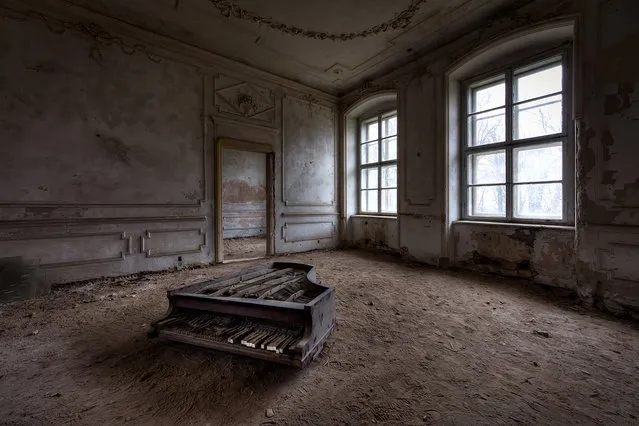
This piano was located in one of many rooms of a huge chateau in Poland. (Photo by Vincent Jansen)

Photographer Vincent Jansen travels throughout Europe, visiting beautiful abandoned places. He explores churches, factories, sanatoriums, mortuaries, villas and theaters, all quietly waiting for renovation or demolition. His photos show a unique perspective on what is happening behind the “no trespassing” signs: where nature is slowly gaining ground and the desolation, loneliness and decay leave their stunning traces. Photo: This piano was located in one of many rooms of a huge chateau in Poland. (Photo by Vincent Jansen)
Details
11 May 2014 12:10:00
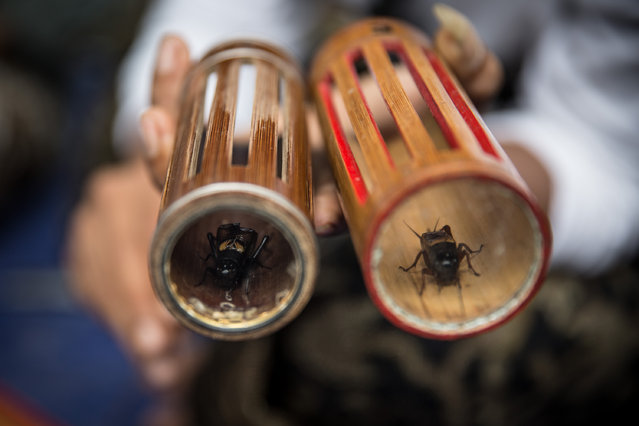
A cricket breeder shows his two adult fighter crickets on a bamboo tubes called Bumbung. (Photo by A. A. Gde Agung/JG Photo)

Most of people who have visited Bali have seen the cockfighting popular among the locals. A little-known but no less ardent hobby among Bali’s farming community is cricket fighting, or mejangkrikang. The insects face off inside bamboo tubes known as bumbung, and bets are placed on the bouts, which typically last two minutes. Here: a cricket breeder shows his two adult fighter crickets on a bamboo tubes called Bumbung. (Photo by A. A. Gde Agung/JG Photo)
Details
07 Jan 2015 14:22:00
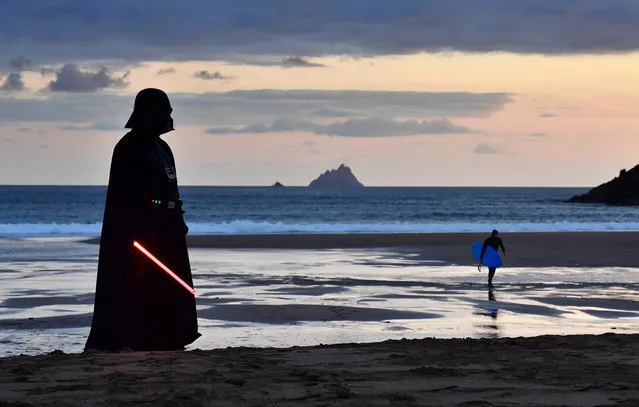
Garrison Ireland Leigon member John O'Dwyer dressed as the character Darth Vader looks out towards Skellig Michael island on May 4, 2019 in Portmagee, Ireland. The latest Star Wars movies such as The Last Jedi have featured the famous Skellig Michael islands situated off the coast of the small Irish fishing village. The May the Fourth Star Wars festival is taking place in the small County Kerry village for the second year running as millions of fans worldwide celebrate the science fiction series. The quiet costal setting has seen a sharp rise in the number of tourists and fans visiting the area. (Photo by Charles McQuillan/Getty Images)

Garrison Ireland Leigon member John O'Dwyer dressed as the character Darth Vader looks out towards Skellig Michael island on May 4, 2019 in Portmagee, Ireland. The latest Star Wars movies such as The Last Jedi have featured the famous Skellig Michael islands situated off the coast of the small Irish fishing village. The May the Fourth Star Wars festival is taking place in the small County Kerry village for the second year running as millions of fans worldwide celebrate the science fiction series. The quiet costal setting has seen a sharp rise in the number of tourists and fans visiting the area. (Photo by Charles McQuillan/Getty Images)
Details
07 May 2019 00:07:00
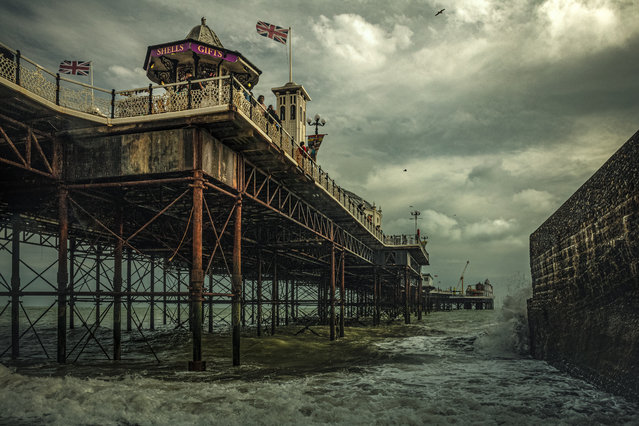
Overall Winner: The Brighton Palace Pier. “Standing in the full force of weather and time: the Brighton Palace Pier. My wife and I have been visiting Brighton for a few years now and I always strive to capture this lovely historic seaside town with a sense of the atmosphere and cinematic interpretation that it instills in me”. (Photo by Michael Marsh/Historic Photographer of the Year 2020)

The winners of the Historic Photographer of the Year Awards 2020 from triphistoric.com celebrate the places and cultural sites around the world that offer a window to the history that exists all around us. This year, restricted by Covid, photographers were called on to scour their photographic archive to share their imagery of those places that dominate our past. Here: The Brighton Palace Pier. (Photo by Michael Marsh/Historic Photographer of the Year 2020)
Details
27 Nov 2020 00:03:00
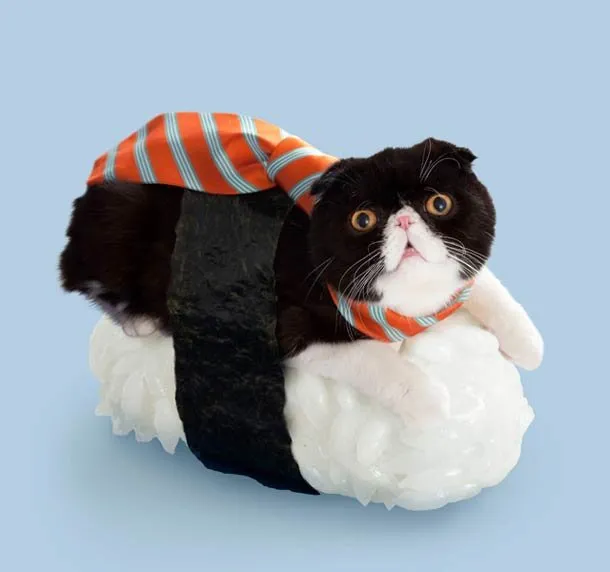
Sushi Cats By Tange & Nakimushi Peanuts

Sushi Cats (originally branded as Neko-Sushi) is a series of photographs created by the Japan-based company Tange & Nakimushi Peanuts. In this series the creators have dressed up a number of cats and placed them on top of oversized balls of sushi rice. The kitties don’t look too happy with what is going on, though they do look adorable in their little outfits. Tange & Nakimushi Peanuts didn’t think that making a set of photos was enough, so they’ve also created an Android and iPhone apps featuring Sushi Cats. Moreover, people living in Japan can visit their website, if they wish to order photo prints, postcards, and other items. (Photo by Tange & Nakimushi Peanuts)
Details
08 Jan 2015 14:14:00
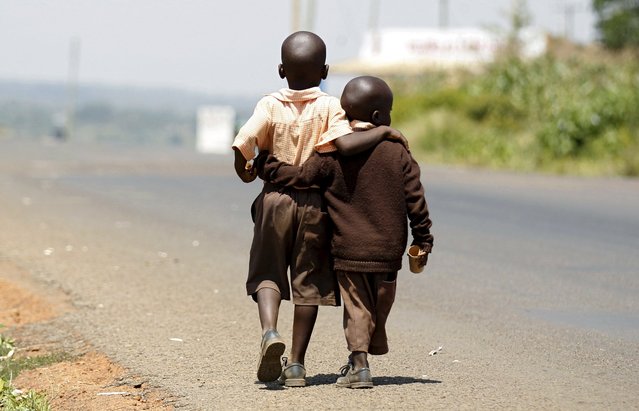
Boys walk home for lunch from school in the village of Kogelo, west of Kenya's capital Nairobi, July 16, 2015. (Photo by Thomas Mukoya/Reuters)

Boys walk home for lunch from school in the village of Kogelo, west of Kenya's capital Nairobi, July 16, 2015. U.S. President Barack Obama visits Kenya and Ethiopia later this month. His ancestral home of Kogelo is home to Sarah Hussein Obama, his step-grandmother. The Kenyan village, burial place of Obama's father, features an open-pit goldmine, a pork butcher's, a school named after their most famous son and outdoor market stalls. Villagers get around by motorbike taxi or on foot while a donkey-cart transports water. Children, some of them named Obama in honour of the President, walk to and from school together. (Photo by Thomas Mukoya/Reuters)
Details
24 Jul 2015 11:46:00
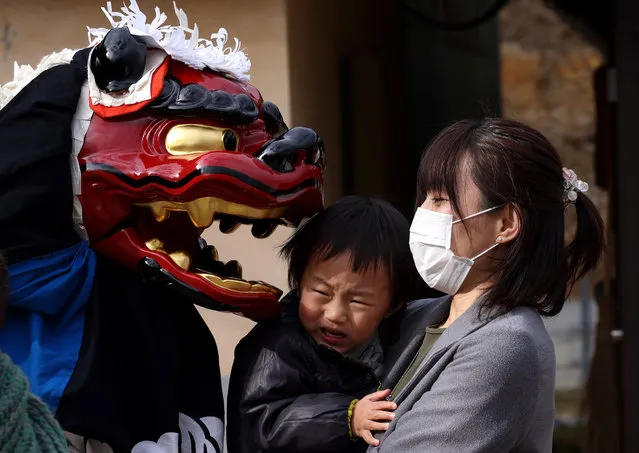
A performer wearing a lion mask performs the Ise Daikagura lion dance at the remote village of Yamanawa on February 08, 2021 in Ryuo, Japan. Ise Daikagura is a group of traditional Lion Dance performers who pray in front of farmers houses and businesses for good grain harvests and disease-free lives. Performers play sacred music using drums and flutes with two lion mask dancers. A lion mask is considered a symbol of God, who enters the house and performs in front of the Shinto God, a statue placed inside the house, mostly in the kitchen. These prayers are called “Kamodo Barai”. After the prayers, they are gifted with money, rice, sake and Japanese sweets from the householders. A group can travel for more than one hundred days to thousands of households and businesses throughout rural-villages in western Japan, and pray to those who are unable to visit the country’s most sacred shrine, the Grand Ise Shrine in Mie Prefecture. The group started its performance in the Edo era between 1603 to 1868 according to Japanese history. The Japanese government designated it as an important folk cultural national property in 1981. (Photo by Buddhika Weerasinghe/Getty Images)

A performer wearing a lion mask performs the Ise Daikagura lion dance at the remote village of Yamanawa on February 08, 2021 in Ryuo, Japan. Ise Daikagura is a group of traditional Lion Dance performers who pray in front of farmers houses and businesses for good grain harvests and disease-free lives. (Photo by Buddhika Weerasinghe/Getty Images)
Details
18 Feb 2021 09:27:00