Loading...
Done
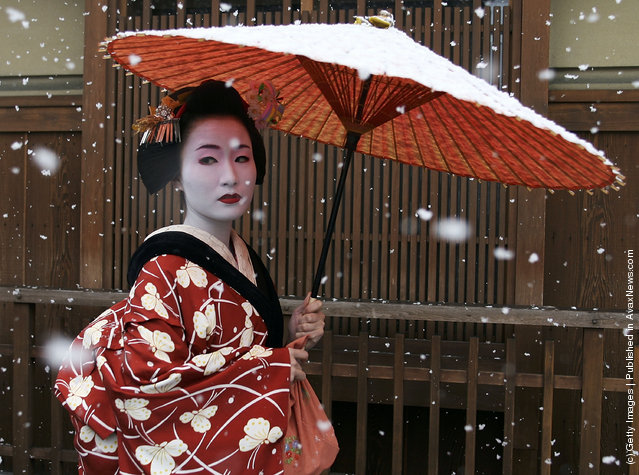
A Maiko, a traditional Japanese dancer, walks in the snow in Gion, Kyoto's famous geisha district

A Maiko, a traditional Japanese dancer, walks in the snow in Gion, Kyoto's famous geisha district, January 7, 2006 in Kyoto, Japan. The ancient city Kyoto attracts the largest number of visitors in Japan and has been increasing every year. (Photo by Koichi Kamoshida/Getty Images)
Details
03 Aug 2011 11:38:00
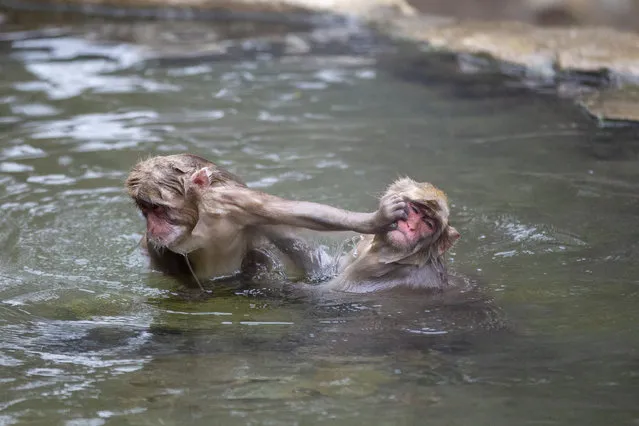
Japanese macaques, also known as snow monkeys, play as they soak in a hot spring in Jigokudani valley in Nagano Prefecture, northwest of Tokyo Saturday, March 6, 2021. (Photo by Kiichiro Sato/AP Photo)

Japanese macaques, also known as snow monkeys, play as they soak in a hot spring in Jigokudani valley in Nagano Prefecture, northwest of Tokyo Saturday, March 6, 2021. (Photo by Kiichiro Sato/AP Photo)
Details
14 Mar 2021 09:11:00
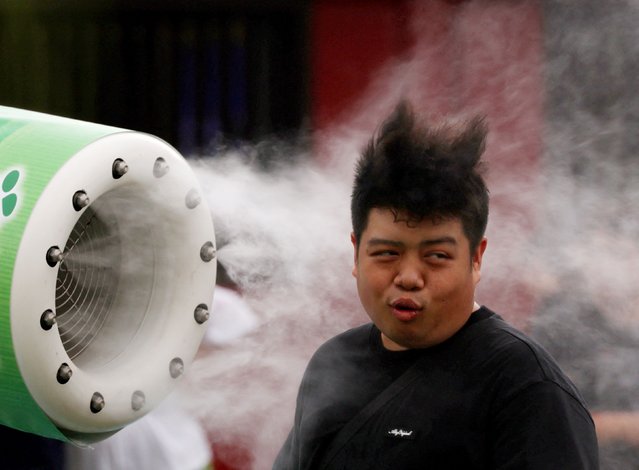
A tourist cools off in front of a misting fan near a venue of the Hozuki-Ichi (Japanese lantern plant fair), at Sensoji temple, in Tokyo, Japan, on July 10, 2025. (Photo by Kim Kyung-Hoon/Reuters)

A tourist cools off in front of a misting fan near a venue of the Hozuki-Ichi (Japanese lantern plant fair), at Sensoji temple, in Tokyo, Japan, on July 10, 2025. (Photo by Kim Kyung-Hoon/Reuters)
Details
05 Aug 2025 04:01:00
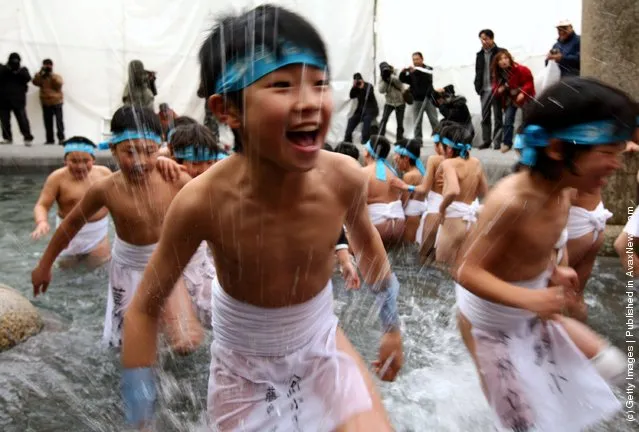
Japanese children wear loincloths as they splash about in freezing cold water during Saidaiji Naked Festival, at Saidaiji Temple

“A Hadaka Matsuri (“Naked Festival”) is a type of Japanese festival, or matsuri, in which participants wear a minimum amount of clothing; usually just a Japanese loincloth (called fundoshi), sometimes with a short happi coat, and rarely completely naked. Whatever the clothing, it is considered to be above vulgar, or everyday, undergarments, and on the level of holy Japanese shrine attire. Naked festivals are held in dozens of places throughout Japan every year, usually in the summer or winter. The most famous festival is held in Okayama, where the festival originated. Every year, over 9,000 men participate in this festival”. – Wikipedia

Photo: Japanese men wear loincloths as they splash about in freezing cold water during Saidaiji Naked Festival, at Saidaiji Temple on February 18, 2012 in Okayama, Japan. (Photo by Buddhika Weerasinghe/Getty Images)

Details
19 Feb 2012 12:18:00
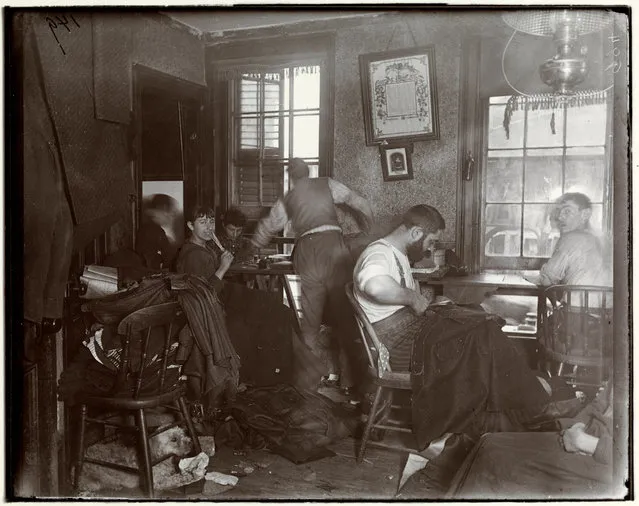
Drastic inequality is by no means new in New York. Jacob A. Riis was called a muckraker after he chose to spotlight the city’s poverty at the turn of the 20th century by photographing it. Here: Sweatshop in Hester Street, 1889-1890. (Photo by Jacob A. Riis/Museum of the City of New York, Gift of Roger William Riis)

Drastic inequality is by no means new in New York. Jacob A. Riis was called a muckraker after he chose to spotlight the city’s poverty at the turn of the 20th century by photographing it. Here: Sweatshop in Hester Street, 1889-1890. (Photo by Jacob A. Riis/Museum of the City of New York, Gift of Roger William Riis)
Details
16 Nov 2015 08:12:00
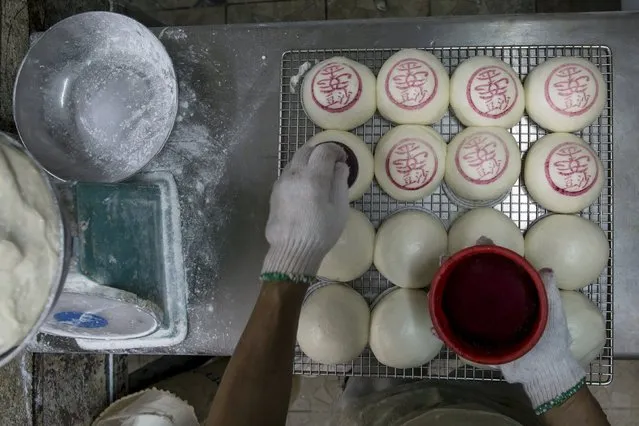
Buns are stamped the Chinese characters “Ping An”, meaning peaceful and safe, inside a bakery, at Hong Kong's Cheung Chau island, China May 17, 2015, ahead of the upcoming Bun Festival on May 25. (Photo by Tyrone Siu/Reuters)

Buns are stamped the Chinese characters “Ping An”, meaning peaceful and safe, inside a bakery, at Hong Kong's Cheung Chau island, China May 17, 2015, ahead of the upcoming Bun Festival on May 25. The festival celebrates the islanders' deliverance from famine many centuries ago and is meant to placate ghosts and restless spirits. (Photo by Tyrone Siu/Reuters)
Details
24 May 2015 09:49:00
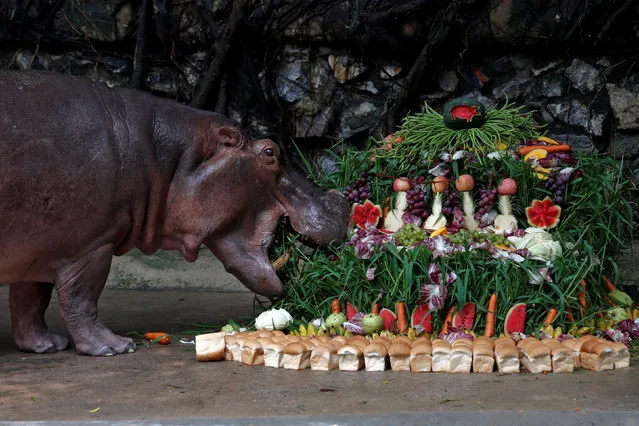
A female hippopotamus named “Mali”, which means Jasmine, eats fruits arranged to look like a cake during her 50th birthday celebration at Dusit Zoo in Bangkok, Thailand September 23, 2016. (Photo by Chaiwat Subprasom/Reuters)

A female hippopotamus named “Mali”, which means Jasmine, eats fruits arranged to look like a cake during her 50th birthday celebration at Dusit Zoo in Bangkok, Thailand September 23, 2016. (Photo by Chaiwat Subprasom/Reuters)
Details
25 Sep 2016 07:06:00
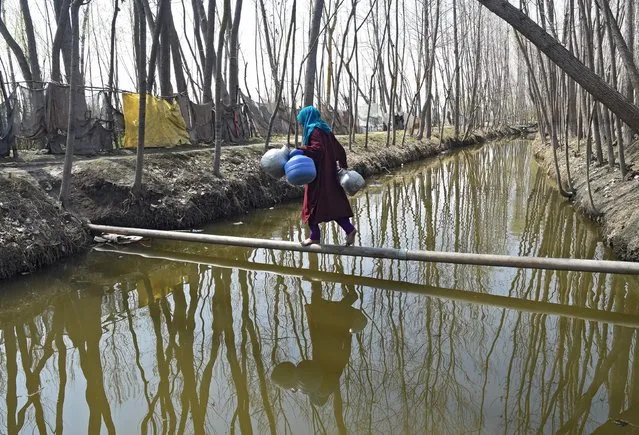
A Kashmiri Muslim woman balances on a water pipe before collecting water at Dasilpora village on March 22, 2018. World Water Day is held annually on 22 March as a means of focusing attention on the importance of freshwater and advocating for the sustainable management of freshwater resources. (Photo by Tauseef Mustafa/AFP Photo)

A Kashmiri Muslim woman balances on a water pipe before collecting water at Dasilpora village on March 22, 2018. World Water Day is held annually on 22 March as a means of focusing attention on the importance of freshwater and advocating for the sustainable management of freshwater resources. (Photo by Tauseef Mustafa/AFP Photo)
Details
24 Mar 2018 06:20:00