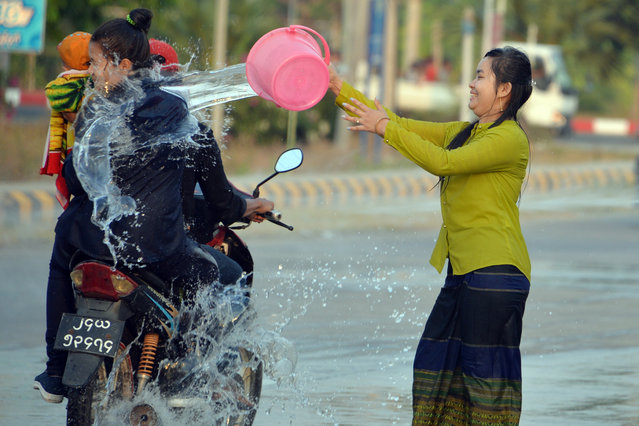
A woman throws water at passing motorists during celebrations for the Thingyan festival, also known as the Buddhist New Year, in Naypyidaw, Myanmar on April 16, 2019. (Photo by Thet Aung/AFP Photo)
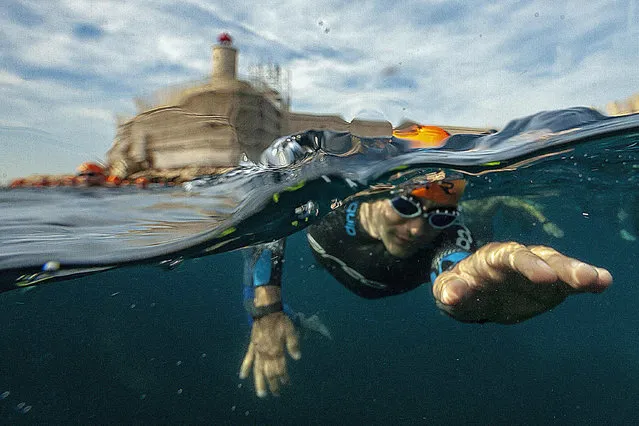
A swimmer competes in Le Defi Monte-Cristo (Monte Cristo Challenge) swimming event at the Chateau d'If, off the coast of Marseille, southern France, on June 21, 2019. Created in 1999 and inspired by Alexandre Dumas' character of Edmond Dantes, the Monte Cristo Challenge will take place from June 21 to 23, 2019. (Photo by Boris Horvat/AFP Photo)
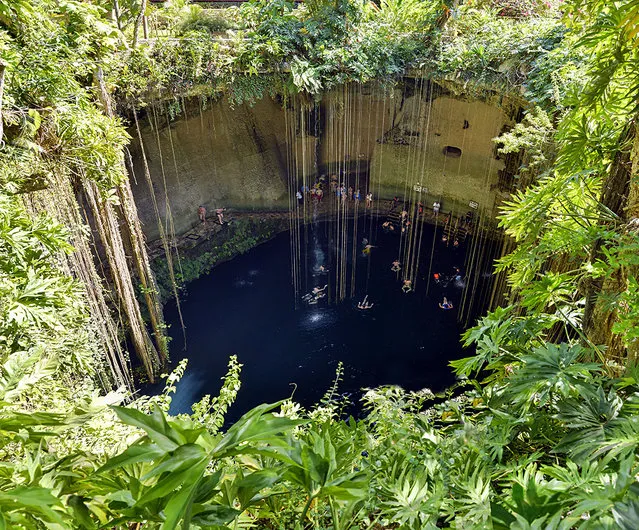
A cenote is a natural phenomenon, a sinkhole in the Earth’s surface. The Yucatan Peninsula in Mexico has an estimated 7,000 cenotes because it is primarily made up of porous limestone. For millions of years, rainfall slowly ate away at the limestone and a huge system of underground caves and caverns was formed. Many filled with water from rain or from the underground water table. When the roof of a water filled cave collapses, a cenote is born. The water found in a cenote may be fresh water, salt water, or both. Structurally it may be completely open, like a lake, almost completely closed with just a small opening at the top, or somewhere in between.
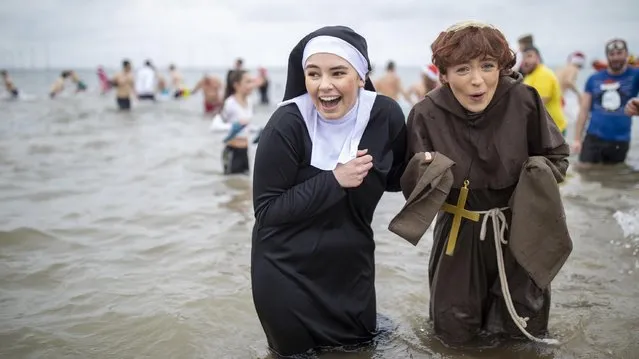
Bathers brave the cold waters of the North Sea as they take part in the annual Boxing Day dip at Redcar Beach on December 26, 2019 in Redcar, England. The event attracts hundreds of people each year who take to the cold water wearing fancy dress as they help to raise money for a number of charities. (Photo by James Glossop/The Times)
Japan's Naomi Osaka sits with her towel over her head during a break in her third round loss to Coco Gauff of the U.S. at the Australian Open tennis championship in Melbourne, Australia, Friday, January 24, 2020. (Photo by Lee Jin-man/AP Photo)
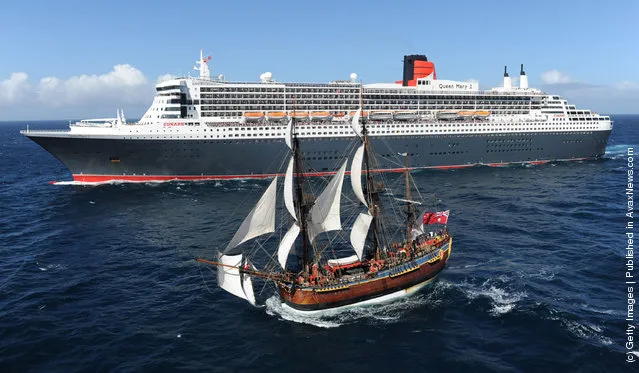
The Queen Mary 2 is saluted by the HMB Endeavour, the replica of Captain James Cook's ship, on March 4, 2012 off the coast of Victoria, Australia. (Photo by James Morgan/Carnival Australia via Getty Images)