Loading...
Done
Models dressed as showgirls participates in a fashion show in front of the Welcome to Fabulous Las Vegas sign on the Las Vegas Strip to kick off the pro-mask wearing campaign “Mask Up for Nevada” put on by Experience Strategy Associates amid the spread of the coronavirus on June 25, 2020 in Las Vegas, Nevada. On Wednesday, Nevada Gov. Steve Sisolak signed a directive requiring people to wear face coverings in public places throughout the state beginning on June 26 in response to a four-week upward trend of new daily COVID-19 cases. (Photo by David Becker/Zuma Press)

Models dressed as showgirls participates in a fashion show in front of the Welcome to Fabulous Las Vegas sign on the Las Vegas Strip to kick off the pro-mask wearing campaign “Mask Up for Nevada” put on by Experience Strategy Associates amid the spread of the coronavirus on June 25, 2020 in Las Vegas, Nevada. On Wednesday, Nevada Gov. Steve Sisolak signed a directive requiring people to wear face coverings in public places throughout the state beginning on June 26 in response to a four-week upward trend of new daily COVID-19 cases. (Photo by David Becker/Zuma Press)
Details
28 Jun 2020 00:07:00
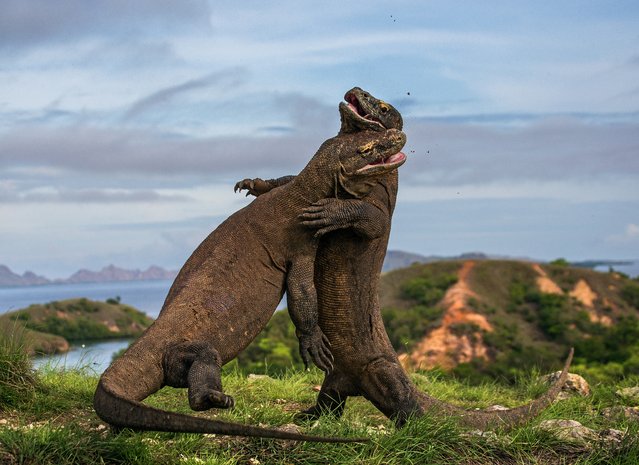
Komodo Judo by Andrey Gudkov. Finalist, Amphibians & Reptiles. Two large male Komodo dragons hissing angrily at each other in Indonesia’s Komodo national park. Komodo dragons can grow up to 8ft. (Photo by Andrey Gudkov/Wildlife Photographer of the Year 2015)

Komodo Judo by Andrey Gudkov. Finalist, Amphibians & Reptiles. Two large male Komodo dragons hissing angrily at each other in Indonesia’s Komodo national park. Komodo dragons can grow up to 8ft. (Photo by Andrey Gudkov/Wildlife Photographer of the Year 2015)
Details
16 Nov 2015 08:15:00
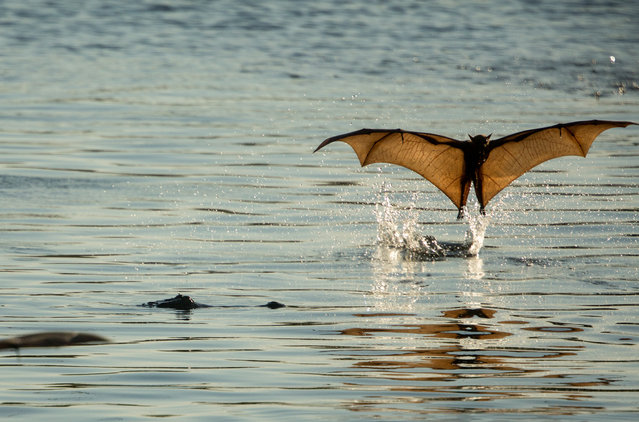
A little red flying fox dips a toe in a lake at the mouth of Katherine gorge in the Northern Territory, Nitmiluk national park, Australia on September 20, 2017. (Photo by Glenn Campbell/AAP)

A little red flying fox dips a toe in a lake at the mouth of Katherine gorge in the Northern Territory, Nitmiluk national park, Australia on September 20, 2017. (Photo by Glenn Campbell/AAP)
Details
24 Sep 2017 06:28:00
A reveller takes part in an annual block party known as “Ceu na Terra” (Heaven on Earth), one of the many carnival parties to take place in the neighbourhoods of Rio de Janeiro, January 30, 2016. (Photo by Pilar Olivares/Reuters)

A reveller takes part in an annual block party known as “Ceu na Terra” (Heaven on Earth), one of the many carnival parties to take place in the neighbourhoods of Rio de Janeiro, January 30, 2016. (Photo by Pilar Olivares/Reuters)
Details
31 Jan 2016 09:09:00
A giant panda cub is pictured in an incubator at the Ya'an Bifengxia Giant Panda Breeding and Research Center in Ya'an city, southwest China's Sichuan province, 21 August 2015. (Photo by Imaginechina/Splash News)

A giant panda cub is pictured in an incubator at the Ya'an Bifengxia Giant Panda Breeding and Research Center in Ya'an city, southwest China's Sichuan province, 21 August 2015. Ten tiny panda cubs made their first public appearance at China's Ya'an Bifengxia Giant Panda Breeding and Research Center in southwestern Sichuan province on Friday (21 August 2015). All of the ten giant pandas were born in 2015. The oldest of them is just two month old, while the youngest one was born a week ago. This marks the first time they were put together as a group since they were born. (Photo by Imaginechina/Splash News)
Details
23 Aug 2015 09:33:00
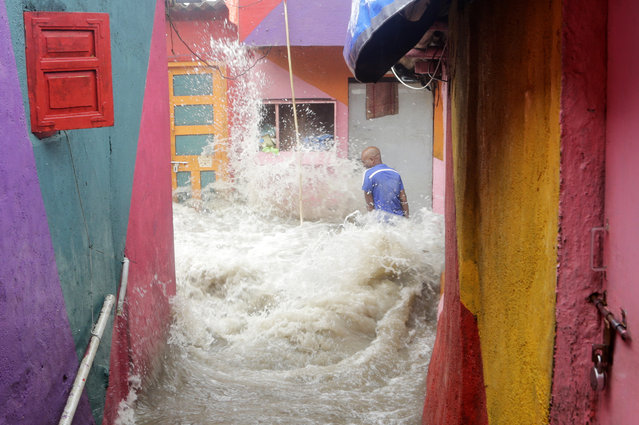
In this Saturday, July 14, 2018, file photo, waves caused by high tide envelops a man standing outside his house near the Arabian Sea in Mumbai, India. The man was washed away by the wave and rescued by locals about 100 meters away from the spot. (Photo by Rajanish Kakade/AP Photo)

In this Saturday, July 14, 2018, file photo, waves caused by high tide envelops a man standing outside his house near the Arabian Sea in Mumbai, India. The man was washed away by the wave and rescued by locals about 100 meters away from the spot. (Photo by Rajanish Kakade/AP Photo)
Details
02 Aug 2018 00:03:00
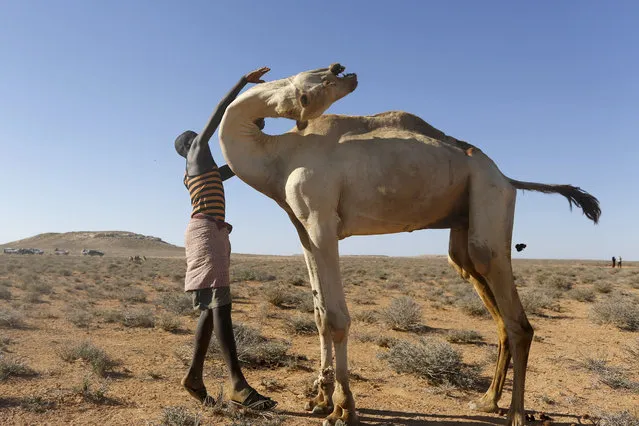
Ali Asair, who has left his family behind and traveled hundreds of kilometers in search for a pasture for his animals, attends to his camel in a pastoralists' settlement in the Bandarbeyla district in Somalia's semi-autonomous region of Puntland, Somalia, 24 March 2017. According to media reports, the United Nations says only 31 percent of 864 million US dollars appeal for a drought-hit Somalia is funded. The UN said the world is facing the largest humanitarian crisis since 1945, adding that more than 20 million people are facing the threat of famine in Somalia, Yemen, South Sudan and Nigeria and 1.4 million children could die from starvation this year. (Photo by Dai Kurokawa/EPA)

Ali Asair, who has left his family behind and traveled hundreds of kilometers in search for a pasture for his animals, attends to his camel in a pastoralists' settlement in the Bandarbeyla district in Somalia's semi-autonomous region of Puntland, Somalia, 24 March 2017. According to media reports, the United Nations says only 31 percent of 864 million US dollars appeal for a drought-hit Somalia is funded. The UN said the world is facing the largest humanitarian crisis since 1945, adding that more than 20 million people are facing the threat of famine in Somalia, Yemen, South Sudan and Nigeria and 1.4 million children could die from starvation this year. (Photo by Dai Kurokawa/EPA)
Details
28 Mar 2017 09:01:00
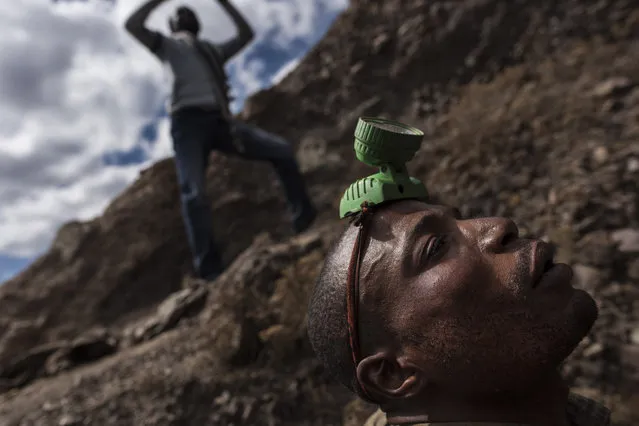
A “creuseur”, or digger, a plastic lantern on his head, readies to enter a copper and cobalt mine in Kawama, Democratic Republic of Congo on June 8, 2016. Cobalt is used in the batteries for electric cars and mobile phones. Working conditions are dangerous, often with no safety equipment or structural support for the tunnels. The diggers say they are paid on average US$2-3/day. (Photo by Michael Robinson Chavez/The Washington Post)

A “creuseur”, or digger, a plastic lantern on his head, readies to enter a copper and cobalt mine in Kawama, Democratic Republic of Congo on June 8, 2016. Cobalt is used in the batteries for electric cars and mobile phones. Working conditions are dangerous, often with no safety equipment or structural support for the tunnels. The diggers say they are paid on average US$2-3/day. (Photo by Michael Robinson Chavez/The Washington Post)
Details
30 Dec 2016 10:29:00