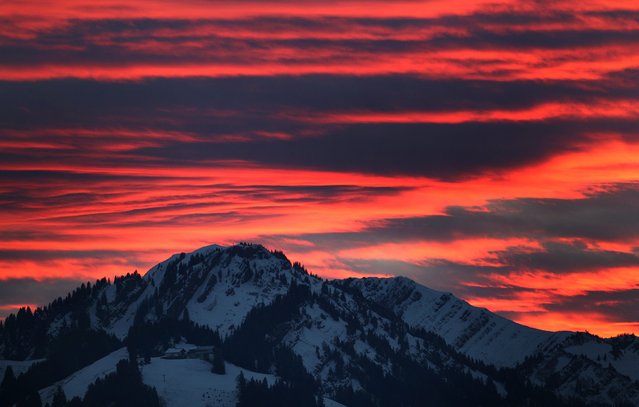
A colorful sky at sunset over the snowy mountains in Immenstadt, Bavaria, Germany, 20 November 2014. Cloudy weather is forecast in the region on 21 November. (Photo by Karl-Josef Hildenbrand/EPA)
Police officers detain a Femen activist during a demonstration of supporters of former Spanish dictator Francisco Franco, during annual gathering held on the week of the 45th anniversary of the dictator's death, in Madrid, Spain, November 22, 2020. (Photo by Javier Barbancho/Reuters)
Actress Riley Keough reacts to the cameras at the Baby2Baby 10-Year Gala in Los Angeles, California on November 13, 2021. (Photo by Action Press/Rex Features/Shutterstock)
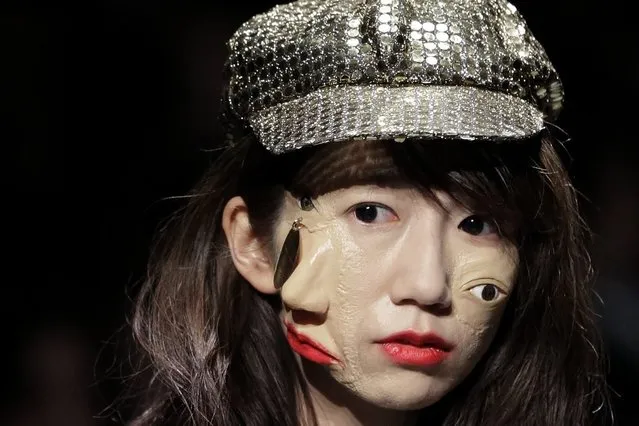
A model presents a creation by Japanese designer Yoshikazu Yamagata for his label writtenafterwards during the Mercedes-Benz Fashion Week in Tokyo, Japan, 16 March 2016. The presentation of the Autumn/Winter 2016 collections runs from 14 to 19 March. (Photo by Kiyoshi Ota/EPA)
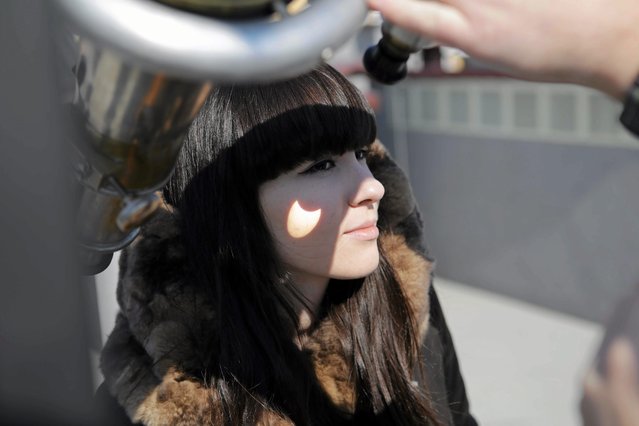
The shadow of a partial eclipse is cast on to the cheek of a student on the roof of the Jana Dlugosza Academy in Czestochowa, Poland March 20, 2015. (Photo by Grzegorz Skowronek/Reuters/Agencja Gazeta)
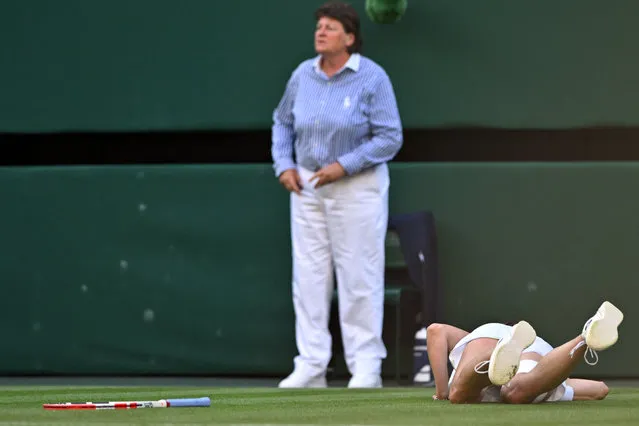
France's Alize Cornet falls down during her women's singles tennis match against Kazakhstan's Elena Rybakina on the fourth day of the 2023 Wimbledon Championships at The All England Tennis Club in Wimbledon, southwest London, on July 6, 2023. (Photo by Glyn Kirk/AFP Photo)
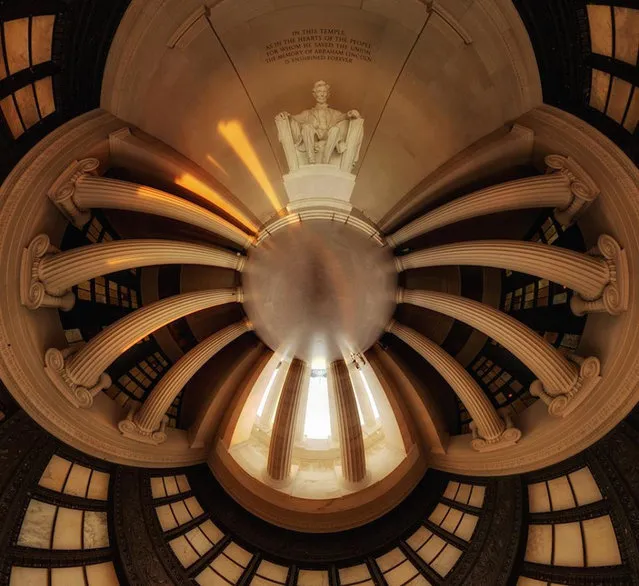
Randy Scott Slavin's photography is surrealism based in reality. His work portrays land and cityscapes in a 360 degree view, a perspective closer to that of the human eye than a 2D photograph, he says. Slavin's "Alternate Perspectives" is a series of photographs of a single location or landmark pieced together to create a 360 degree perspective in a flat image. The results are whimsical, and occasionally eerie, scenes that reflect the portion and scale of Slavin's surroundings when he took the photo.
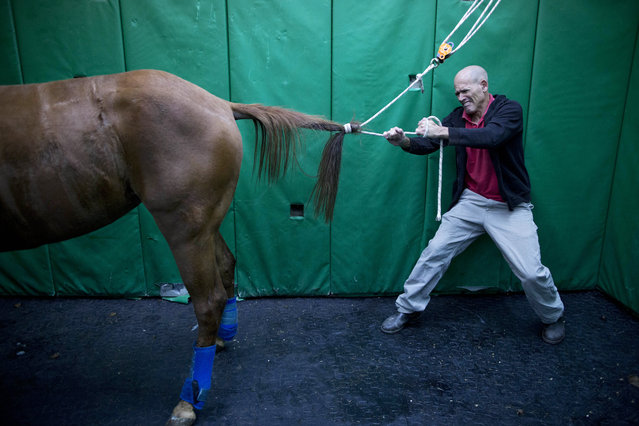
In this Wednesday, December 2, 2015 photo, Dr. Gal Kelmer, head of the department of large animals, unties a horse after its operation at the University's Koret School of Veterinary Medicine in Rishon Lezion, Israel. “Horses have an instinctive response of flight from danger”, Kelmer said. “The minute they wake up they start trying to stand and run, even if they don't have control of their limbs. So then they fall”. (Photo by Oded Balilty/AP Photo)