Loading...
Done
Shadow Photography By Solve Sundsbo

Solve Sundsbo is a Norwegian photographer who lives in London. His career began when four months into a course at the London College of Printing he became Nick Knight’s assistant.
Details
29 Jun 2014 11:55:00
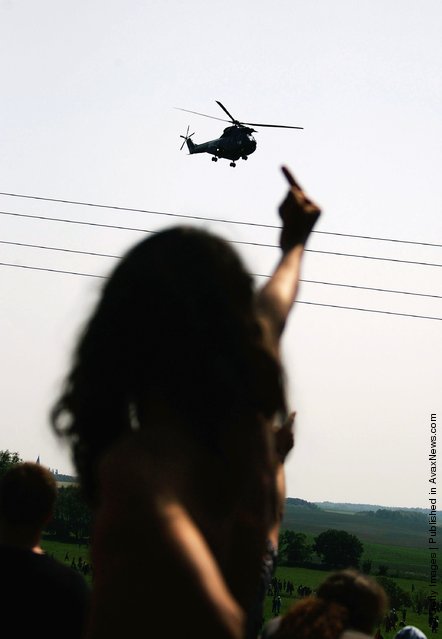
An activist of the anti-G8 forum 'Block G8' shows his middle finger to a police helicopter passing overhead

An activist of the anti-G8 forum “Block G8” shows his middle finger to a police helicopter passing overhead June 07, 2007 at Bollhagen, near Heiligendamm, Germany. (Photo by Carsten Koall/Getty Images)
Details
27 Dec 2011 15:40:00
Members of the Gafatar sect walk in the rain as they evacuate their compound, which was later burned down by local villagers, in Antibar village, Mempawah Regency, Indonesia West Kalimantan Province, January 19, 2016 in this photo taken by Antara Foto. Local authorities and police moved the sect members to an army barracks located some 70 km (43 miles) away from Antibar for their safety following recent disputes between the sect and the villagers, Antara said on Tuesday. (Photo by Jessica Helena Wuysang/Reuters/Antara Foto)


Members of the Gafatar sect walk in the rain as they evacuate their compound, which was later burned down by local villagers, in Antibar village, Mempawah Regency, Indonesia West Kalimantan Province, January 19, 2016 in this photo taken by Antara Foto. Local authorities and police moved the sect members to an army barracks located some 70 km (43 miles) away from Antibar for their safety following recent disputes between the sect and the villagers, Antara said on Tuesday. (Photo by Jessica Helena Wuysang/Reuters/Antara Foto)
Details
20 Jan 2016 13:24:00
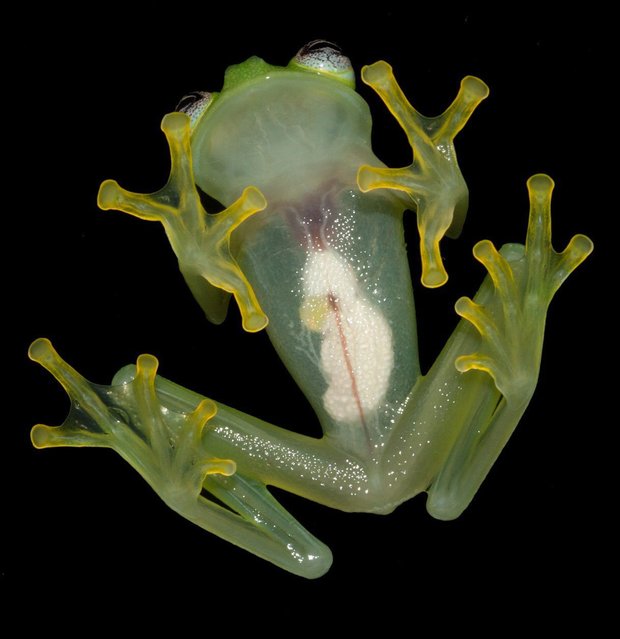
A handout photograph provided by Brian Kubicki of Costa Rican Amphibian Research Center on 26 April 2016 shows a “Crystal frog”, Hyalinobatrachium dianae (H. diane). This frog was discovered by US biologist Brian Kubicki and Costa Ricans Stanley Salazar and Robert Puschendorf in a rainy forest of Costa Rican caribbean after 40 years without notice of any new example of this kind. (Photo by Brian Kubicki/EPA/Costa Rican Amphibian Research Center)

A handout photograph provided by Brian Kubicki of Costa Rican Amphibian Research Center on 26 April 2016 shows a “Crystal frog”, Hyalinobatrachium dianae (H. diane). This frog was discovered by US biologist Brian Kubicki and Costa Ricans Stanley Salazar and Robert Puschendorf in a rainy forest of Costa Rican caribbean after 40 years without notice of any new example of this kind. (Photo by Brian Kubicki/EPA/Costa Rican Amphibian Research Center)
Details
02 May 2015 15:23:00
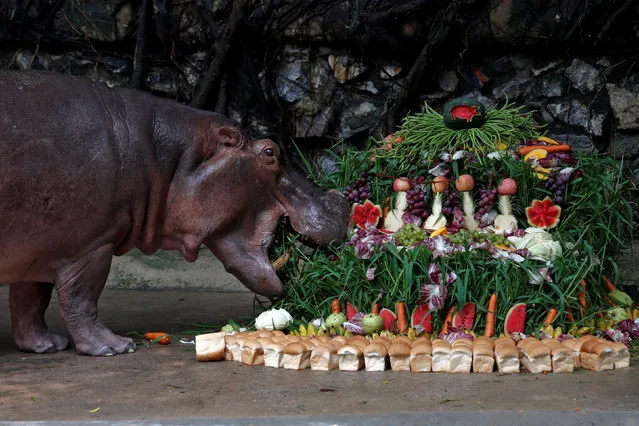
A female hippopotamus named “Mali”, which means Jasmine, eats fruits arranged to look like a cake during her 50th birthday celebration at Dusit Zoo in Bangkok, Thailand September 23, 2016. (Photo by Chaiwat Subprasom/Reuters)

A female hippopotamus named “Mali”, which means Jasmine, eats fruits arranged to look like a cake during her 50th birthday celebration at Dusit Zoo in Bangkok, Thailand September 23, 2016. (Photo by Chaiwat Subprasom/Reuters)
Details
25 Sep 2016 07:06:00
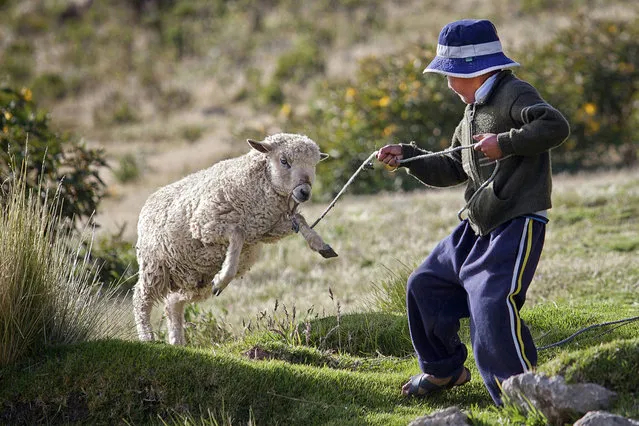
“The Challenge!” Young boy relishes in a game of tug of war before school. Photo location:  Lake Titicaca, Peru. (Photo and caption by Paul Heyman/National Geographic Photo Contest)

“The Challenge!” Young boy relishes in a game of tug of war before school. Photo location: Lake Titicaca, Peru. (Photo and caption by Paul Heyman/National Geographic Photo Contest)
Details
18 Jun 2014 12:40:00
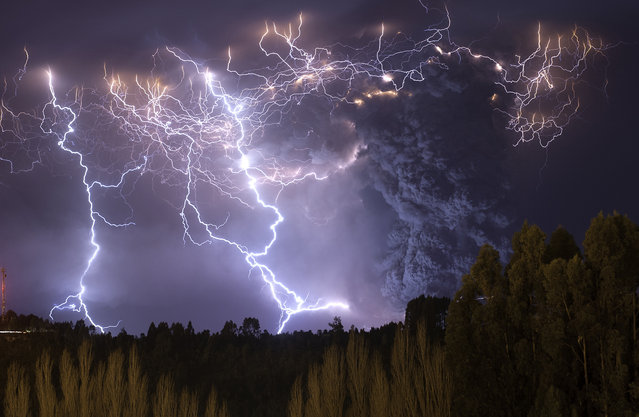
The eruption of Cordon Caulle began on June 4, 2011, located in the Region of Los Rios in Chile. For about 12 months, people and animals became accustomed to living with the daily fall of ash, which also caused problems in the air traffic in South America. The explosions and lightning during first days of the eruption could be seen from hundreds of miles around. This photograph was taken on the second night of eruption from the town of Lago Ranco. (Photo and caption by Francisco Negroni/National Geographic Traveler Photo Contest)

The eruption of Cordon Caulle began on June 4, 2011, located in the Region of Los Rios in Chile. For about 12 months, people and animals became accustomed to living with the daily fall of ash, which also caused problems in the air traffic in South America. The explosions and lightning during first days of the eruption could be seen from hundreds of miles around. This photograph was taken on the second night of eruption from the town of Lago Ranco. (Photo and caption by Francisco Negroni/National Geographic Traveler Photo Contest)

ATTENTION! All pictures are presented in high resolution. To see Hi-Res images – just TWICE click on any picture. In other words, click small picture – opens the BIG picture. Click BIG picture – opens VERY BIG picture.
Details
23 Jun 2013 11:24:00
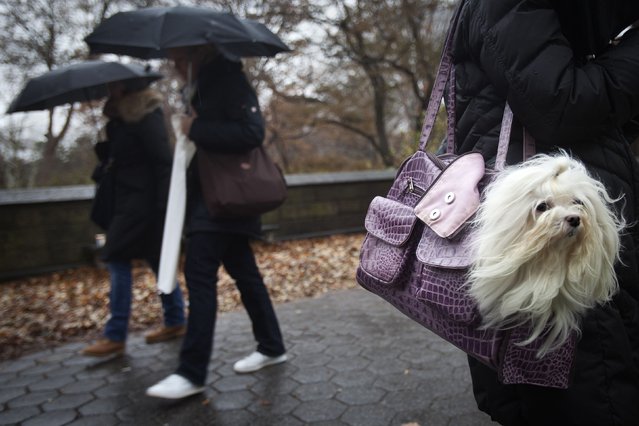
Emma the Maltese's fur blows in the wind as she rides in her owner's purse on 5th Avenue at Central Park in New York December 2, 2014. (Photo by Carlo Allegri/Reuters)

Emma the Maltese's fur blows in the wind as she rides in her owner's purse on 5th Avenue at Central Park in New York December 2, 2014. (Photo by Carlo Allegri/Reuters)
Details
06 Dec 2014 13:07:00