Loading...
Done
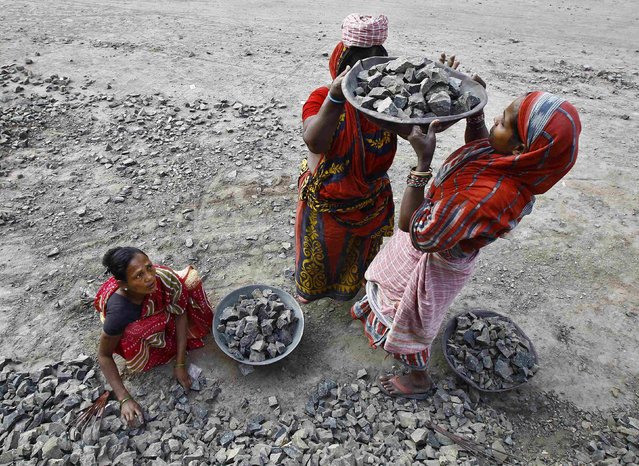
Women labourers work at the construction site of a road in Kolkata January 8, 2015. Across towns and cities in India, it is not uncommon to see women cleaning building sites, carrying bricks and or shoveling gravel - helping construct the infrastructure necessary for the country's economic and social development. (Photo by Rupak De Chowdhuri/Reuters)

Women labourers work at the construction site of a road in Kolkata January 8, 2015. Across towns and cities in India, it is not uncommon to see women cleaning building sites, carrying bricks and or shoveling gravel – helping construct the infrastructure necessary for the country's economic and social development. They help build roads, railway tracks, airports, and offices. They lay pipes for clean water supplies, cables for telecommunications, and dig the drains for sewage systems. But although women make up at least 20 percent of India's 40 million construction workers, they are less recognized than male workers with lower pay and often prone to safety hazards and sexual harassment. They are often unaware of their rights or scared to complain, say activists now trying to campaign for better treatment of women in the construction industry. (Photo by Rupak De Chowdhuri/Reuters)
Details
15 Jan 2015 13:47:00
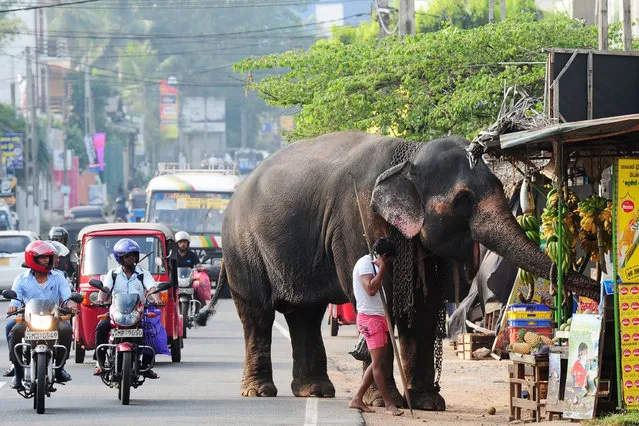
A Sri Lankan elephant, accompanied by his mahout, browse through a roadside fruit stall in Colombo on January 19, 2015. The Sri Lankan elephant is listed as endangered by the International Union for Conservation of Nature (IUCN) as the population has declined by at least 50 percent over the last three generations, with the species threatened by habitat loss, degradation and fragmentation. (Photo by Lakruwan Wanniarachchi/AFP Photo)

A Sri Lankan elephant, accompanied by his mahout, browse through a roadside fruit stall in Colombo on January 19, 2015. The Sri Lankan elephant is listed as endangered by the International Union for Conservation of Nature (IUCN) as the population has declined by at least 50 percent over the last three generations, with the species threatened by habitat loss, degradation and fragmentation. (Photo by Lakruwan Wanniarachchi/AFP Photo)
Details
23 Jan 2015 13:21:00
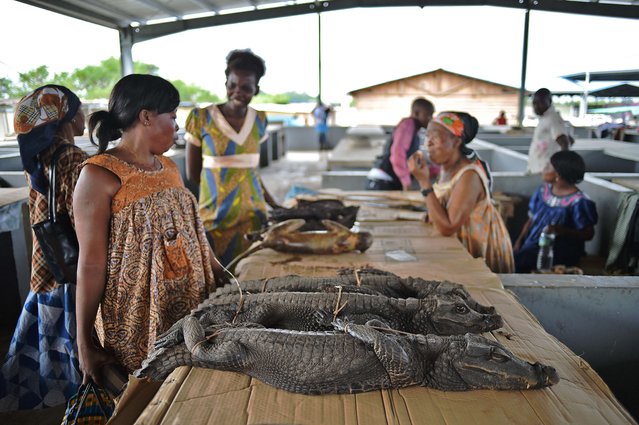
Shoppers walk past crocodiles for sale at a market in Bata on February 3, 2015. Markets in Equatorial Guinea sell a variety of animals including pangolins, monkeys and crocodiles as food. (Photo by Carl De Souza/AFP Photo)

Shoppers walk past crocodiles for sale at a market in Bata on February 3, 2015. Markets in Equatorial Guinea sell a variety of animals including pangolins, monkeys and crocodiles as food. (Photo by Carl De Souza/AFP Photo)
Details
07 Feb 2015 14:33:00
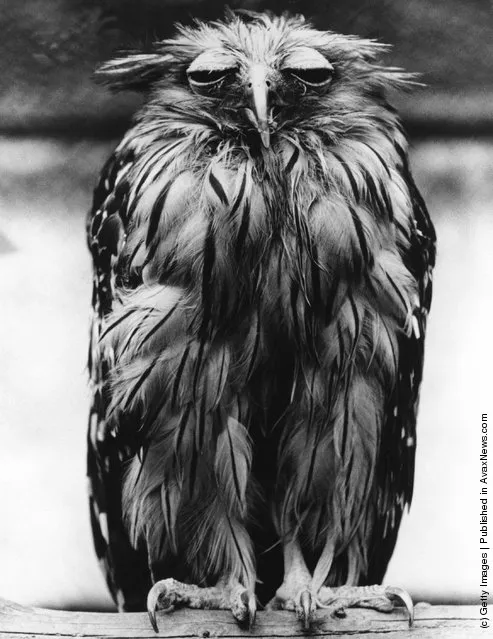
1973: A tired-looking Javan Fish Owl

A tired-looking Javan Fish Owl. (Photo by Fox Photos/Getty Images). 5th December 1973
Details
13 Oct 2011 11:33:00
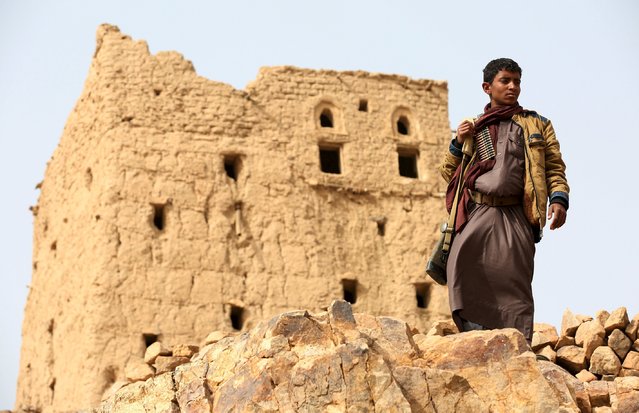
A tribal fighter loyal to Yemen's government stands in Al Khurais village of Nihm district east of the capital Sanaa January 11, 2016. (Photo by Ali Owidha/Reuters)

A tribal fighter loyal to Yemen's government stands in Al Khurais village of Nihm district east of the capital Sanaa January 11, 2016. (Photo by Ali Owidha/Reuters)
Details
13 Jan 2016 08:01:00
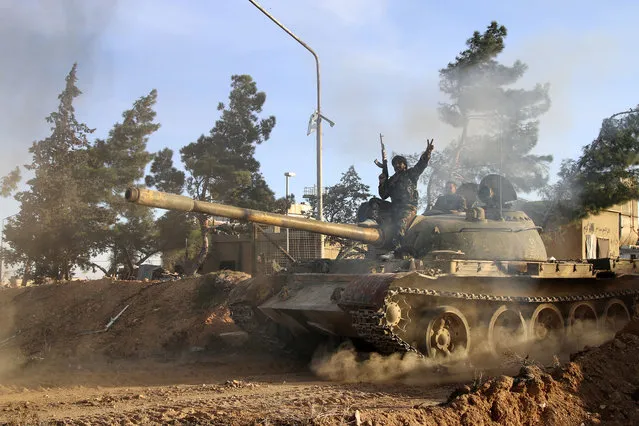
In this photo taken on Wednesday, February 17, 2016, a volunteer fighter with the Syrian Government forces sits atop a tank in the province of Raqqa, Syria. In recent weeks, Syrian government forces captured dozens of villages and towns across the country. (Photo by Alexander Kots/Komsomolskaya Pravda via AP Photo)

In this photo taken on Wednesday, February 17, 2016, a volunteer fighter with the Syrian Government forces sits atop a tank in the province of Raqqa, Syria. In recent weeks, Syrian government forces captured dozens of villages and towns across the country. (Photo by Alexander Kots/Komsomolskaya Pravda via AP Photo)
Details
22 Feb 2016 09:35:00
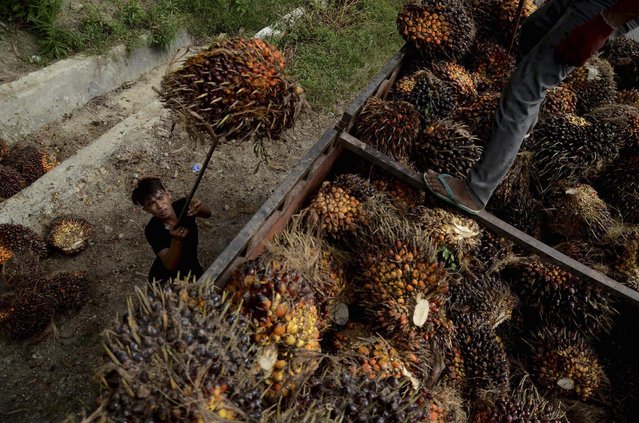
A worker loads palm fruit at a palm oil plantation in North Mamuju regency, West Sulawesi province, Indonesia March 10, 2016 in this photo taken by Antara Foto. (Photo by Sahrul Manda Tikupadang/Reuters/Antara Foto)

A worker loads palm fruit at a palm oil plantation in North Mamuju regency, West Sulawesi province, Indonesia March 10, 2016 in this photo taken by Antara Foto. (Photo by Sahrul Manda Tikupadang/Reuters/Antara Foto)
Details
13 Mar 2016 09:22:00
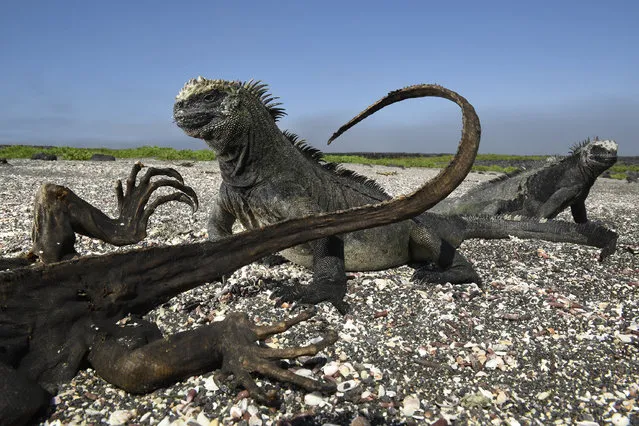
Galapagos – Rocking the Cradle: Four major ocean currents converge along the Galapagos archipelago, creating the conditions for an extraordinary diversity of animal life, April 25, 2016. The islands are home to at least 7,000 flora and fauna species, of which 97 percent of the reptiles, 80 percent of the land birds, 50 percent of the insects and 30 percent of the plants are endemic. The local ecosystem is highly sensitive to the changes in temperature, rainfall and ocean currents that characterize the climatic events known as El Niño and La Niña. These changes cause marked fluctuations in weather and food availability. Many scientists expect the frequency of El Niño and La Niña to increase as a result of climate change, making the Galapagos a possible early-warning location for its effects. (Photo by Thomas P. Peschak for National Geographic/World Press Photo)

Galapagos – Rocking the Cradle: Four major ocean currents converge along the Galapagos archipelago, creating the conditions for an extraordinary diversity of animal life, April 25, 2016. The islands are home to at least 7,000 flora and fauna species, of which 97 percent of the reptiles, 80 percent of the land birds, 50 percent of the insects and 30 percent of the plants are endemic. (Photo by Thomas P. Peschak for National Geographic/World Press Photo)
Details
16 Apr 2018 00:01:00