Loading...
Done
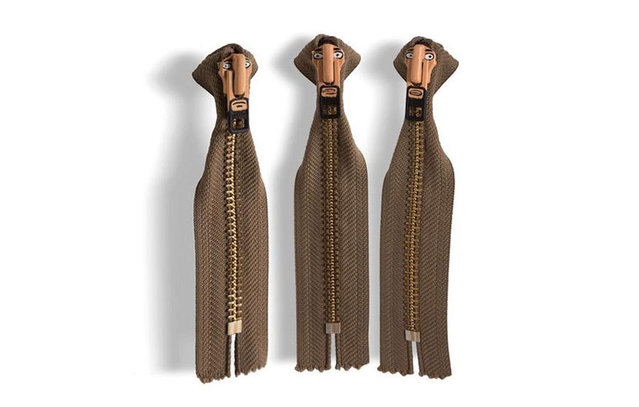
Everyday Objects Into Cute Characters By Gilbert Legrand Part 1

French artist Gilbert Legrand’s new series takes everyday objects like corkscrews, tape measures, and more and turns them into hilariously cute characters that almost make you forget their original purpose. Skillfully using each object’s natural shape, he crafts a character full of whimsy and personality. Each is painted to detail, with even the tiniest of characters bearing an expression which leaves no doubt as to their feelings about the situation. It truly takes a talented hand and imagination to turn paint brushes and zippers into humorous characters with surprisingly huge personalities.


See Also: Psrt 2 _ Part 3
Details
08 Jul 2014 10:29:00
Labourers pour molten iron into a container at a foundry in Xiangfan, Hubei province in this July 2, 2010 file photo. Iron ore is enjoying its biggest rally in years, outpacing copper and oil so far in 2016, but still weak forward prices show it may be tough to stretch the bullish outlook. Improving steel prices in top market China are helping fuel iron ore's climb as producers gear up for a seasonal uptick in demand. (Photo by Reuters/Stringer)

Labourers pour molten iron into a container at a foundry in Xiangfan, Hubei province in this July 2, 2010 file photo. Iron ore is enjoying its biggest rally in years, outpacing copper and oil so far in 2016, but still weak forward prices show it may be tough to stretch the bullish outlook. Improving steel prices in top market China are helping fuel iron ore's climb as producers gear up for a seasonal uptick in demand. Yet there is no shortage of doubters who see gains in the bulk commodity as fleeting given a large glut and challenges for China's economy. (Photo by Reuters/Stringer)
Details
24 Feb 2016 12:41:00
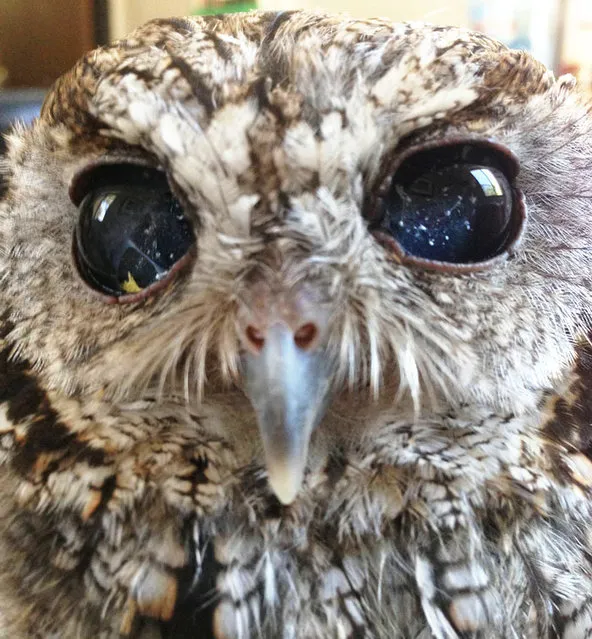
The Blind Owl With Stars Eyes

When you gaze into the eyes of this beautiful creature, you can almost make out constellations forming deep within. The name of this magnificent bird is Zeus, named after the Greek god of the sky for her one-of-a-kind eyes. The reason why she has such eyes is because she is blind. She was saved by a family in Southern California, when they found her injured on their front porch. After realizing that this poor creature is blind and unable to take care of itself, they took her to an animal hospital. After she healed up, everyone agreed that she should be sent to the Wildlife Learning Center. From that point on, Zeus has been happily living in the center. And though she cannot see, you can bet that her other senses are ten times as sharp. (Photo by Wildlife Learning Center)
Details
24 Nov 2014 13:31:00
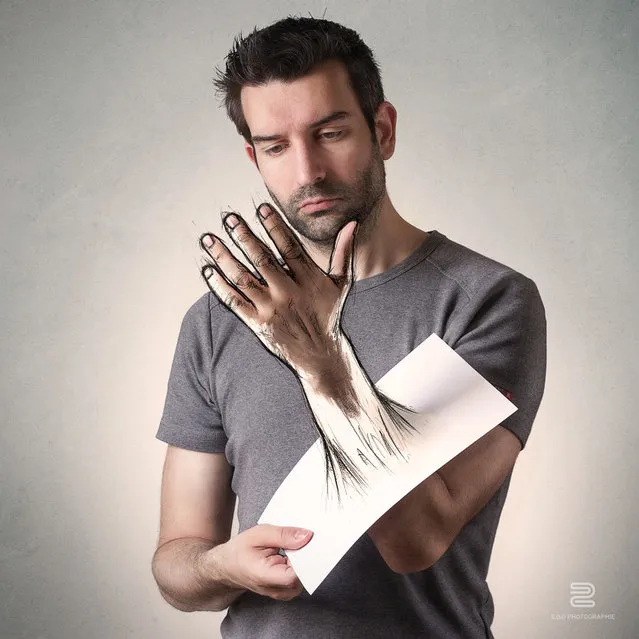
The Sketch Of A Life By Sebastien Del Grosso

Sébastien Del Grosso is a French artist and a photographer, who will allow you to enter the world of surrealism, which combines photography and hand-drawn art. His works masterfully blur the transition between the real photo and the picture. By viewing his works, we can see that Sébastien is not only a master of creating photo illusions, but also a person who tries to show his inner world through his art. His emotions, his feelings, his fears and desires are all vividly and skillfully expressed in simple strokes of a pencil. He is the continuation of his art. So much so, that he loses his identity, fearing it, but being unable to stop. (Photo by Sébastien Del Grosso)
Details
02 Dec 2014 12:11:00
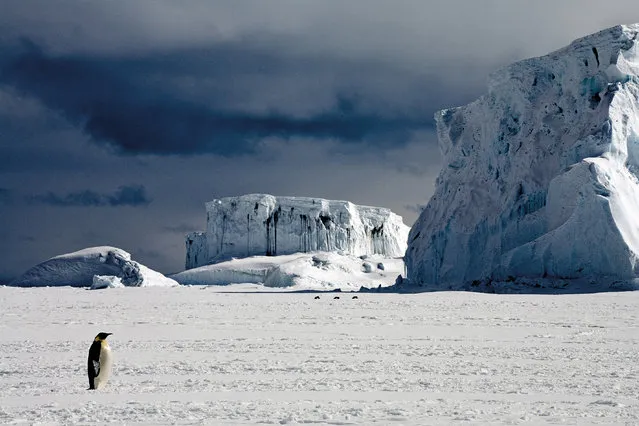
Image from Camille Seamans new book, “Melting Away”. (Photo by Camille Seaman/Barcroft Media)

Documenting the effects of climate change first hand over the past eight years, Camille Seaman fears we may be on the road to the last iceberg. Photographing the enormous frozen floats at both poles for the past eight years, the Californian adventurer has seen the receding ice shelves and experienced the changing warmer weather. Feeling that her intimate and emotional work documents a snapshot of history, Camille presents her series “The Last Iceberg” as a study of what she sees as the personality of each huge iceberg. Drawing parallels with the famous novel, “The Last of the Mohicans”, Camille, 42, wonders whether these unique, almost alien natural features will become a thing of the past or part of nature's renewal process. (Photo by Camille Seaman/Barcroft Media)
Details
02 Dec 2014 12:10:00
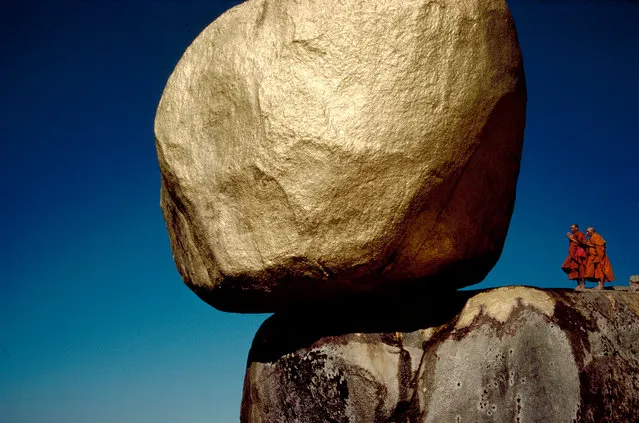
Kyaiktiyo, Burma, 1978. The Golden Rock at Shwe Pyi Daw (the Golden Country), the Buddhist holy place. Hiroji Kubota writes: “I was desperate to keep a distance from America for a while; luckily, I found Burma and its gentle and compassionate people. In the spring of 1978, on the top of the hill where I took this photo, I had two Leica bodies: the one with Tri-X and the other with Kodachrome 64. Soon after, I realised that the colour one looked very colourful and was more powerful. That was my decisive moment, to become a colour photographer”. (Photo by Hiroji Kubota/Magnum Photos)

Kyaiktiyo, Burma, 1978. The Golden Rock at Shwe Pyi Daw (the Golden Country), the Buddhist holy place. Hiroji Kubota writes: “I was desperate to keep a distance from America for a while; luckily, I found Burma and its gentle and compassionate people. In the spring of 1978, on the top of the hill where I took this photo, I had two Leica bodies: the one with Tri-X and the other with Kodachrome 64. Soon after, I realised that the colour one looked very colourful and was more powerful. That was my decisive moment, to become a colour photographer”. (Photo by Hiroji Kubota/Magnum Photos)
Details
10 Jun 2016 13:30:00
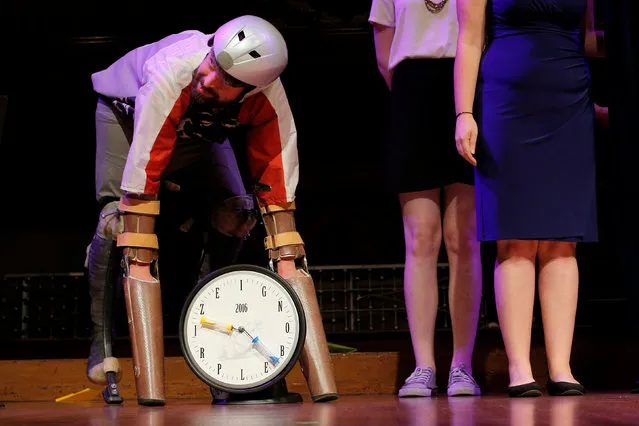
Thomas Thwaites of the United Kingdom accepts the 2016 Ig Nobel Prize in Biology for “creating prosthetic extensions of his limbs that allowed him to move in the manner of, and spend time roaming the hills in the company of, goats” during the 26th First Annual Ig Nobel Prize ceremony at Harvard University in Cambridge, Massachusetts, U.S. September 22, 2016. (Photo by Brian Snyder/Reuters)

Thomas Thwaites of the United Kingdom accepts the 2016 Ig Nobel Prize in Biology for “creating prosthetic extensions of his limbs that allowed him to move in the manner of, and spend time roaming the hills in the company of, goats” during the 26th First Annual Ig Nobel Prize ceremony at Harvard University in Cambridge, Massachusetts, U.S. September 22, 2016. (Photo by Brian Snyder/Reuters)
Details
24 Sep 2016 10:46:00
Ocean voyage

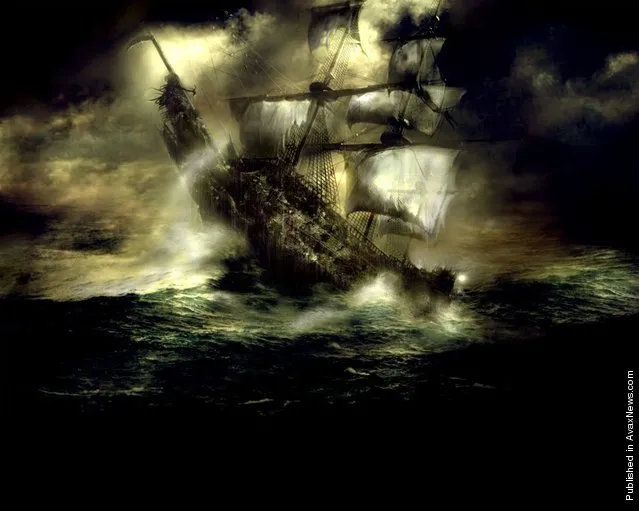
Do you think that history is a science? Well, not exactly. First, and foremost, history is the state's “legend of wars”, it’s official regalia. Of course, public historians are not interested in scientific truth – quite the opposite. In this respect, any attempt to present a state’s history as altruistic and benevolent as possible is welcomed and encouraged – as opposed to any revisionism attempts that may be more accurate. In this matter, Chinese have surpassed us all – they revised in highly creative manner (but rather shamelessly) the technology already invented by Europeans, a process that resulted in oldest state on the planet. Here is an interesting paradox: ask any sinologist about the Middle Kingdom during second century B.C., and he will describe it to you in such a vivid manner as if he has been living there all his life – but as soon as you will ask him to describe Chinese history in the 19-20th centuries… let's say, his eagerness will be greatly diminished. However, we will discuss China in a different article, and in the meantime we will try to understand how exactly historic “legend of wars” is formed and functions – based on a specific and well-known example. A great example is Ferdinand Magellan's first voyage around the world.
Details
14 Nov 2011 09:11:00