Loading...
Done
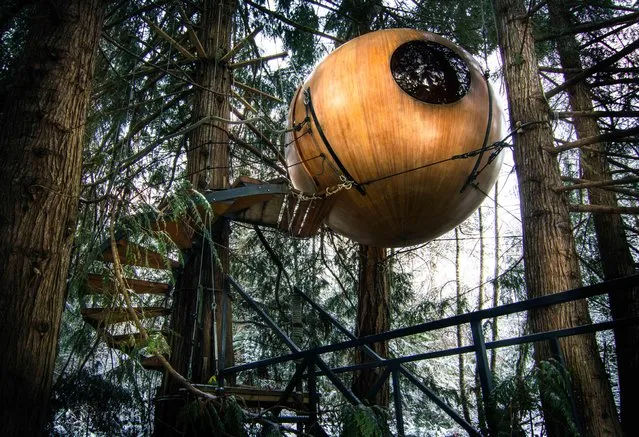
Eryn, owned by Tom Chudleigh in Canada. New global research has revealed that ‘shed-scapism’ is sweeping the world with more people than ever ditching their tools and transforming their sheds into zen dens. The research comes as the Cuprinol Shed of the Year competition joins forces with aspirational shed fan site, Cabin p*rn, to launch the first ever global category. We have a stunning suite of imagery of 9 sheds from across the world - from Norway to Slovenia, British Colombia to Colorado who have all submitted their sheds in the hopes of being crowned the first ever Global Shed of the Year. (Photo by Cuprinol/Rex Features/Shutterstock)

Eryn, owned by Tom Chudleigh in Canada. New global research has revealed that ‘shed-scapism’ is sweeping the world with more people than ever ditching their tools and transforming their sheds into zen dens. The research comes as the Cuprinol Shed of the Year competition joins forces with aspirational shed fan site, Cabin p*rn, to launch the first ever global category. We have a stunning suite of imagery of 9 sheds from across the world - from Norway to Slovenia, British Colombia to Colorado who have all submitted their sheds in the hopes of being crowned the first ever Global Shed of the Year. (Photo by Cuprinol/Rex Features/Shutterstock)
Details
15 Mar 2017 00:02:00
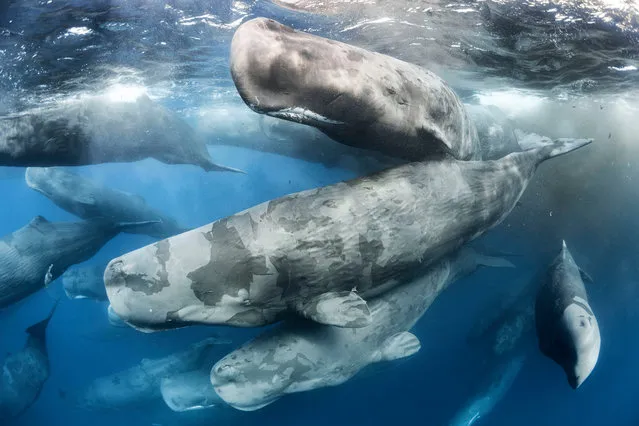
Behaviour: Mammals category. Giant Gathering by Tony Wu, USA. Dozens of sperm whales mingled noisily off Sri Lanka’s northeast coast, stacked as far down as Tony could see. This was a congregation of dozens of social units, like a gathering of the clans. Aggregations like this could be a critical part of the whales’ rich social lives but are rarely reported. Some two thirds of the population was wiped out before commercial whaling was banned in 1986. This kind of major gathering could be “a sign that populations are recovering”, says Tony. (Photo by Tony Wu/Wildlife Photographer of the Year 2017)

Behaviour: Mammals category. Giant Gathering by Tony Wu, USA. Dozens of sperm whales mingled noisily off Sri Lanka’s northeast coast, stacked as far down as Tony could see. This was a congregation of dozens of social units, like a gathering of the clans. Aggregations like this could be a critical part of the whales’ rich social lives but are rarely reported. Some two thirds of the population was wiped out before commercial whaling was banned in 1986. This kind of major gathering could be “a sign that populations are recovering”, says Tony. (Photo by Tony Wu/Wildlife Photographer of the Year 2017)
Details
19 Oct 2017 09:38:00
Taylor's sister, who works in an animal rescue center, found this baby jackdaw who was in need of a little extra love and attention before being released into the wild

Mark Taylor may not have any training as a photographer, but that doesn’t stop him from taking amazing animal photos. From his studio in Southeast England, Taylor has made a big business out of photographing man’s best friends, following in the footsteps of his late mother, Jane Burton. Most of the animals he works with are babies, who are more comfortable in front of the camera than older animals.

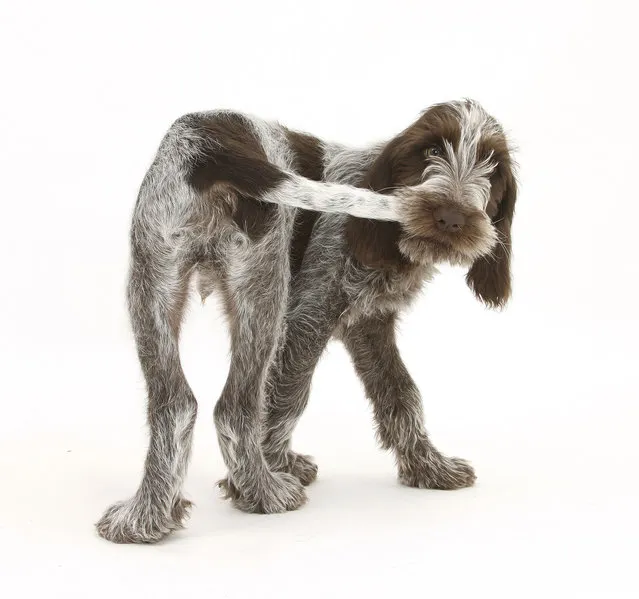
Photo: Taylor often uses animals that belonged to friends of his late mother, including this Italian Spinone puppy chewing his tail. Baby animals make ideal subjects, as the older dogs and cats get, the warier they are of spending time in a studio. And his trick for getting this small subject to pose? Dog treats, of course. (Photo by Mark Taylor/Rex Features)
Details
27 Apr 2012 13:45:00
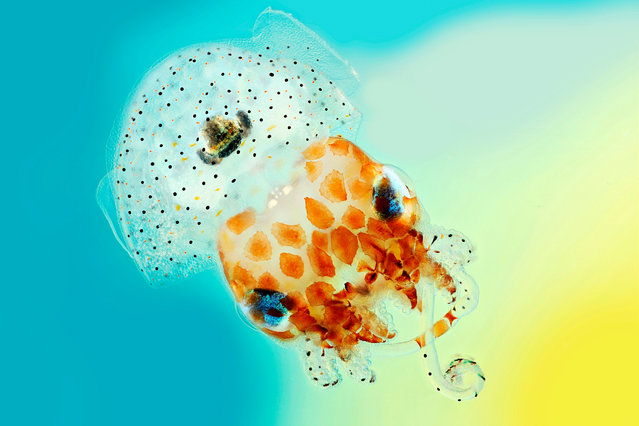
With its huge eyes, comical name and diminutive size, Mark R. Smith’s image of a baby Hawaiian bobtail squid can’t help but raise a smile. A curiously endearing creature, the cephalopod is just 1.5cm across, its mantle cavity bearing more than a passing resemblance to a rather natty shower cap. But it is also a beautiful example of symbiosis – nature’s version of “I’ll scratch your back if you scratch mine” – for on the underside of the squid is a light organ which houses bioluminescent bacteria. The squid offers the bacteria protection and food, while the bacteria emit a glow – a handy trait that the squid uses to offset its silhouette, helping it to evade predators in the depths below. Mark R. Smith’s entry combines several images of a Hawaiian bobtail squid with different focus lengths to create a final picture with greater depth of field than normal. (Photo by Mark R. Smith/Wellcome Images/Macroscopic Solutions)

With its huge eyes, comical name and diminutive size, Mark R. Smith’s image of a baby Hawaiian bobtail squid can’t help but raise a smile. A curiously endearing creature, the cephalopod is just 1.5cm across, its mantle cavity bearing more than a passing resemblance to a rather natty shower cap. But it is also a beautiful example of symbiosis – nature’s version of “I’ll scratch your back if you scratch mine” – for on the underside of the squid is a light organ which houses bioluminescent bacteria. The squid offers the bacteria protection and food, while the bacteria emit a glow – a handy trait that the squid uses to offset its silhouette, helping it to evade predators in the depths below. Mark R. Smith’s entry combines several images of a Hawaiian bobtail squid with different focus lengths to create a final picture with greater depth of field than normal. (Photo by Mark R. Smith/Wellcome Images/Macroscopic Solutions)
Details
08 Mar 2017 00:05:00
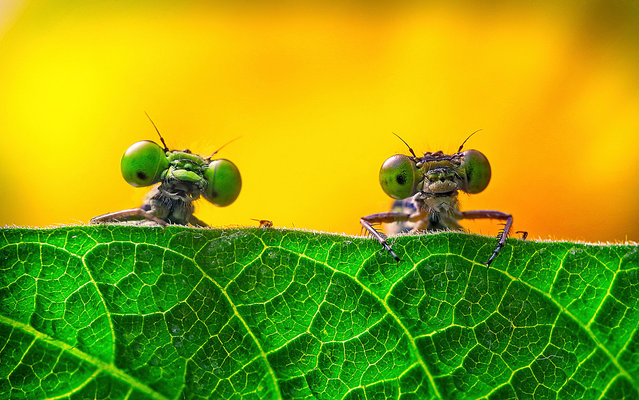
Shortlisted: “Two big eyes” by Miao Yong (Zejiang province, China). Damselflies look over the leaves. “I was photographing insects in a park near my home when suddenly I found two damselflies in the grass. They kept flying and it was very difficult to focus until suddenly they parked behind a leaf”. (Photo by Miao Yong/2017 Royal Society of Biology Photographer of the Year)

Shortlisted: “Two big eyes” by Miao Yong (Zejiang province, China). Damselflies look over the leaves. “I was photographing insects in a park near my home when suddenly I found two damselflies in the grass. They kept flying and it was very difficult to focus until suddenly they parked behind a leaf”. (Photo by Miao Yong/2017 Royal Society of Biology Photographer of the Year)
Details
16 Oct 2017 09:04:00
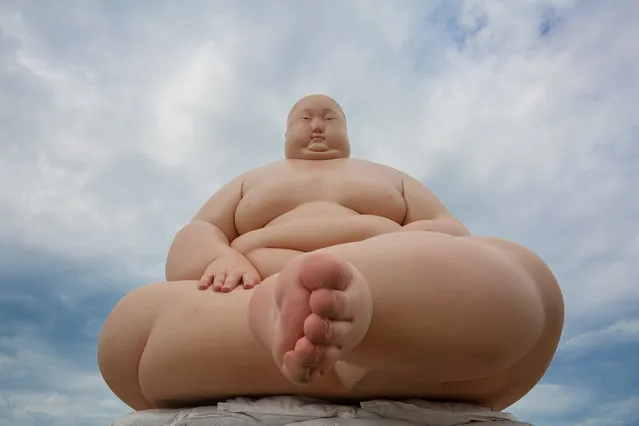
The Sculpture Bank (2017) by Chinese artist Mu Boyan is exhibited along the Bondi to Tamarama Coastal walk as part of the Sculpture by the Sea exhibition in Sydney, Australia, October 18, 2018. (Photo by Charlotte Curd/The Guardian)

The Sculpture Bank (2017) by Chinese artist Mu Boyan is exhibited along the Bondi to Tamarama Coastal walk as part of the Sculpture by the Sea exhibition in Sydney, Australia, October 18, 2018. (Photo by Charlotte Curd/The Guardian)
Details
23 Oct 2018 21:39:00
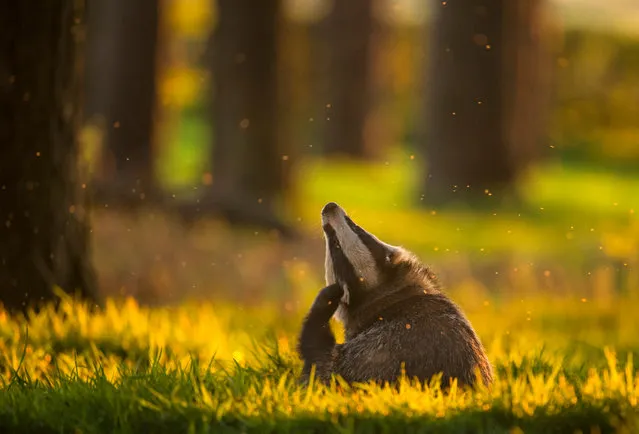
Andrew Parkinson, animal behaviour category winner: Crepuscular Contentment, Derbyshire. “In 15 years of working with badgers I’ve never seen a badger sit out in the open to have a scratch. I was sat concealed behind a tree and downwind so it was especially nice that the badger had his back to me, demonstrating just how inconspicuous and inconsequential my presence was”. (Photo by Andrew Parkinson/British Wildlife Photography Awards 2017)

Andrew Parkinson, animal behaviour category winner: Crepuscular Contentment, Derbyshire. “In 15 years of working with badgers I’ve never seen a badger sit out in the open to have a scratch. I was sat concealed behind a tree and downwind so it was especially nice that the badger had his back to me, demonstrating just how inconspicuous and inconsequential my presence was”. (Photo by Andrew Parkinson/British Wildlife Photography Awards 2017)
Details
10 Nov 2017 09:01:00
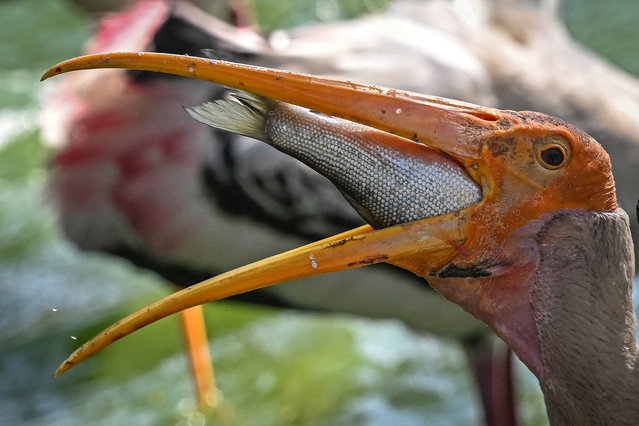
A painted stork eats a fish as it is pictured in the Delhi Zoo in New Delhi on December 5, 2024. (Photo by Sajjad Hussain/AFP Photo)

A painted stork eats a fish as it is pictured in the Delhi Zoo in New Delhi on December 5, 2024. (Photo by Sajjad Hussain/AFP Photo)
Details
15 Dec 2024 02:32:00