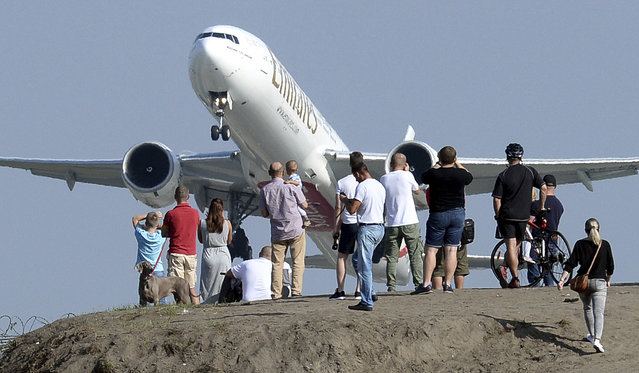
People gather on a hill near the Chopin Airport to watch aeroplanes taking off, in Warsaw, Poland, Sunday, September 9, 2018. (Photo by Alik Keplicz/AP Photo)
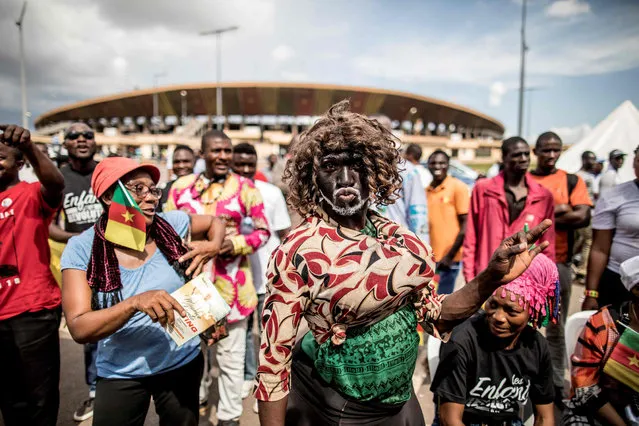
A performer entertains the crowd during a rally in support of the leader of the Cameroonian opposition party Movement for the Rebirth of Cameroon (MRC) in Yaounde, on September 30, 2018, prior to the upcoming October 7, presidential elections. (Photo by Marco Longari/AFP Photo)
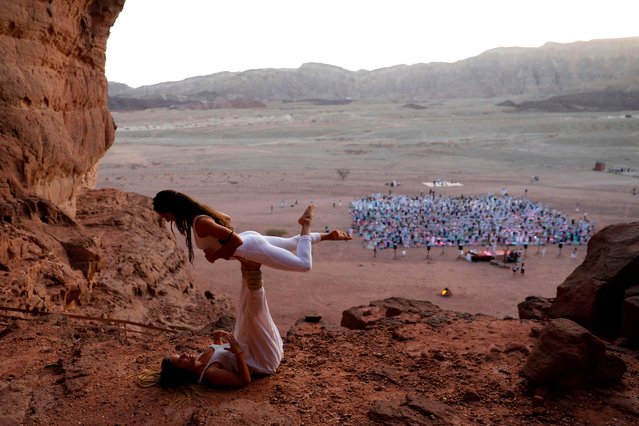
Yogis, Israeli and foreigners, participate in the Arava Yoga Annual festival at the ancient copper mines area of the Timna Valley, in the southern Arava region of Israel, north of Eilat on November 2, 2018. (Photo by Menahem Kahana/AFP Photo)
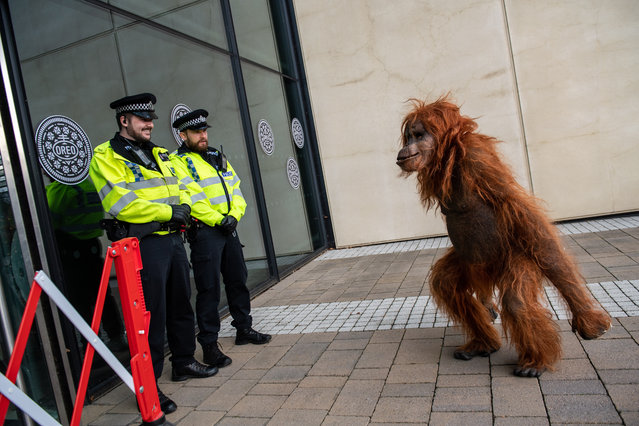
Police officers laugh as Greenpeace activists create a burnt smoldering rain-forest with a lifelike animatronic orangutan at the headquarters of Oreo cookies, in protest over their use of palm oil on November 19, 2018 in Uxbridge, England. Greenpeace is calling on the makers of Oreo to stop buying palm oil from Wilmar, the largest palm oil producer, who they say have destroyed 70,000 hectares of Indonesian rain forest in the last two years. (Photo by Chris J. Ratcliffe for Greenpeace via Getty Images)
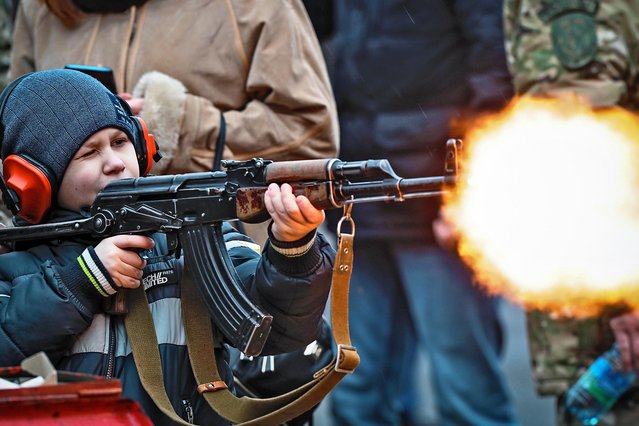
A boy fires blanks from a Kalashnikov rifle, during Maslenitsa celebrations, or Shrovetide, to say farewell to winter in Minsk, Belarus, Sunday, March 1, 2020. Maslenitsa is a traditional Russian and Belarusian holiday marking the end of winter that dates back to pagan times. (Photo by Sergei Grits/AP Photo)
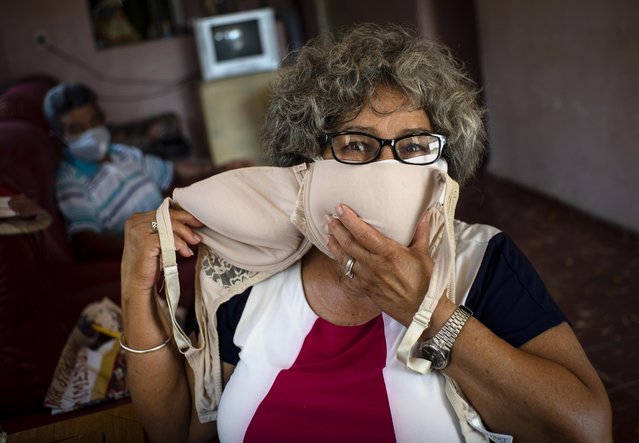
Idania Espanola, 63, poses for a photo showing a bra that she will adapt into two face masks, amid the spread of the new coronavirus in Cojimar, Cuba, east of Havana, Tuesday, March 31, 2020. (Photo by Ramon Espinosa/AP Photo)
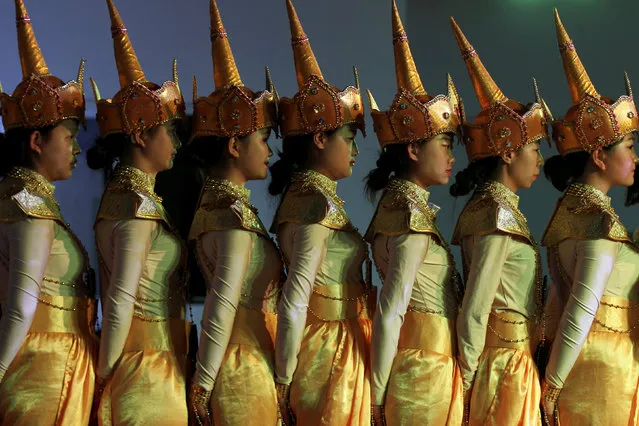
Deaf and hard of hearing people perform a Buddhist Guanyin Thousand Hand dance to mark Sunday's National Day for Helping the Disabled in Yunnan, Kunming province, China on May 19, 2018. (Photo by Wong Campion/Reuters)