Loading...
Done
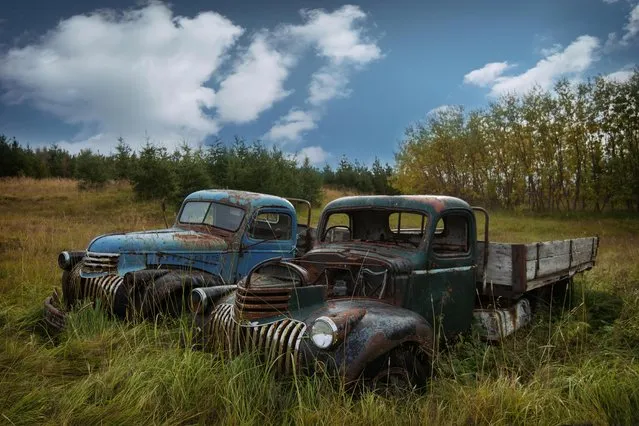
1941 Chevrolet 1.5 tonnes are left to rot in a field. (Photo by Robert Kahl/Mediadrumworld)

Feast your eyes on Europe’s most spectacular car graveyards as discovered by one auto-obsessed explorer who has dedicated over ten years to finding the best cars left to rot in the European wilderness. The beautiful set of images were taken in Germany, Sweden and Belgium by German Civil Servant Robert Kahl (30) using a Nikon D7100. He describes his photographs as showcasing “the beauty of transience and decayed charm”. Here: 1941 Chevrolet 1.5 tonnes are left to rot in a field. (Photo by Robert Kahl/Mediadrumworld)
Details
01 Mar 2017 00:04:00
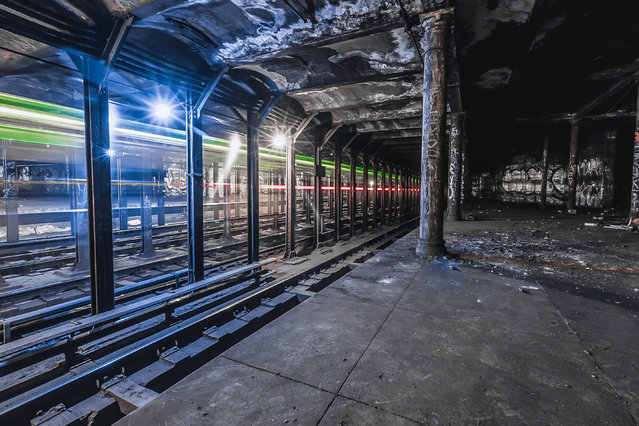
At the dead of night, the photographer – known to his Instagram followers as Dark Cyanide – heads out to look for hidden gems, like abandoned stations, provisions and tunnels. His intriguing images feature vibrant streaks, graffiti, and tight framing – and by adding individuals to some to some of shots, he is also able to depict the incredible scale of some of the tunnels. The photographer, 19, admitted what he and his friends do is highly dangerous, illegal, and he does not recommend others attempt to explore such tunnels. Here: Unnamed subway track in New York City. (Photo by Dark Cyanide/Caters News)

At the dead of night, the photographer – known to his Instagram followers as Dark Cyanide – heads out to look for hidden gems, like abandoned stations, provisions and tunnels. His intriguing images feature vibrant streaks, graffiti, and tight framing – and by adding individuals to some to some of shots, he is also able to depict the incredible scale of some of the tunnels. Here: Unnamed subway track in New York City. (Photo by Dark Cyanide/Caters News)
Details
29 Jan 2016 12:45:00
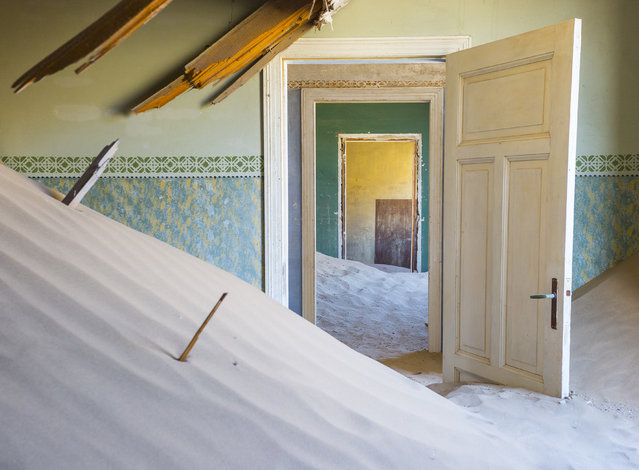
Kolmankop, an abandoned mining town in Namibia. (Photo by David Ogden/Caters News)

These sand-swept images show the ghostly remains of what was once a mineral-rich mining community. In its heyday, the town of Kolmanskop, Namibia, was home to about 700 families. Now all that remains are empty homes filled with sand, while cast-off items such as bathtubs are scattered about the surrounding area. Over time, the sand of the stunning dunes that encircle the town of Kolmanskop has been blown towards the abandoned residences, coating everything from streets to the interiors of houses and workshops. Here: Kolmankop, an abandoned mining town in Namibia. (Photo by David Ogden/Caters News)
Details
13 Mar 2016 09:31:00
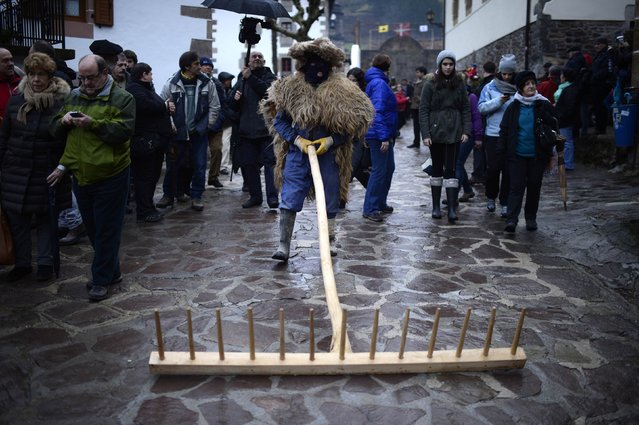
A man walks with a giant rake during carnival celebrations in Zubieta January 27, 2015. Bell carrying dancers known as Joaldunak from Zubieta and neighbouring Ituren visit each other's villages performing a ritual dance to ward off evil spirits and awaken the coming spring. Alongside the dancers, villagers dress in bizarre and frightening costumes to harass and scare visitors. (Photo by Vincent West/Reuters)

A man walks with a giant rake during carnival celebrations in Zubieta January 27, 2015. Bell carrying dancers known as Joaldunak from Zubieta and neighbouring Ituren visit each other's villages performing a ritual dance to ward off evil spirits and awaken the coming spring. Alongside the dancers, villagers dress in bizarre and frightening costumes to harass and scare visitors. (Photo by Vincent West/Reuters)
Details
28 Jan 2015 11:46:00
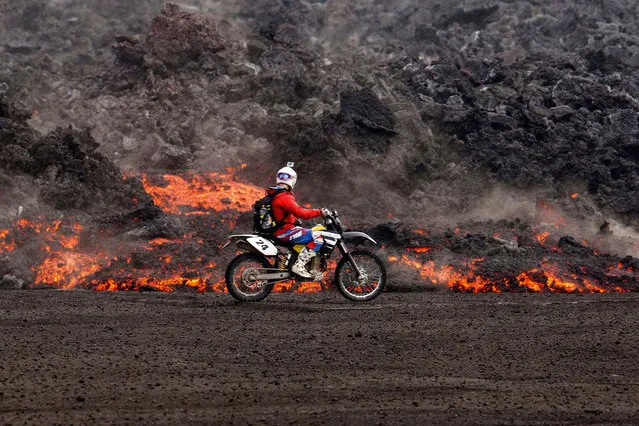
A brave photographer managed to get within metres of an active volcano despite it spewing out lava waves over 140 metres high. Silhouetted against a fiery fountain of red, Icelandic photographer, Tómas Freyr Kristjánsson, 37, braved blistering temperatures to get as close the volcano as possible. (Photo by Tómas Freyr Kristjánsson/Caters News)

A brave photographer managed to get within metres of an active volcano despite it spewing out lava waves over 140 metres high. Silhouetted against a fiery fountain of red, Icelandic photographer, Tómas Freyr Kristjánsson, 37, braved blistering temperatures to get as close the volcano as possible. Although very few were brave enough to get so close, Tómas managed to photograph nearby tourists to give some scale to the spraying molten rock, including that of a nearby motorcyclist. (Photo by Tómas Freyr Kristjánsson/Caters News)
Details
03 Feb 2015 13:14:00
Spanish bullfighter Julian Lopez “El Juli” adjusts his montera (bullfighter's hat) before starting a bullfight at the Malagueta bullring in Malaga, southern Spain, April 4, 2015. (Photo by Jon Nazca/Reuters)

Spanish bullfighter Julian Lopez “El Juli” adjusts his montera (bullfighter's hat) before starting a bullfight at the Malagueta bullring in Malaga, southern Spain, April 4, 2015. (Photo by Jon Nazca/Reuters)
Details
05 Apr 2015 11:01:00
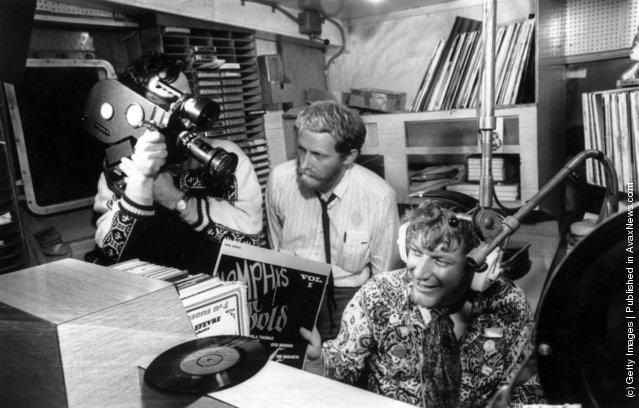
The World in Action team making a program about the pirate radio ship Caroline, filmed by Paddy Searle, and produced by Mike Hodges. The DJ being filmed is Robbie Dale, and Hodges is standing behind him

“«Pirate radio» in the UK first became widespread in the early 1960s when pop music stations such as Radio Caroline and Radio London started to broadcast on medium wave to the UK from offshore ships or disused sea forts. At the time these stations were not illegal because they were broadcasting from international waters. The stations were set up by entrepreneurs and music enthusiasts to meet the growing demand for pop and rock music, which was not catered for by the legal BBC Radio services”. – Wikipedia

Photo: The “World in Action” team making a program about the pirate radio ship Caroline, filmed by Paddy Searle, and produced by Mike Hodges. The DJ being filmed is Robbie Dale, and Hodges is standing behind him. (Photo by James Jackson/Evening Standard/Getty Images). 6th September 1967
Details
09 Sep 2011 08:54:00
An infrared portrait from NASA's Spitzer Space Telescope which shows generations of stars is seen in this undated NASA handout image released February 14, 2013. In this wispy star-forming region, called W5, the oldest stars can be seen as blue dots in the centers of the two hollow cavities (other blue dots are background and foreground stars not associated with the region). Red shows heated dust that pervades the region's cavities, while green highlights dense clouds. (Photo by NASA/Reuters/JPL-Caltech/Harvard-Smithsonian/Handout)

An infrared portrait from NASA's Spitzer Space Telescope which shows generations of stars is seen in this undated NASA handout image released February 14, 2013. In this wispy star-forming region, called W5, the oldest stars can be seen as blue dots in the centers of the two hollow cavities (other blue dots are background and foreground stars not associated with the region). Red shows heated dust that pervades the region's cavities, while green highlights dense clouds. (Photo by NASA/Reuters/JPL-Caltech/Harvard-Smithsonian/Handout)
Details
03 Mar 2013 08:44:00