Loading...
Done
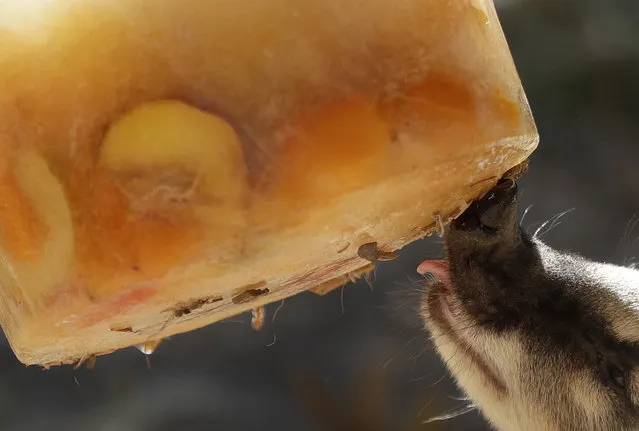
A lemur licks a block of ice containing fruit at Rome's Bioparco zoo, Wednesday, July 5, 2017. Zookeepers at the Bioparco often give animals ice blocks with either fruit or meat on hot summer days. (Photo by Gregorio Borgia/AP Photo)

A lemur licks a block of ice containing fruit at Rome's Bioparco zoo, Wednesday, July 5, 2017. Zookeepers at the Bioparco often give animals ice blocks with either fruit or meat on hot summer days. (Photo by Gregorio Borgia/AP Photo)
Details
09 Jul 2017 07:44:00
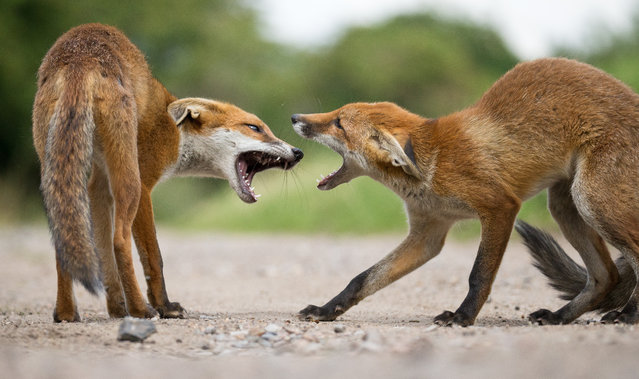
Four-month-old fox cubs squaring up to each other in Walthamstow, England on August 7, 2015. (Photo by Greg Morgan/Barcroft Media)

Four-month-old fox cubs squaring up to each other in Walthamstow, England on August 7, 2015. (Photo by Greg Morgan/Barcroft Media)
Details
09 Aug 2015 10:54:00
In this Thursday, August 22, 2013 photo, a female member of the Basij paramilitary militia aims a rifle as a trainer looks over her shoulder in Tehran, Iran. (Photo by Ebrahim Noroozi/AP Photo)

With a presence in nearly every city and town across Iran, the paramilitary Basij volunteer corps has an ever-increasing influence on life in the Islamic Republic. Authorities created the Basij, which means mobilization in Persian, just after the country's 1979 Islamic Republic. It is part of Iran's powerful Revolutionary Guard. Photo: In this Thursday, August 22, 2013 photo, a female member of the Basij paramilitary militia aims a rifle as a trainer looks over her shoulder in Tehran, Iran. (Photo by Ebrahim Noroozi/AP Photo)
Details
17 Jan 2014 09:19:00


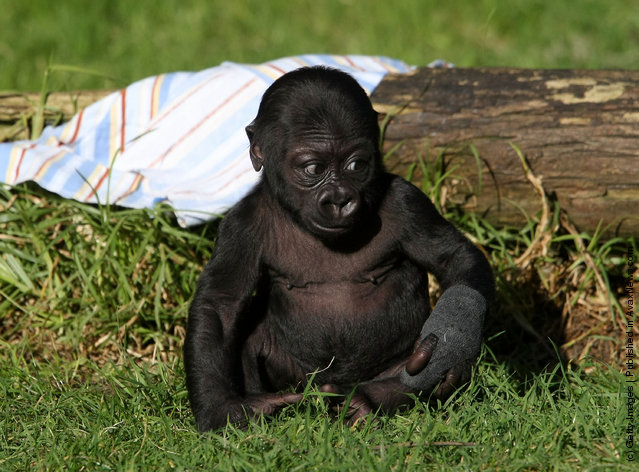
A three month-old baby gorilla named Hasani sits in the grass March 11, 2009 at the San Francisco Zoo in San Francisco, California. The newborn gorilla was given the name Hasani. Hasani's father, a twenty seven year-old gorilla named Oscar Jonsey, picked between five color coded cantaloupes representing the five name finalists to come up with the newborn's name that was submitted by Amanda VerPloeg of Oskaloosa, Iowa. (Photo by Justin Sullivan/Getty Images)
Details
30 Mar 2011 13:46:00
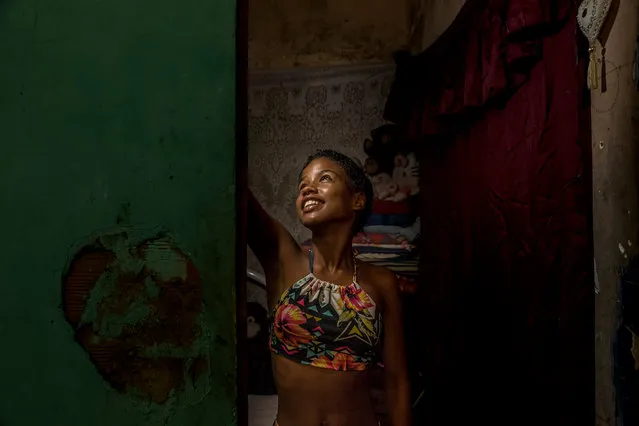
Victoria, 12, at her home in Mangueira. (Photo by Tariq Zaidi/The Guardian)

Planned improvements to Rio’s favelas have meant increases in rent, forcing the poorest families into squatting in unoccupied buildings. Photographer Tariq Zaidi visits the Mangueira community favela, less than 1km from the showpiece Maracanã stadium, to see what life is like for the women living there. Here: Victoria, 12, at her home in Mangueira. (Photo by Tariq Zaidi/The Guardian)
Details
29 Jun 2017 08:08:00
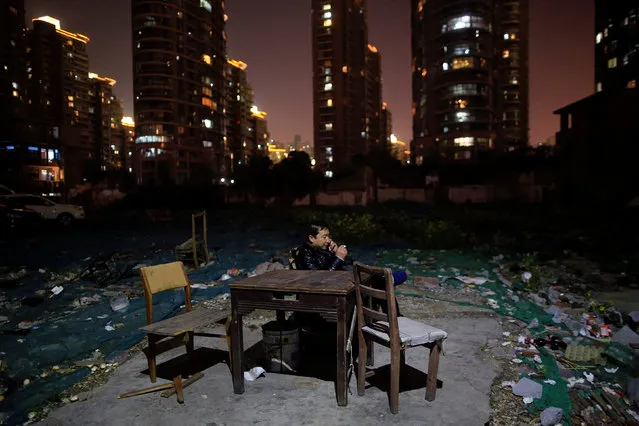
Li Guoqiang talks on his phone outside his house at Guangfuli neighbourhood, in Shanghai, China, April 1, 2016. Li, 38, is a deliveryman who rents a place at Guangfuli. (Photo by Aly Song/Reuters)

Li Guoqiang talks on his phone outside his house at Guangfuli neighbourhood, in Shanghai, China, April 1, 2016. Li, 38, is a deliveryman who rents a place at Guangfuli. In a corner of Shanghai, surrounded by a cement wall, lies one of the world's most valuable fields of debris and garbage. On paper, the Guangfuli neighbourhood is a real estate investor's dream: a plot in the middle of one of the world's most expensive and fast-rising property markets. But the reality is more like a developer's nightmare, thanks to hundreds of people living there who have refused to budge from their ramshackle homes for nearly 16 years as the local authority sought to clear the land for new construction. (Photo by Aly Song/Reuters)

Details
06 May 2016 13:54:00
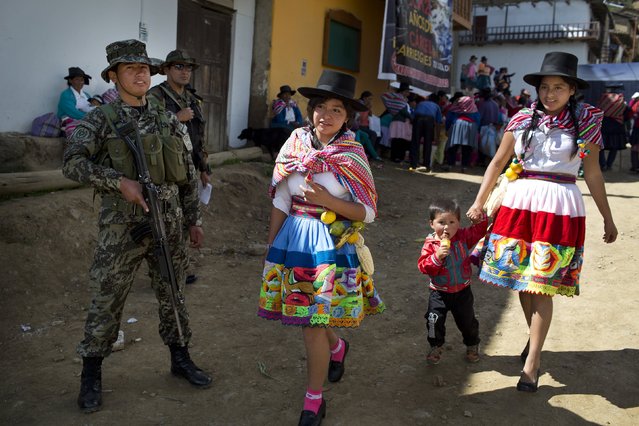
Women walk next to soldiers in Surcubamba, Peru, Thursday, May 21, 2015. (Photo by Rodrigo Abd/AP Photo)

Women walk next to soldiers in Surcubamba, Peru, Thursday, May 21, 2015. The Joint Command of the Peruvian Armed Forces organized a humanitarian mission to Surcubamba, where health care was provided to families from nearby villages in this region called VRAEM, the acronym for Valley of the Apurimac, Ene and Mantaro rivers, where sixty percent of Peru's cocaine originates. (Photo by Rodrigo Abd/AP Photo)
Details
24 May 2015 09:38:00
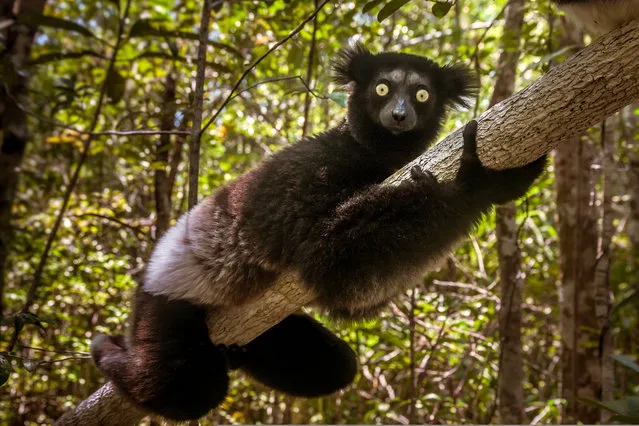
The secretive indri (Indri indri) of Madagascar, the largest living lemur. It is also critically endangered and highly evolutionarily distinct with no close relatives, which makes its branch one of most precarious on the mammal evolutionary tree. In the likely event that the indri goes extinct, we will lose 19m years of unique evolutionary history from the mammal tree of life. (Photo by Pierre-Yves Babelon/Aarhus University)

The secretive indri (Indri indri) of Madagascar, the largest living lemur. It is also critically endangered and highly evolutionarily distinct with no close relatives, which makes its branch one of most precarious on the mammal evolutionary tree. In the likely event that the indri goes extinct, we will lose 19m years of unique evolutionary history from the mammal tree of life. (Photo by Pierre-Yves Babelon/Aarhus University)
Details
18 Nov 2018 00:02:00