Loading...
Done
Blaine stands inside the apparatus, surrounded by a million volts of electric currents streamed by tesla coils. The stunt, sponsored by Intel, is the latest of daredevil endeavors by the magician whose previous stunts included being encased in ice for over 60 hours in Times Square, on October 5, 2012. (Photo by John Minchillo/Associated Press)

“Magician David Blaine's latest stunt boasts lots of high-voltage snap, crackle and pop – but experts say he'll be safe from electrocution as long as he wears his chain-mail suit and metal headgear”. – NBC News. Photo: Blaine stands inside the apparatus, surrounded by a million volts of electric currents streamed by tesla coils. The stunt, sponsored by Intel, is the latest of daredevil endeavors by the magician whose previous stunts included being encased in ice for over 60 hours in Times Square, on October 5, 2012. (Photo by John Minchillo/Associated Press)
Details
06 Oct 2012 08:06:00
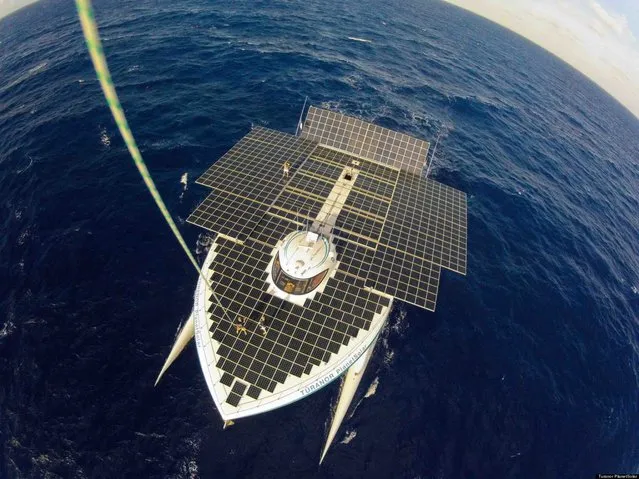
Turanor PlanetSolar

MS Tûranor PlanetSolar, known under the project name PlanetSolar, is the largest solar-powered boat in the world The vessel was designed by LOMOcean Design, built by Knierim Yachtbau in Kiel, Germany, and launched on 31 March 2010. In May 2012, it became the first ever solar electric vehicle to circumnavigate the globe. The 31-meter boat is covered in over 500 square meters of solar panels rated 93 kW, which in turn connect to one of the two electric motors in each hull. There are 8.5 tons of lithium-ion batteries in the ship's two hulls. The boat's shape allows it to reach speeds of up to 14 knots. The hull was model tested in wind tunnels and was tank tested to determine its hydrodynamics and aerodynamics. The boat has been designed to be used as a luxury yacht after the record attempt is finished.
Details
30 Oct 2013 09:06:00
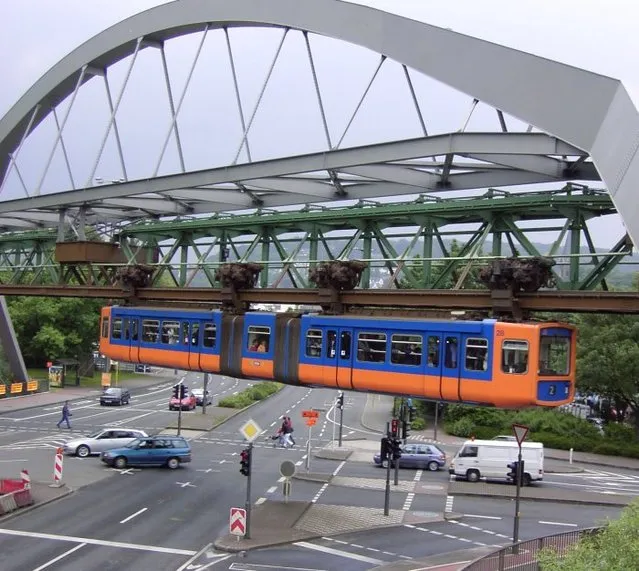
The Wuppertal Suspension Railway in Wuppertal, Germany

The Wuppertal Suspension Railways is one a kind elevated railway located in Wuppertak, Germany. It is the oldest elevated railway in the world, though it doesn’t look like it. It is kept in great condition by the government and provides for a great attraction for the tourists. It provides a great overview, as it runs above a number of city streets and a small river. Moreover, since it is powered by electricity, it proves an ecologically clean method of travel for the residents of the city.
Details
03 Apr 2015 11:38:00
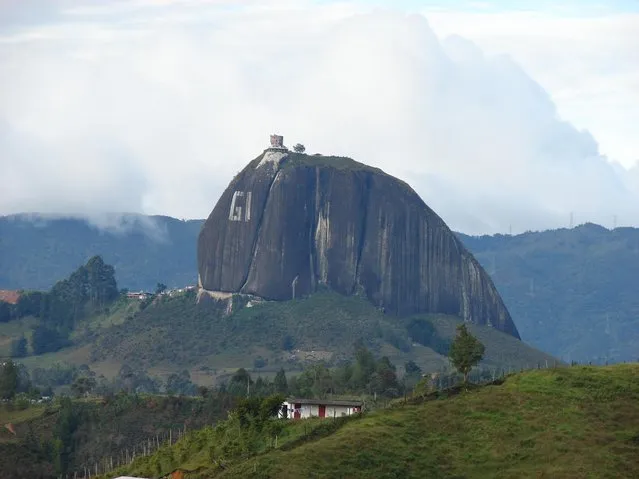
Guatape Rock In Colombia

Guatapé is a town and municipality in Antioquia Department, Colombia. Part of the subregion of Eastern Antioquia. Guatapé is located in the outskirts of Medellín, bordering a reservoir created by the Colombian government for a hydro-electric dam, built in the late 1960s. This quaint town is the gathering place for "Las Vegas", or the small farms of the area. It is also a growing area of recreation for citizens of Medellín, and aims to be a tourist destination for foreign travellers.
Guatapé was founded in 1811, by the Spaniard Don Francisco Giraldo y Jimenez. The name "Guatapé", comes from the Quechua language, related to "stones and water". The area was visited by the conquistadors circa 1551.
Details
25 Dec 2013 09:18:00


A woman in a maid costume serves customers the Maid Coffee Shop in the Akihabara District October 23, 2005 in Tokyo, Japan. The Akihabara District is known as the world's biggest electrical appliance and equipment town, but recently this area has also became famous for having many shops delivering products and healing services by employees in the costume of maids and animation characters. Some popular shops include coffee, hair salon and massage shops where females deliver services dressed as maids. (Photo by Koichi Kamoshida/Getty Images)
Details
10 Jul 2011 09:32:00
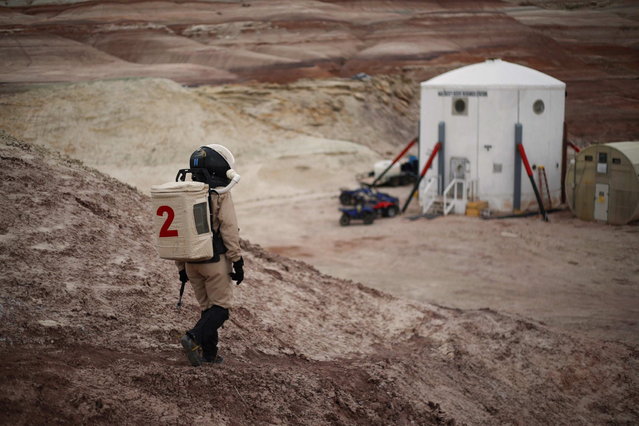
Csilla Orgel, a geologist of Crew 125 EuroMoonMars B mission, makes her way back to the Mars Desert Research Station (MDRS) in the Utah desert March 3, 2013. (Photo by Jim Urquhart/Reuters)

NASA says it could be another 20 years before humans touch down on Mars, but in a sense, the Mars Society has been exploring the red planet for more than a decade – in Utah. Photo: Csilla Orgel, a geologist of Crew 125 EuroMoonMars B mission, makes her way back to the Mars Desert Research Station (MDRS) in the Utah desert March 3, 2013. The MDRS aims to investigate the feasibility of a human exploration of Mars and uses the Utah desert's Mars-like terrain to simulate working conditions on the red planet. Scientists, students and enthusiasts work together developing field tactics and studying the terrain. All outdoor exploration is done wearing simulated spacesuits and carrying air supply packs and crews live together in a small communication base with limited amounts of electricity, food, oxygen and water. Everything needed to survive must be produced, fixed and replaced on site. (Photo by Jim Urquhart/Reuters)
Details
14 Mar 2013 12:11:00
She wowed judges and competitors at the NPC Junior USA Bodybuilding Championships. (Photo by Incredible Features/Barcroft Media)

Meet Barbie Thomas the incredible armless female body builder who is inspiring America. The 37-year-old lost both her arms during a horrific electrical accident as a toddler – but that hasn't stopped her from pursuing her bodybuilding dream.Barbie says she can do anything an average person can do – except she uses her feet. That includes brushing her teeth, making dinner, taking milk out of the fridge, texting, shopping, putting on makeup and even driving. Photo: Barbie Thomas cooks up meals with her feet. (Photo by Incredible Features/Barcroft Media)
Details
27 May 2014 10:55:00


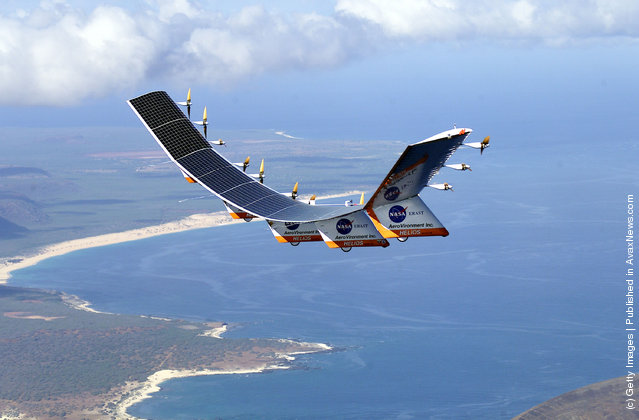
“NASA's Pathfinder, Pathfinder Plus, Centurion and Helios Prototype were an evolutionary series of solar- and fuel-cell-system-powered unmanned aerial vehicles. AeroVironment, Inc. developed the vehicles under NASA's Environmental Research Aircraft and Sensor Technology (ERAST) program. They were built to develop the technologies that would allow long-term, high-altitude aircraft to serve as “atmospheric satellites”, to perform atmospheric research tasks as well as serve as communications platforms”. – Wikipedia

Photo: The solar-electric Helios Prototype flying wing is flies over the Hawaiian islands of Niihau and Lehua during the first solar-powered test flight July 14, 2001 from the U.S. Navy's Pacific Missile Range Facility on Kauai, HI. The 18-hour flight was a functional checkout of the aircraft's systems and performance in preparation for an attempt to reach sustained flight at 100,000 feet altitude later in the summer. (Photo Courtesy of NASA/Getty Images)
Details
14 Jul 2011 09:24:00