Loading...
Done
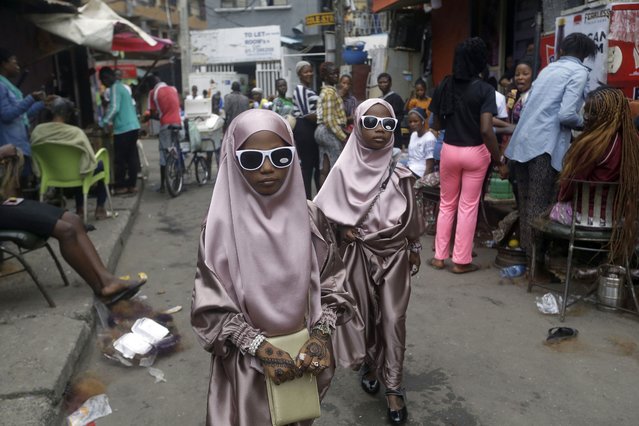
Muslim girls are seen after prayers, in Lagos, Nigeria, Friday, July 31, 2020. Small groups of pilgrims performed one of the final rites of the Islamic hajj on Friday as Muslims worldwide marked the start of the Eid al-Adha holiday amid a global pandemic that has impacted nearly every aspect of this year's pilgrimage and celebrations. The last days of hajj coincide with the four-day Eid al-Adha, or “Feast of Sacrifice”, in which Muslims slaughter livestock and distribute the meat to the poor. (Photo by Sunday Alamba/AP Photo)

Muslim girls are seen after prayers, in Lagos, Nigeria, Friday, July 31, 2020. Small groups of pilgrims performed one of the final rites of the Islamic hajj on Friday as Muslims worldwide marked the start of the Eid al-Adha holiday amid a global pandemic that has impacted nearly every aspect of this year's pilgrimage and celebrations. The last days of hajj coincide with the four-day Eid al-Adha, or “Feast of Sacrifice”, in which Muslims slaughter livestock and distribute the meat to the poor. (Photo by Sunday Alamba/AP Photo)
Details
14 Aug 2020 00:01:00
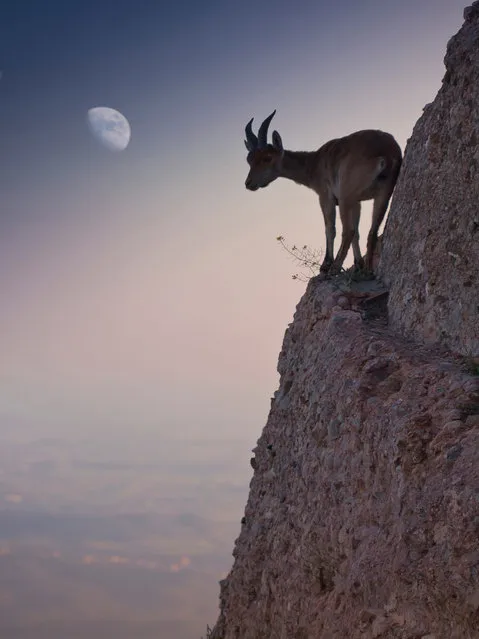
“For a bouquet of flowers”. Photographs made ​​in the last hours of the day. A goat is directed by a dangerous way to eat a small bouquet of flowers. Location: España, Barcelona, Montserrat. (Photo and caption by Renato Lopez Baldo/National Geographic Traveler Photo Contest)

“For a bouquet of flowers”. Photographs made ​​in the last hours of the day. A goat is directed by a dangerous way to eat a small bouquet of flowers. Location: España, Barcelona, Montserrat. (Photo and caption by Renato Lopez Baldo/National Geographic Traveler Photo Contest)

ATTENTION! All pictures are presented in high resolution. To see Hi-Res images – just TWICE click on any picture. In other words, click small picture – opens the BIG picture. Click BIG picture – opens VERY BIG picture.
Details
25 Jun 2013 12:51:00
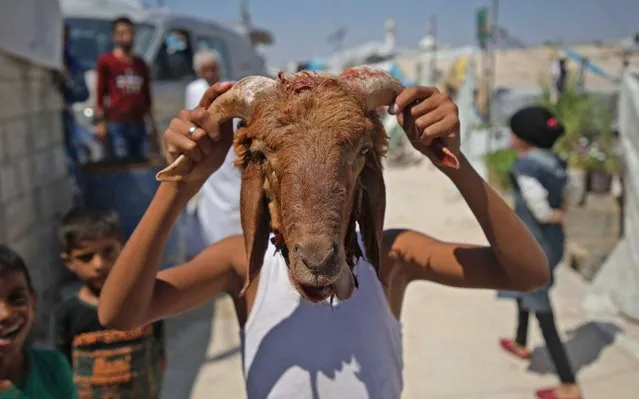
A Syrian boy plays with the head of a sacrificed sheep at a DIP camp for Interally Displaced Persons near the town of Aqrabat in Syria's northern Idlib province on August 12, 2019. Known as the “big” festival, Eid Al-Adha is celebrated each year by Muslims sacrificing various animals according to religious traditions, including cows, camels, goats and sheep. The festival marks the end of the Hajj pilgrimage to Mecca and commemorates Prophet Abraham's readiness to sacrifice his son to show obedience to God. (Photo by Aaref Watad/AFP Photo)

A Syrian boy plays with the head of a sacrificed sheep at a DIP camp for Interally Displaced Persons near the town of Aqrabat in Syria's northern Idlib province on August 12, 2019. Known as the “big” festival, Eid Al-Adha is celebrated each year by Muslims sacrificing various animals according to religious traditions, including cows, camels, goats and sheep. The festival marks the end of the Hajj pilgrimage to Mecca and commemorates Prophet Abraham's readiness to sacrifice his son to show obedience to God. (Photo by Aaref Watad/AFP Photo)
Details
15 Aug 2019 00:05:00


Smithfield meat porters march on the Home Office, bearing a petition which calls for an end to all immigration into Britain, 25th August 1972. (Photo by Keystone/Hulton Archive/Getty Images)
Details
14 Apr 2011 08:42:00
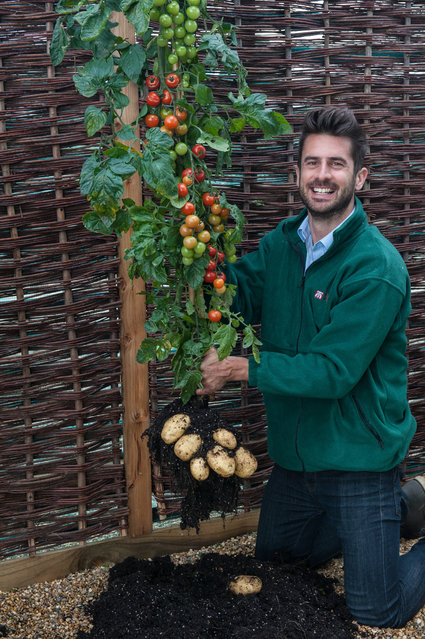
TomTato Plant Grows Both Tomatoes And Potatoes

Nowadays, crossbreeding and gene splicing are creating things that would never have occurred in nature. Thanks to gene splicing, modern man can witness mice that glow in the dark, goats that produce milk which is then used to make bulletproof vests, and even cows that produce milk that is almost identical to human breast milk. One of the latest feats of human genius is the creation of Thompson and Morgan. By combining the genes of tomatoes and potatoes they were able to create a “TomTato”, which is essentially a plant that grows tomatoes and potatoes at the same time. With creations such as this, the world’s hunger problem may be resolved in a few decades.
Details
12 Dec 2014 12:43:00
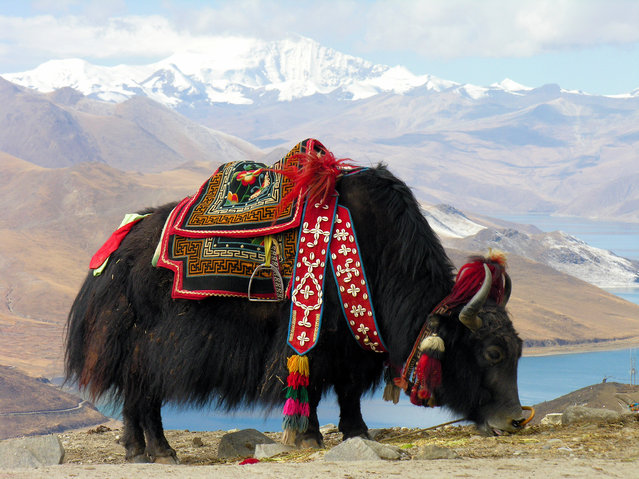
Yak near Yamdrok lake, Tibet. It is a long-haired bovinae found throughout the Himalayan region of south Central Asia, the Tibetan Plateau and as far north as Mongolia and Russia. The Tibetan economy is dominated by subsistence agriculture. Due to limited arable land, the primary occupation of the Tibetan Plateau is raising livestock, such as sheep, cattle, goats, camels, yaks, dzo, and horses. The Tibetan yak is an integral part of Tibetan life. (Photo by Dennis Jarvis)

Yak near Yamdrok lake, Tibet. It is a long-haired bovinae found throughout the Himalayan region of south Central Asia, the Tibetan Plateau and as far north as Mongolia and Russia. The Tibetan economy is dominated by subsistence agriculture. Due to limited arable land, the primary occupation of the Tibetan Plateau is raising livestock, such as sheep, cattle, goats, camels, yaks, dzo, and horses. The Tibetan yak is an integral part of Tibetan life. (Photo by Dennis Jarvis)
Details
10 Jun 2015 10:48:00
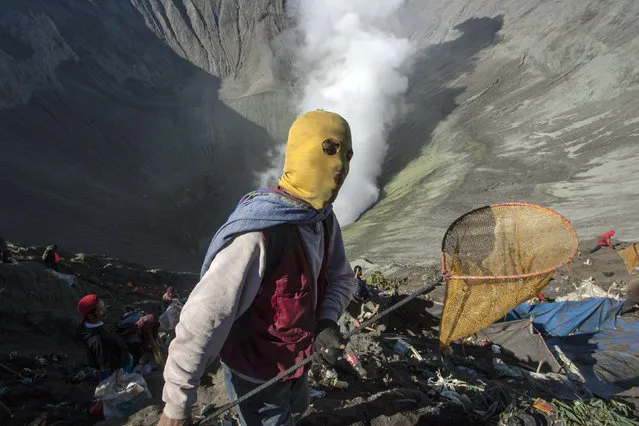
Non-Hindus carry nets as they wait on the edge of the crater to catch offerings cast down by Hindus during the Kasodo ceremony at Mount Bromo, Probolinggo, Indonesia, August 12, 2014. The Kasodo ceremony is a way of Tengger Hindus to express their gratitude to God for good harvest and fortune. The offerings range from vegetables to chickens, from fruits to goats, from money to other valuables. (Photo by Fully Handoko/EPA)

Non-Hindus carry nets as they wait on the edge of the crater to catch offerings cast down by Hindus during the Kasodo ceremony at Mount Bromo, Probolinggo, Indonesia, August 12, 2014. The Kasodo ceremony is a way of Tengger Hindus to express their gratitude to God for good harvest and fortune. The offerings range from vegetables to chickens, from fruits to goats, from money to other valuables. (Photo by Fully Handoko/EPA)
Details
14 Aug 2014 11:06:00
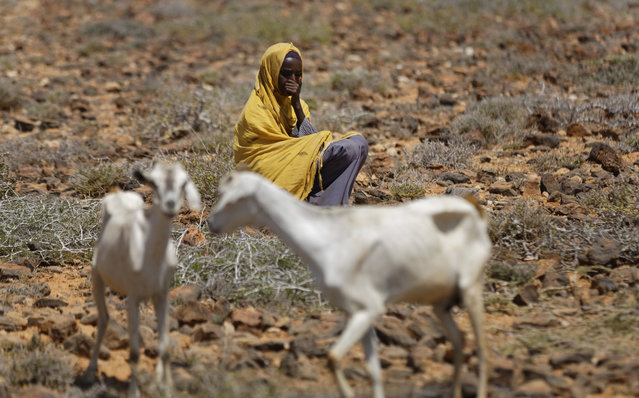
In this photo taken Wednesday, March 8, 2017, a woman herder sits with her goats in a remote desert area near Bandar Beyla in Somalia's semiautonomous northeastern state of Puntland. Somalia has declared the drought a national disaster, part of what the United Nations calls the largest humanitarian crisis since the world body was founded in 1945, and with animals being central to many the drought threatens their main sources of nutrition and survival. (Photo by Ben Curtis/AP Photo)

In this photo taken Wednesday, March 8, 2017, a woman herder sits with her goats in a remote desert area near Bandar Beyla in Somalia's semiautonomous northeastern state of Puntland. Somalia has declared the drought a national disaster, part of what the United Nations calls the largest humanitarian crisis since the world body was founded in 1945, and with animals being central to many the drought threatens their main sources of nutrition and survival. (Photo by Ben Curtis/AP Photo)
Details
15 Mar 2017 00:03:00