A Kashmiri man cover his head with plastic bag as it snows in Srinagar, Indian controlled Kashmir, Thursday, November 7, 2019. The region received its first snow on Wednesday, bringing temperatures down drastically and affecting air and vehicular traffic. (Photo by Mukhtar Khan/AP Photo)
Snow falls as a woman walks her dog in the village of Podolye, 70 kilometers (43 miles) east of St. Petersburg, Russia, early Thursday, May 11, 2017. North winds brought snow to the east of the St. Petersburg region. (Photo by Dmitri Lovetsky/AP Photo)
A snowman is seen by the side of a road as snow falls on the hills around the Bay Area while a massive winter storm passes along the west coast, delivering some snow, freezing rains, and gusty winds around, near San Jose, California, U.S., February 23, 2023. (Photo by Carlos Barria/Reuters)
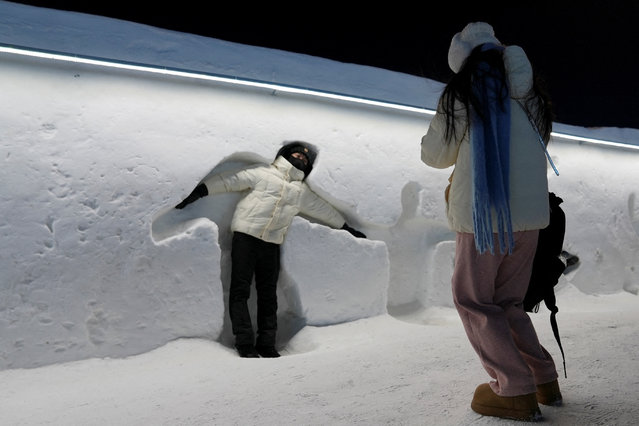
A visitor poses for pictures at the Harbin International Ice and Snow Festival in Harbin, Heilongjiang province, China on January 5, 2025. (Photo by Xiaoyu Yin/Reuters)
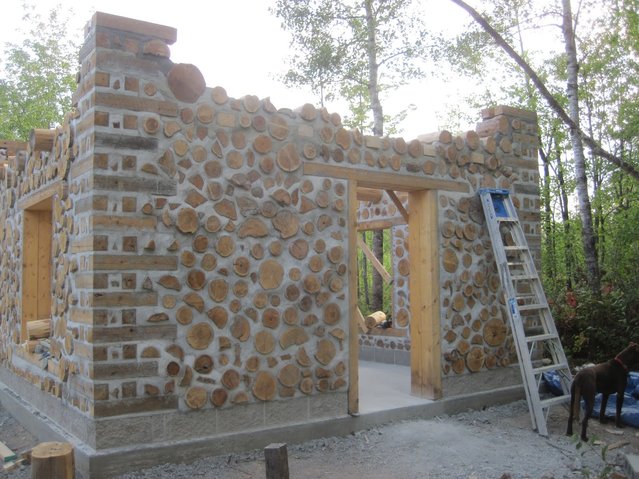
Cordwood construction is a method of natural building that originated roughly one thousand years ago in Greece and Siberia. This method involves using pieces of wood that slightly protrude from the mortar, giving the walls an attractive appearance. Usually, the walls are made 12 to 24 inches thick. However, in some parts of Canada, the walls can be as thick as 36 inches. This method appeals to many people due to its ease of construction economy of resources. Cordwood Construction can be separated into two main types: mortar-insulation-mortar (M-I-M) and Throughwall. M-I-M is a more preferable and widely used choice as it allows for better insulating properties.