A person wearing a face mask holds a cat on Swanston Street after cases of the coronavirus were confirmed in Melbourne, Victoria, Australia, January 29, 2020. (Photo by Andrew Kelly/Reuters)
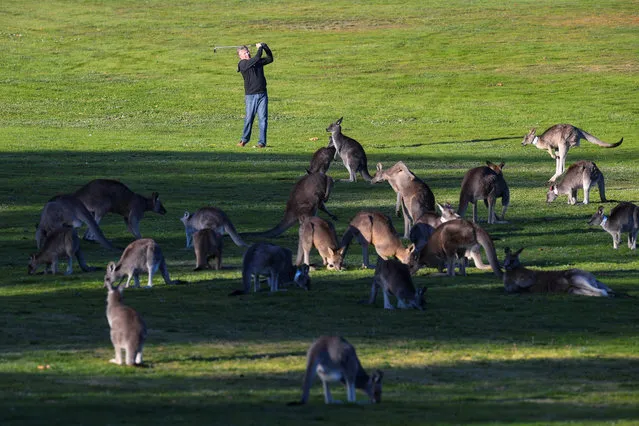
Canberra resident Bruce Gibbons is seen surrounded by grazing kangaroos as he plays a shot during a session on a practice fairway at Gold Creek Golf Club in Canberra, Australia, May 16, 2017. (Photo by Lukas Coch/Reuters/AAP)
Guests arrive for the Arlo Guthrie concert at the Bethel Woods Center for the Arts, the original site of the Woodstock Festival, on the 50th anniversary in Bethel, New York, U.S. August 15, 2019. (Photo by Brendan McDermid/Reuters)
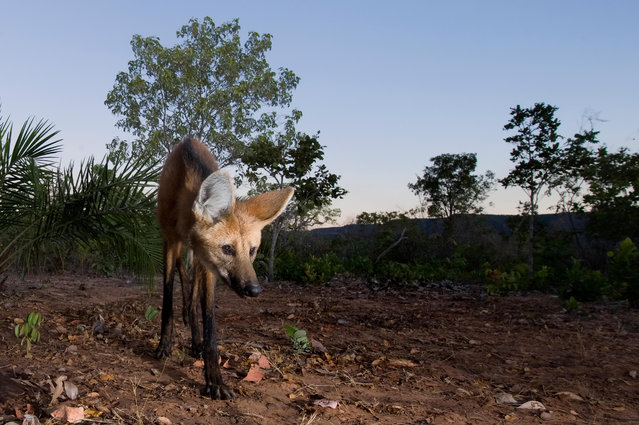
Global wildlife populations will decline by 67% by 2020 unless urgent action is taken to reduce human impact on species and ecosystems, warns the biennial Living Planet Index report from WWF (World Wide Fund for Nature) and ZSL (Zoological Society of London). From elephants to eels, here are some of the wildlife populations most affected by human activity. Here: The maned wolf is among the large mammals in the Brazilian Cerrado that are threatened by the increasing conversion of grasslands into farmland for grazing and growing crops. (Photo by Ben Cranke/Nature Picture Library/Alamy Stock Photo)
Ukrainian service members walk to an armoured personnel carrier outside of the frontline town of Bakhmut, amid Russia's attack on Ukraine, in Donetsk region, Ukraine on May 23, 2023. (Photo by Yevhenii Zavhorodnii/Reuters)
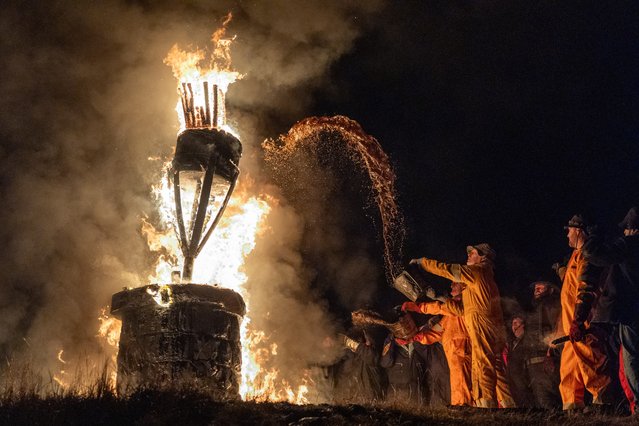
People take part in the Burning of the Clavie fire festival in Burghead, Moray, UK on Saturday, January 11, 2025. Burghead welcomes in the New Year twice each year, on both January 11th and the more traditional January 1st. (Photo by Jane Barlow/PA Images via Getty Images)
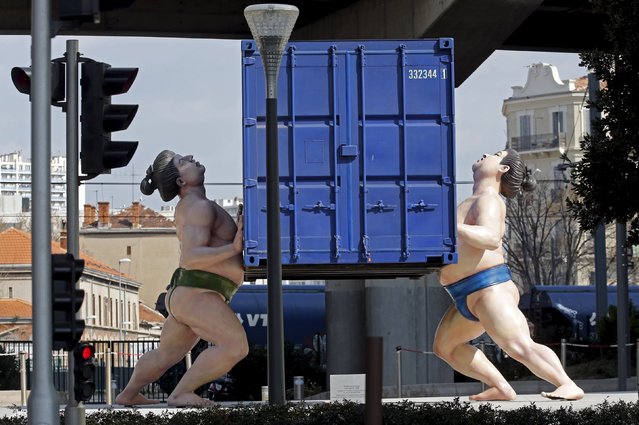
The sculpture “It Takes Two to Tango” by Scottish sculptor David Mach is seen in front of the headquarters of the CMA-CGM shipping company office tower in the port of Marseille, France, March 15, 2016. (Photo by Jean-Paul Pelissier/Reuters)