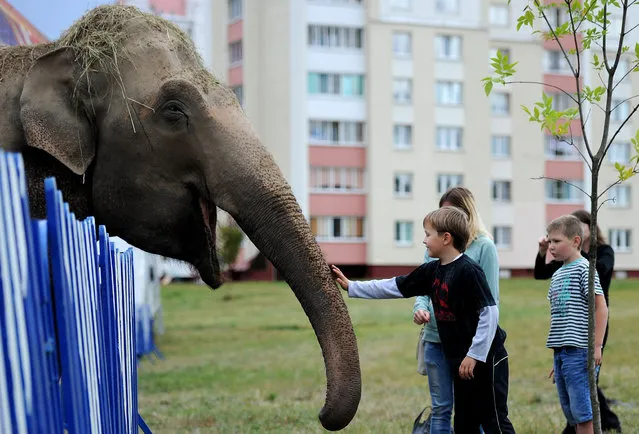
Children pat an elephant at the mobile Diva circus in the town of Molodechno, some 70 kilometers northwest of Minsk on September 3, 2015. (Photo by Sergei Gapon/AFP Photo)
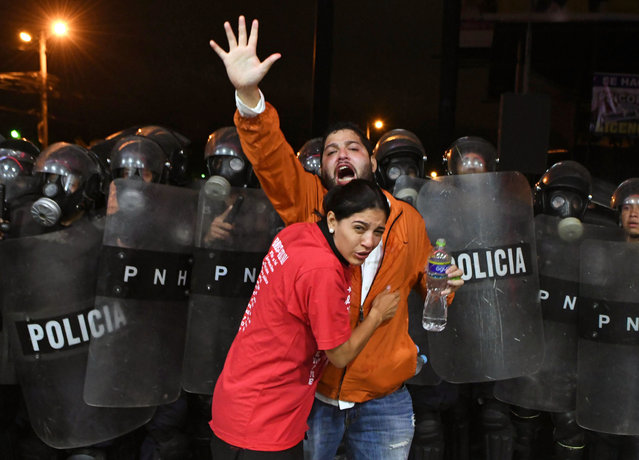
Supporters of Honduran presidential candidate for the Opposition Alliance against the Dictatorship party Salvador Nasralla, are affected by tear gas during a protest outside the Electoral Supreme Court (TSE), to demand the announcement of the election final results in Tegucigalpa, on November 30, 2017. (Photo by Orlando Sierra/AFP Photo)
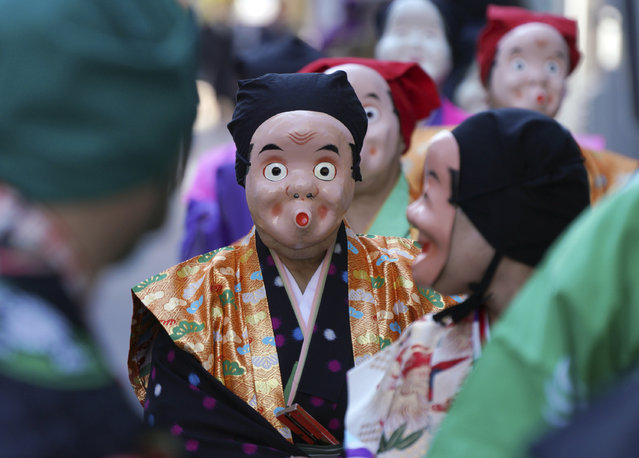
Artists wearing Japanese traditional clown masks march during the First Konpira Festival at Kotohiragu shrine in Tokyo Wednesday, January 10, 2018. The shrine is dedicated to sailors and seafaring. (Photo by Eugene Hoshiko/AP Photo)
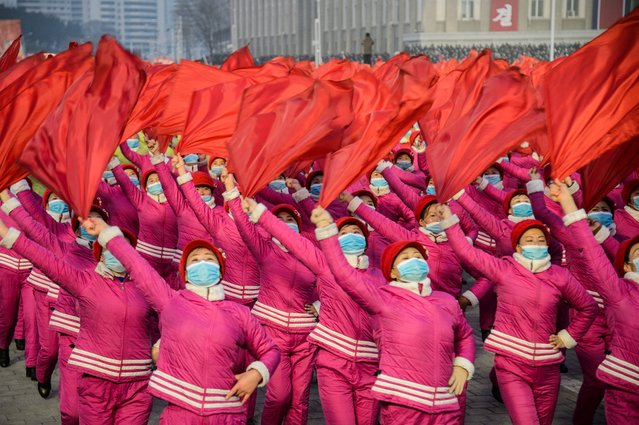
In this picture taken on January 5, 2022, people take part in a demonstration march after the Pyongyang City rally to carry out the decision of the 4th Plenary Meeting of the 8th Central Committee of the Workers' Party of Korea, at Kim Il Sung Square in Pyongyang. (Photo by Kim Won Jin/AFP Photo)
Katie Loynes of the Blues attempts to mark the ball during the AFLW Preliminary Final match between the Carlton Blues and the Fremantle Dockers at Ikon Park on March 23, 2019 in Melbourne, Australia. (Photo by Mike Owen/Getty Images)
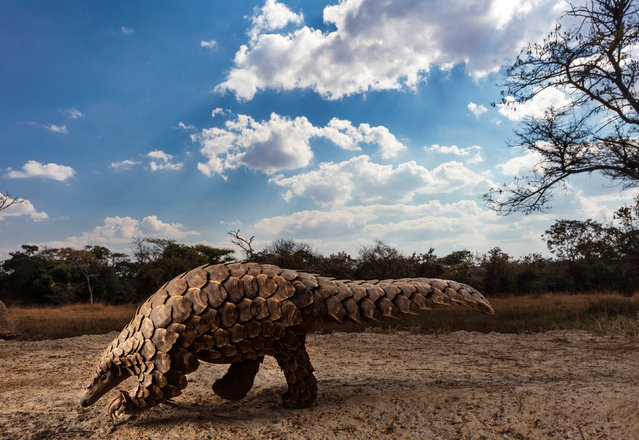
Pangolins in Crisis: Brent Stirton, South Africa; 1st place, Natural world and wildlife. “Pangolins are the world’s most illegally trafficked mammals, with an estimated one million trafficked to Asia in the last 10 years. Their scales are used in traditional Chinese and Vietnamese medicine, and their meat is sold as a high-priced delicacy. As a result, pangolins are listed as critically endangered and anyone who trades or consumes them is breaking the law. This body of work exposes the trade, while exploring aspects of illegality and celebrating the people who are trying to save these animals”. (Photo by Brent Stirton/Sony World Photography Awards 2020)
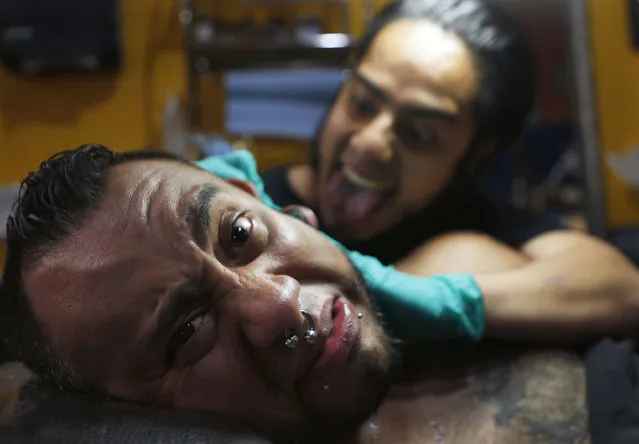
In this April 18, 2019 photo, tattoo artist Lalo Calva inks a tattoo on client Adrian Alonso Rodriguez, a journalist, announcer and dubbing artist, at the Corona Tattoo parlor in Mexico City. Not only inks and techniques have changed in Mexico over the years, but tattoos themselves have evolved from stigmatized symbols of gangs, violence and poverty to an art form. (Photo by Marco Ugarte/AP Photo)