Loading...
Done
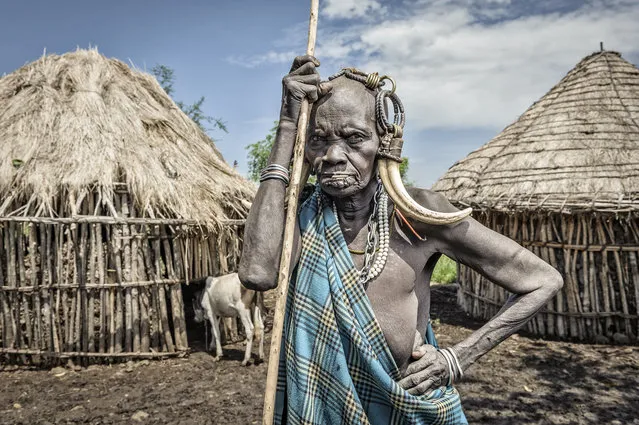
“Old Mursi woman”. Old woman by the huts of her village. Location: Marenke, Omo valley, Ethiopia. (Photo and caption by Jorge Fernandez/National Geographic Traveler Photo Contest)

“Old Mursi woman”. Old woman by the huts of her village. Location: Marenke, Omo valley, Ethiopia. (Photo and caption by Jorge Fernandez/National Geographic Traveler Photo Contest)

ATTENTION! All pictures are presented in high resolution. To see Hi-Res images – just TWICE click on any picture. In other words, click small picture – opens the BIG picture. Click BIG picture – opens VERY BIG picture.
Details
24 Jun 2013 09:55:00
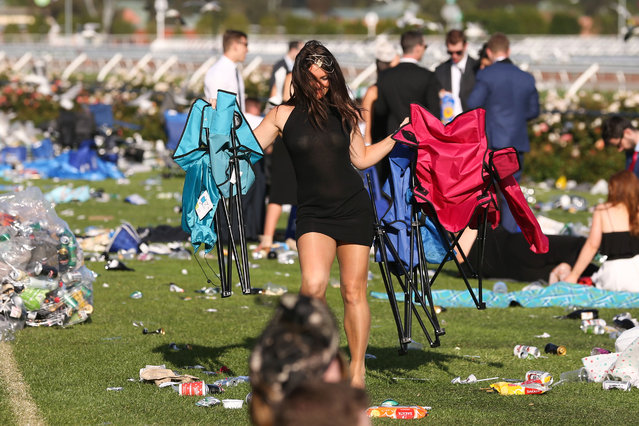
A racegoer enjoy the atmosphere following 2016 Derby Day at Flemington Racecourse on October 29, 2016 in Melbourne, Australia. Women attendees weren’t afraid to show off some skin as the warm summer weather arrived in Australia. (Photo by Splash News and Pictures)

A racegoer enjoy the atmosphere following 2016 Derby Day at Flemington Racecourse on October 29, 2016 in Melbourne, Australia. Women attendees weren’t afraid to show off some skin as the warm summer weather arrived in Australia. (Photo by Splash News and Pictures)
Details
30 Oct 2016 11:22:00
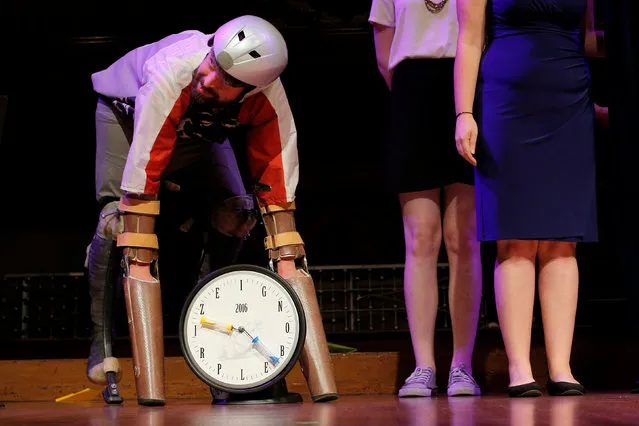
Thomas Thwaites of the United Kingdom accepts the 2016 Ig Nobel Prize in Biology for “creating prosthetic extensions of his limbs that allowed him to move in the manner of, and spend time roaming the hills in the company of, goats” during the 26th First Annual Ig Nobel Prize ceremony at Harvard University in Cambridge, Massachusetts, U.S. September 22, 2016. (Photo by Brian Snyder/Reuters)

Thomas Thwaites of the United Kingdom accepts the 2016 Ig Nobel Prize in Biology for “creating prosthetic extensions of his limbs that allowed him to move in the manner of, and spend time roaming the hills in the company of, goats” during the 26th First Annual Ig Nobel Prize ceremony at Harvard University in Cambridge, Massachusetts, U.S. September 22, 2016. (Photo by Brian Snyder/Reuters)
Details
24 Sep 2016 10:46:00
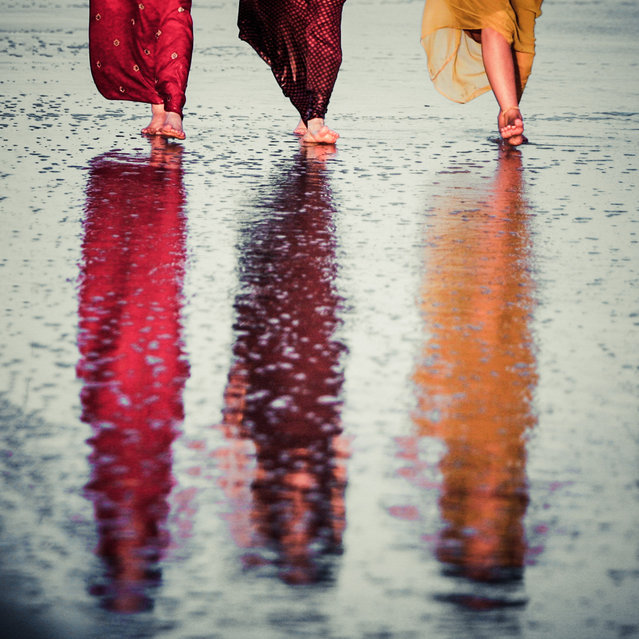
“Walking six feet tall”. (Photo by Photocillin)

“Photocillin is the pseudonym of Dr Andy Teo, physician and people photographer based in the Surrey/Hampshire borders near London in the UK. My style is about showing the beauty of people and the world in which they live in a retro-utopian way”. – Andy Teo. Photo: “Walking six feet tall”. (Photo by Photocillin)
Details
04 May 2014 11:26:00
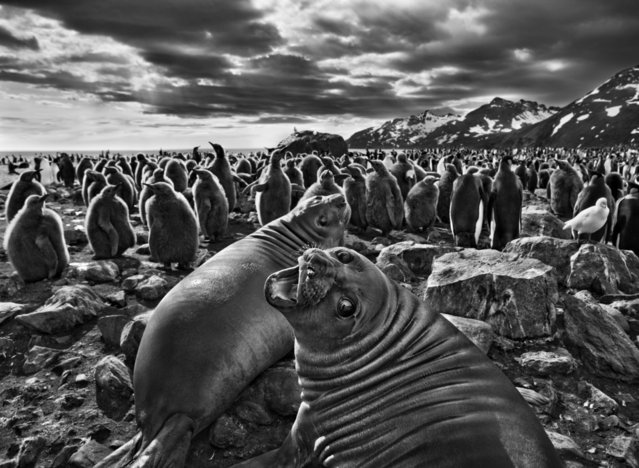
On South Georgia, a barren island in the far South Atlantic, a pair of southern elephant seal calves beckon before a colony of king penguins. “The male seals can grow to almost five tons,” says Salgado, “but these are just babies. This one looked at me with beautiful eyes”. (Photo by Sebastião Salgado/Amazonas/Contact Press Images)

Sebastião Salgado is a Brazilian documentary photographer living in Paris. He has produced several books, and his work has been exhibited extensively around the world. His latest work, «Genesis», premieres at The Natural History Museum in London on April 11, on view through September 8, 2013. Photo: On South Georgia, a barren island in the far South Atlantic, a pair of southern elephant seal calves beckon before a colony of king penguins. “The male seals can grow to almost five tons,” says Salgado, “but these are just babies. This one looked at me with beautiful eyes”. (Photo by Sebastião Salgado/Amazonas/Contact Press Images)
Details
30 Apr 2013 12:17:00
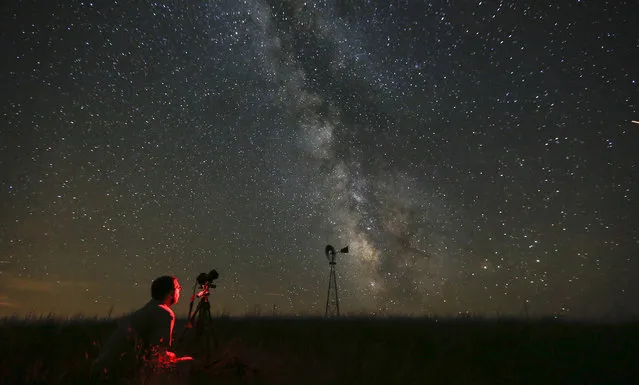
In this Wednesday, July 23, 2014 file photo, Omaha photographer Lane Hickenbottom photographs the night sky in a pasture near Callaway, Neb. With no moon in the sky, the Milky Way was visible to the naked eye. More than one-third of the world’s population can no longer see the Milky Way because of man-made lights, according to a scientific paper by Light Pollution Science and Technology Institute's Fabio Falchi and his team members, published on Friday, June 10, 2016. (Photo by Travis Heying/The Wichita Eagle via AP Photo)

In this Wednesday, July 23, 2014 file photo, Omaha photographer Lane Hickenbottom photographs the night sky in a pasture near Callaway, Neb. With no moon in the sky, the Milky Way was visible to the naked eye. More than one-third of the world’s population can no longer see the Milky Way because of man-made lights, according to a scientific paper by Light Pollution Science and Technology Institute's Fabio Falchi and his team members, published on Friday, June 10, 2016. (Photo by Travis Heying/The Wichita Eagle via AP Photo)
Details
11 Jun 2016 12:37:00
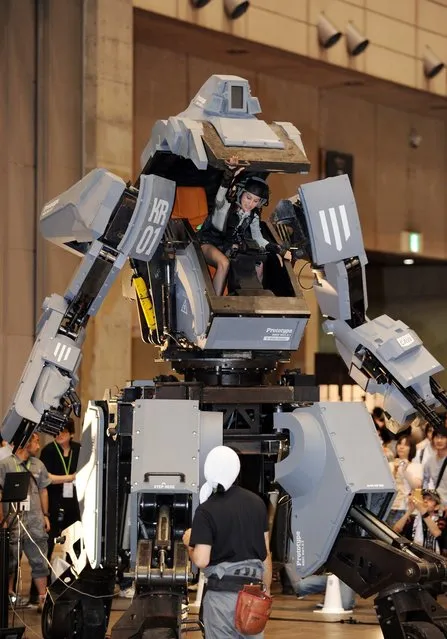
Female “pilot” Anna (C) climbs out the cockpit of Japanese electronics company Suidobashi Heavy Industry's newly unveiled robot “Kuratas” at the Wonder Festival in Chiba, suburban Tokyo on July 29, 2012. The Kuratas robot, which will go on sale with a price tag of one million USD, measures four meters in height, weighs four tons and has four wheeled legs that can either be controlled remotely through the 3G network or by a human seated within the cockpit.

Female pilot Anna climbs out the cockpit of Japanese electronics company Suidobashi Heavy Industry's newly unveiled robot “Kuratas” at the Wonder Festival in Chiba, suburban Tokyo on July 29, 2012. The “Kuratas” robot, which will go on sale with a price tag of one million USD, measures four meters in height, weighs four tons and has four wheeled legs that can either be controlled remotely through the 3G network or by a human seated within the cockpit. (Photo by Yoshikazu Tsuno/AFP Photo)
Details
30 Jul 2012 09:26:00
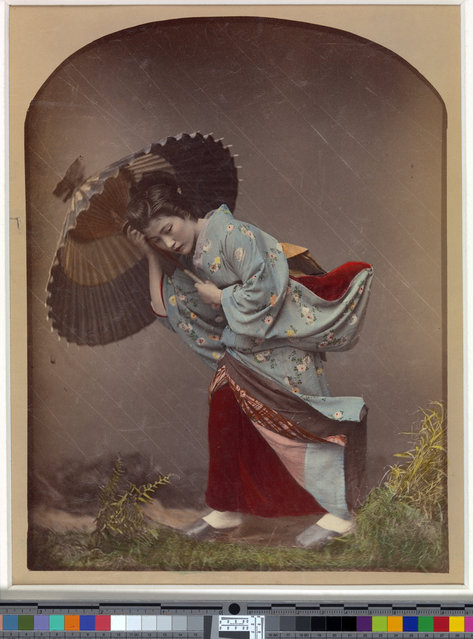
“Woman with Umbrella in Rain” by Raimund von Stillfried. Artist: Kusakabe Kimbei (Japanese, 1841–1934), 1870s. (Photo courtesy of The Metropolitan Museum of Art)

“Woman with Umbrella in Rain” by Raimund von Stillfried. Artist: Kusakabe Kimbei (Japanese, 1841–1934), 1870s. Commercial photography studios in Meiji-era Japan were renowned for the subtlety and refinement of their coloring techniques. This hand-tinted image of a young woman caught in a heavy rainstorm achieved its naturalistic effect by knitting together multiple strands of artifice: the greenery in the foreground was a studio prop; the flaps of the kimono were suspended by thin wires to create the impression of a strong wind; and long, diagonal marks were made on the negative to suggest streaks of rain. (Photo courtesy of The Metropolitan Museum of Art)
Details
12 May 2013 10:13:00