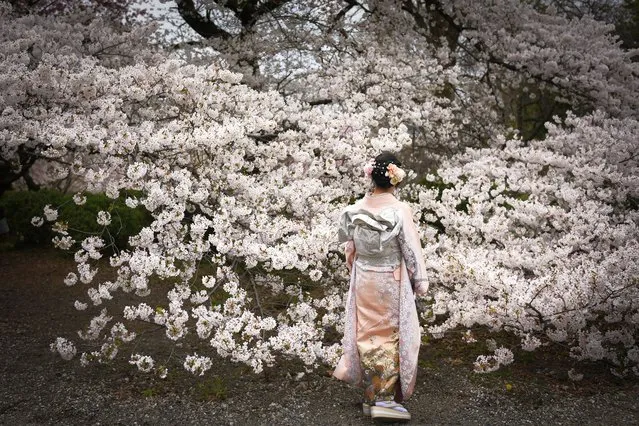
A woman with Kimono looks at cherry trees in bloom in Shinjuku Gyoen in Tokyo, Japan on Thursday, April 4, 2024. (Photo by Noriko Hayashi for The Washington Post)
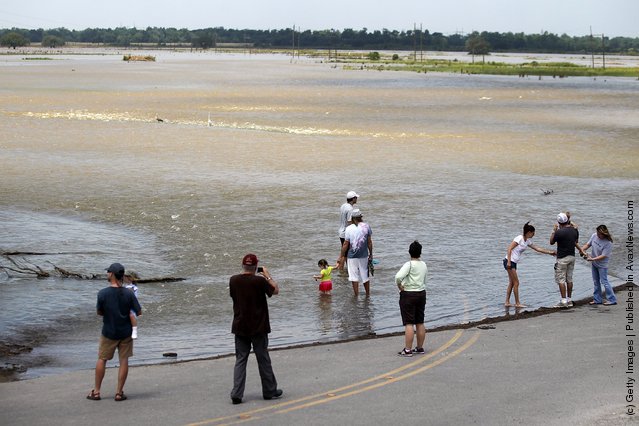
People look on as water from the rising Mississippi River is released through the Bonnet Carre Spillway while washing out a road May 9, 2011 in Norco, Louisiana. The Army Corps of Engineers began redirecting part of the Mississippi River through the spillway today to lower river levels and reduce pressure on levees in order to avoid a catastrophic failure. The water will flow nearly 6 miles north before emptying into Lake Pontchartrain as the Mississippi rises close to the highest level ever upriver in Memphis. (Photo by Mario Tama/Getty Images)
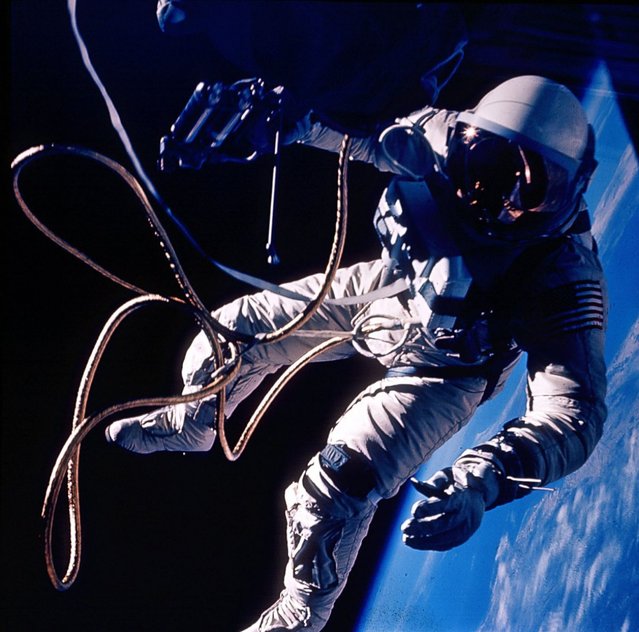
The First U.S. Spacewalk – Gemini 4 Ed White made the United States' first spacewalk on June 3, 1965 during the Gemini 4 mission. The extra-vehicular activity (EVA) started at 19:45 UT (3:45 p.m. EDT) on the third orbit when White opened his hatch and used the hand-held manuevering oxygen-jet gun to push himself out of the capsule. (Photo by NASA)
Sushi chef Mitsuru Tamura uses a radiation detector on seafood before it is prepared in Manhattan's Sushi Yasuda restaurant April 8, 2011 in New York City. The restaurant has begun using the detector as a precautionary measure due to consumer concerns over possible radiation contamination in seafood from the nuclear emergency in Japan. Health officials believe contamination is unlikely to threaten the food supply chain and none has been found in this restaurant. (Photo by Mario Tama/Getty Images)
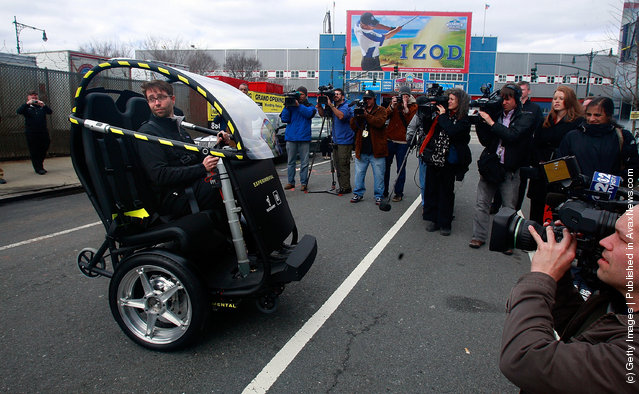
“The Personal Urban Mobility and Accessibility (PUMA) is an experimental electrically powered road vehicle created by Segway and adopted by General Motors as a concept vehicle representing the future of urban transportation. It operates on two wheels placed side-by-side, a layout that differs in placement from motorcycles which instead have their two wheels placed at the front and rear”. – Wikipedia
The Project P.U.M.A. (Personal Urban Mobility and Accessibility) prototype is displayed for the media April 7, 2009 in New York City. (Photo by Mario Tama/Getty Images)
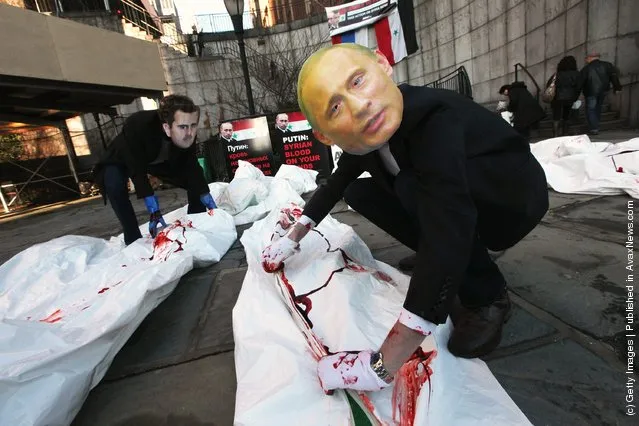
Actors wearing masks of Syrian President Bashar al-Assad and Russian Prime Minister Vladimir Putin perform with body bags during a demonstration outside United Nations headquarters on January 24, 2011 in New York City. Protesters called on the U.N. Security Council to pass a resolution to attempt to halt al-Assad's crackdown on the Syrian uprising. (Photo by Mario Tama/Getty Images)
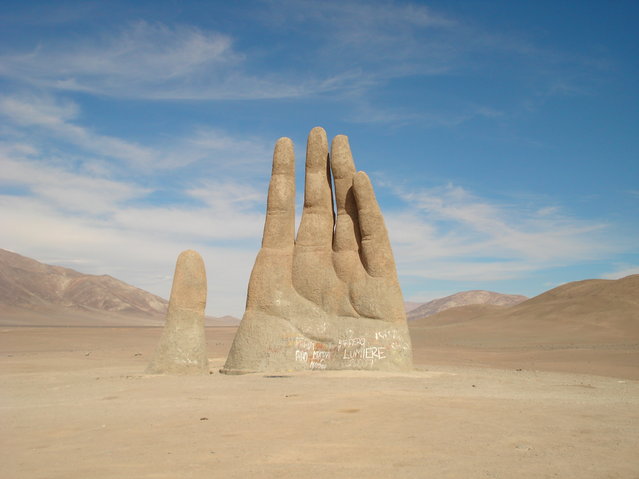
The Mano de Desierto is a large-scale sculpture of a hand located in the Atacama Desert in Chile, 75 km to the south of the city of Antofagasta, on the Panamerican Highway. The nearest point of reference is the “Ciudad Empresarial La Negra” (La Negra Business City). The sculpture was constructed by the Chilean sculptor Mario Irarrázabal at an altitude of 1,100 meters above sea level. Irarrázabal used the human figure to express emotions like injustice, loneliness, sorrow and torture. Its exaggerated size is said to emphasize human vulnerability and helplessness. The work has a base of iron and cement, and stands 11 metres (36 ft) tall. Funded by Corporación Pro Antofagasta, a local booster organization, the sculpture was inaugurated on March 28, 1992.
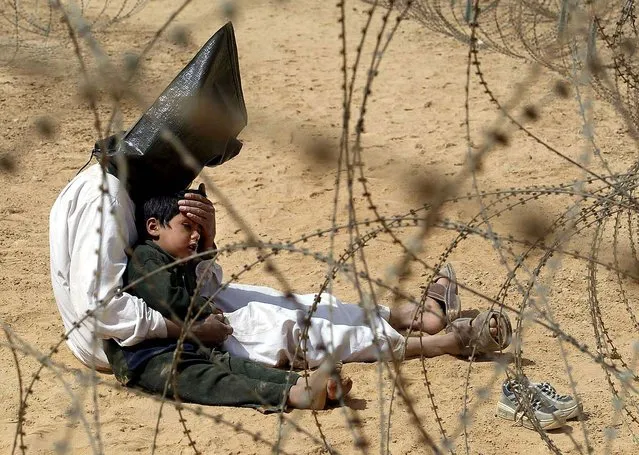
An Iraqi man comforts his 4-year-old son at a regroupment center for POWs of the 101st Airborne Division near An Najaf, Iraq, March 31, 2003. The man was seized in An Najaf with his son and the U.S. military did not want to separate them. (Photo by Jean-Marc Bouju/Associated Press)