Loading...
Done
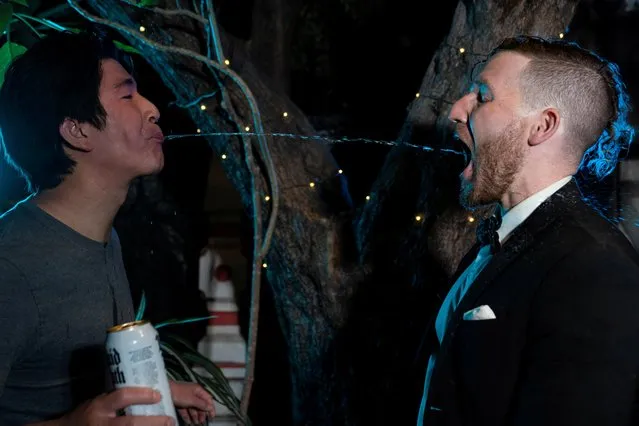
Jeffrey Shiau, 35, a volunteer from the crowd, spits water into the mouth of Sam Kaufman, 27, a performer from the Human Fountains, during a reopening party held as coronavirus disease (COVID-19) restrictions are gradually lifted in Los Angeles, California, U.S. June 15, 2021. (Photo by Cheney Orr/Reuters)

Jeffrey Shiau, 35, a volunteer from the crowd, spits water into the mouth of Sam Kaufman, 27, a performer from the Human Fountains, during a reopening party held as coronavirus disease (COVID-19) restrictions are gradually lifted in Los Angeles, California, U.S. June 15, 2021. (Photo by Cheney Orr/Reuters)
Details
22 Jun 2021 07:55:00
English singer Rita Ora looked like she was sitting on a gold mine as she reclined in towering, metallic shoes and an open gown during a photoshoot in Los Angeles on August 5, 2021. (Photo by Instagram)

English singer Rita Ora looked like she was sitting on a gold mine as she reclined in towering, metallic shoes and an open gown during a photoshoot in Los Angeles on August 5, 2021. (Photo by Instagram)
Details
01 Sep 2021 07:49:00
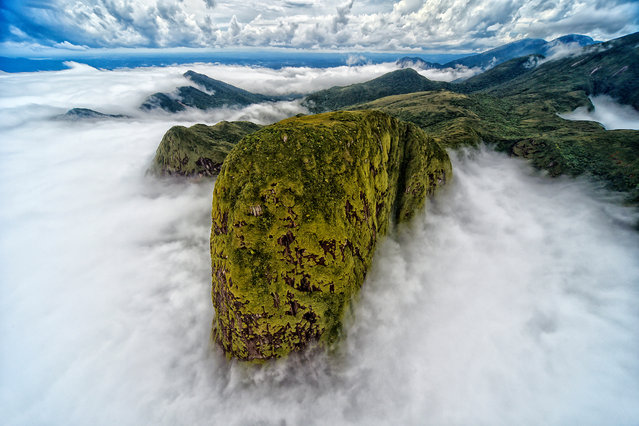
Landscape second place: Denis Ferreira Netto, Brazil. “In a helicopter flight through the sea mountain range, I came across this white cloud cover, which resulted in this magnificent image that resembles the head of a dinosaur”, the photographer said. (Photo by Denis Ferreira Netto/TNC Photo Contest 2021)

Landscape second place: Denis Ferreira Netto, Brazil. “In a helicopter flight through the sea mountain range, I came across this white cloud cover, which resulted in this magnificent image that resembles the head of a dinosaur”, the photographer said. (Photo by Denis Ferreira Netto/TNC Photo Contest 2021)
Details
06 Oct 2021 07:52:00
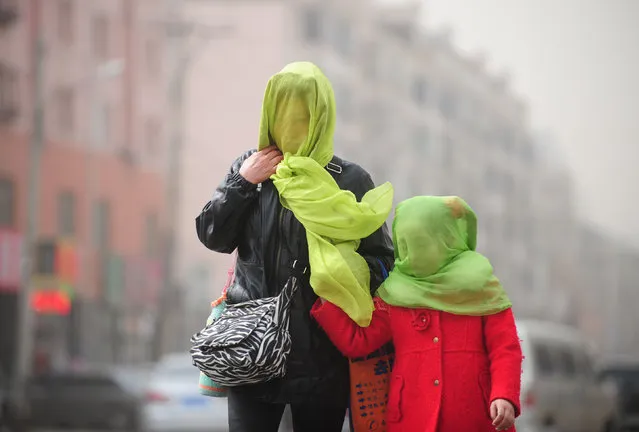
People walk during a polluted day in Shenyang, Liaoning province, March 31, 2016. (Photo by Reuters/Stringer)

People walk during a polluted day in Shenyang, Liaoning province, March 31, 2016. (Photo by Reuters/Stringer)
Details
18 Apr 2016 10:12:00
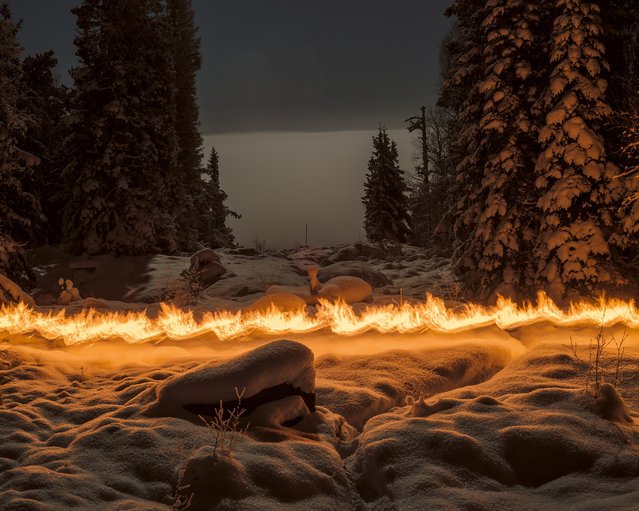
Border between Sweden and Norway at Moldusen. An approximately 20-meter wide clearing in the forest separates the two Scandinavian nations, consequently cutting Finnskogen in two. Grue Finnskog 2016. (Photo by Terje Abusdal/The Washington Post)

Border between Sweden and Norway at Moldusen. An approximately 20-meter wide clearing in the forest separates the two Scandinavian nations, consequently cutting Finnskogen in two. Grue Finnskog 2016. (Photo by Terje Abusdal/The Washington Post)
Details
12 Oct 2018 00:03:00
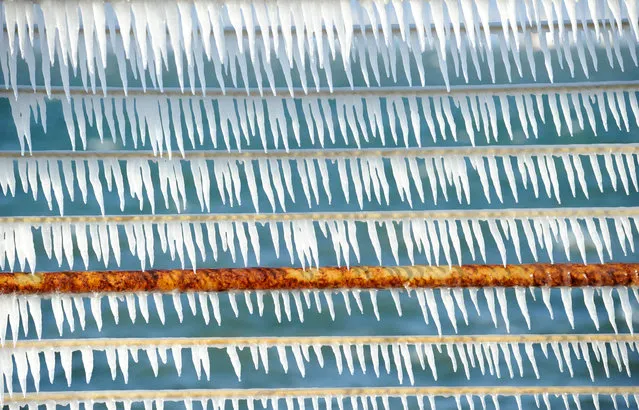
Icicles are seen on a handrail along the coast at Donggang business district in Dalian, Liaoning province, China on December 27, 2018. (Photo by Reuters/China Stringer Network)

Icicles are seen on a handrail along the coast at Donggang business district in Dalian, Liaoning province, China on December 27, 2018. (Photo by Reuters/China Stringer Network)
Details
04 Feb 2019 00:01:00
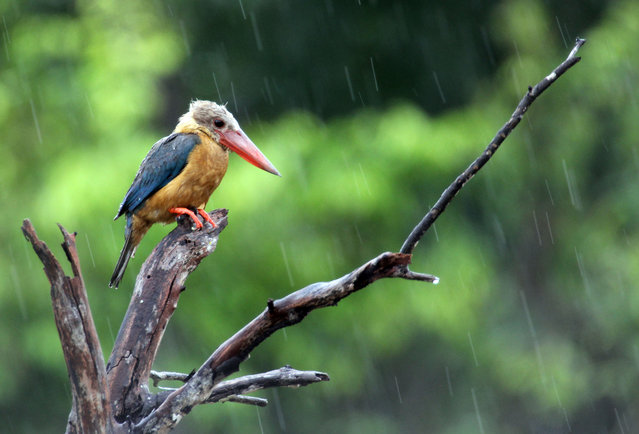
Stork-billed kingfisher during rain in Bintan, Indonesia. The tree species is sparsely distributed in the tropical Indian subcontinent and south-east Asia, from India to Indonesia. (Photo by Sijori Images/Barcroft Images)

A stork-billed kingfisher (Pelargopsis capensis) is seen perched on a tree during monsoon rain on July 25, 2016 in Bintan, Indonesia. The stork-billed kingfisher is a tree species which is widely but sparsely distributed in the tropical Indian subcontinent and Southeast Asia, from India to Indonesia. This kingfisher is resident throughout its range. It is very large, measuring 35 to 38 cm (14 to 15 in) in length. The adult has a green back, blue wings and tail, and grey head. (Photo by Sijori Images/Barcroft Images)
Details
27 May 2017 07:47:00
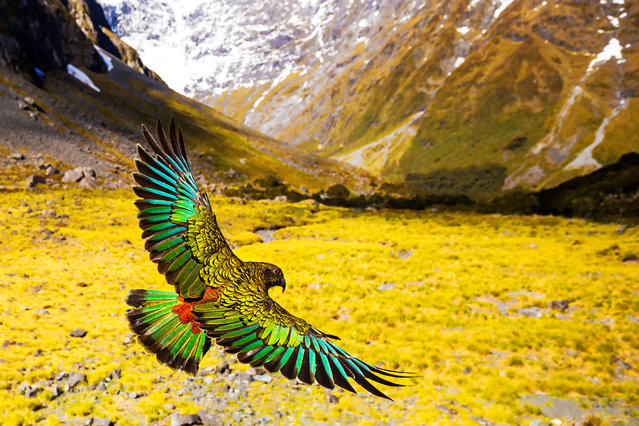
Kea are the only true alpine parrots in the world and thrive as cunning opportunists in the freezing conditions of the Southern Alps. Kea are thought to have developed their wide array of food-finding strategies during the last great ice age, where they learned to adapt using their unusual powers of curiosity. (Photo by Tom Walker/BBC Pictures/The Guardian)

Kea are the only true alpine parrots in the world and thrive as cunning opportunists in the freezing conditions of the Southern Alps. Kea are thought to have developed their wide array of food-finding strategies during the last great ice age, where they learned to adapt using their unusual powers of curiosity. (Photo by Tom Walker/BBC Pictures/The Guardian)
Details
19 Jul 2016 13:03:00