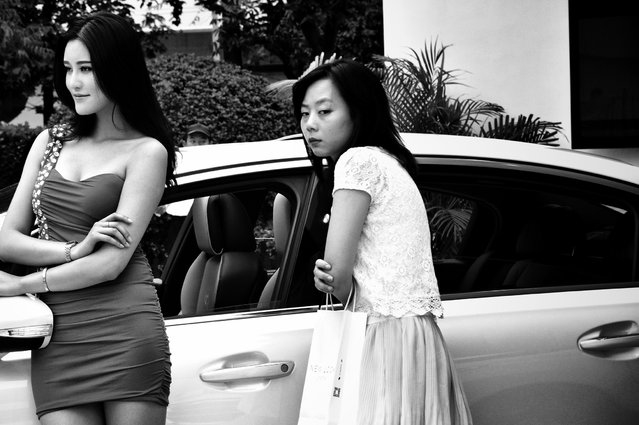
This 2014 series Shanghai Tian Wa saw Chinese photographer Liu Tao train his lens on two distinct districts in Shanghai. Here: “Shanghai Tian Wai №26, 2014”. (Photo by Liu Tao/The Guardian)
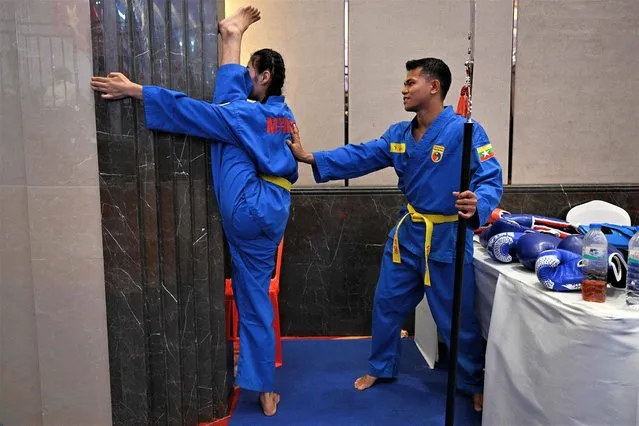
Members of Myanmar's vovinam team warm up before competing in the vovinam event at the 32nd Southeast Asian Games (SEA Games) in Phnom Penh on May 6, 2023. (Photo by Mohd Rasfan/AFP Photo)
A diver dressed in a Santa Claus costume swims with a penguin at Sunshine Aquarium during preparations for the upcoming Christmas special event in Tokyo on December 1, 2025. (Photo by Kazuhiro Nogi/AFP via Getty Images)
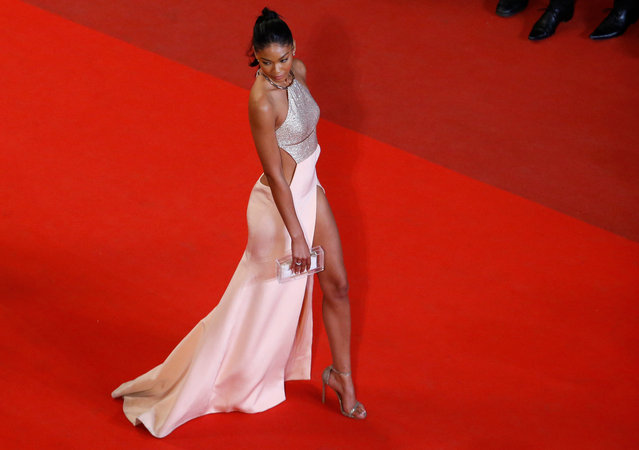
Model Chanel Iman arrives on the red carpet for the screening of the film “Hands of Stone” out of competition at the 69th Cannes Film Festival in Cannes, France, May 16, 2016. (Photo by Yves Herman/Reuters)
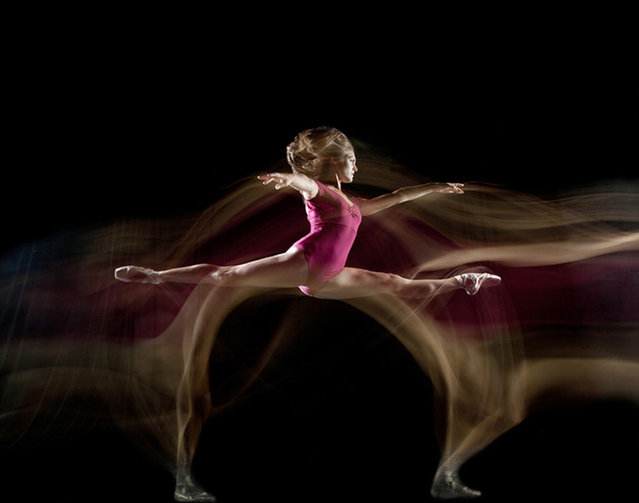
Photographer and former dancer Jesús Chapa-Malacara, head of art production company fotosjcm, announces the launch of Esprit de Corps, an innovative book of ballet photography unlike any seen before. The high-end art book, currently being independently financed and offered exclusively through a Kickstarter campaign, will feature world-class dancers from top ballet companies, including Michaela DePrince of Dutch National Ballet, Jared Matthews and Yuriko Kajiya of American Ballet Theatre, among others.
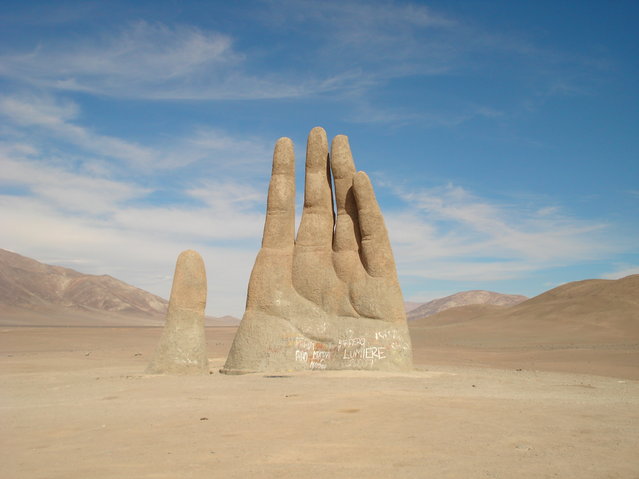
The Mano de Desierto is a large-scale sculpture of a hand located in the Atacama Desert in Chile, 75 km to the south of the city of Antofagasta, on the Panamerican Highway. The nearest point of reference is the “Ciudad Empresarial La Negra” (La Negra Business City). The sculpture was constructed by the Chilean sculptor Mario Irarrázabal at an altitude of 1,100 meters above sea level. Irarrázabal used the human figure to express emotions like injustice, loneliness, sorrow and torture. Its exaggerated size is said to emphasize human vulnerability and helplessness. The work has a base of iron and cement, and stands 11 metres (36 ft) tall. Funded by Corporación Pro Antofagasta, a local booster organization, the sculpture was inaugurated on March 28, 1992.
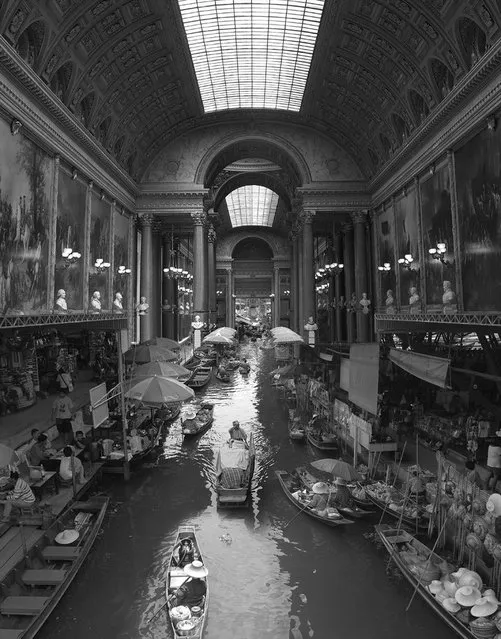
Thomas Barbèy grew up in Geneva, Switzerland, across the street from the “Caran D'ache” factory, the largest manufacturer of art supplies. He started drawing seriously at the age of 13, using black “encre de Chine” and gouaches for color. His influences were Philippe Druillet, Roger Dean and H.R. Giger. After living in Geneva for 17 years and designing posters for musical bands, he decided to move to Italy, where he lived in Milan for 15 years making a living as a successful recording artist, lyricist and fashion photographer.