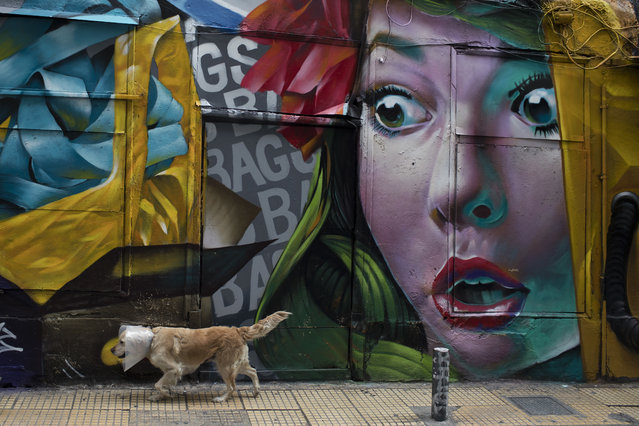
A dog walks past a mural by street artist Alex Martinez outside a shop which sells bags at Psiri area, central Athens, on Thursday, January 25, 2018. (Photo by Petros Giannakouris/AP Photo)
Parade participants during the traditional “Masopust Carnival” festival on February 13, 2018 in Roztoky near Prague, Czech Republic. Known as Masopust (literally, “giving up meat”), the festival was traditionally the last chance to eat and drink in excess before the austerity of Lent. (Photo by Margot Buff/RFE/RL)
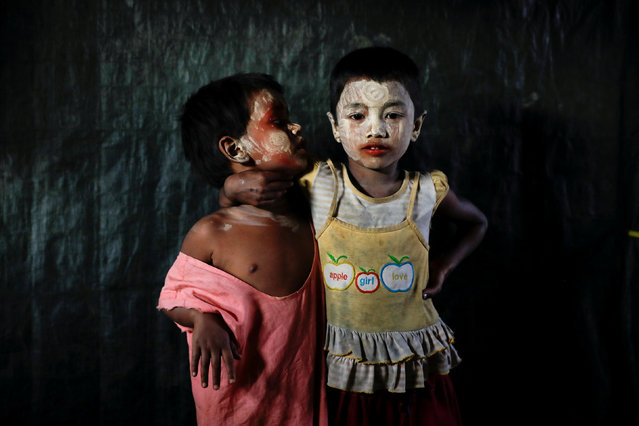
Rohingya refugee sisters Nur Kaida (R) and Ruhana hug each other at their shelter at the Palongkhali refugee camp near Cox's Bazar, Bangladesh December 21, 2017. (Photo by Marko Djurica/Reuters)
“Drag Race Thailand” contestants Thanisorn Hengsoontorn “Annee Maywong” (L) and Supattarapon Kasikam “Dearis Doll” pose at a studio in Bangkok, Thailand March 23, 2018. (Photo by Athit Perawongmetha/Reuters)
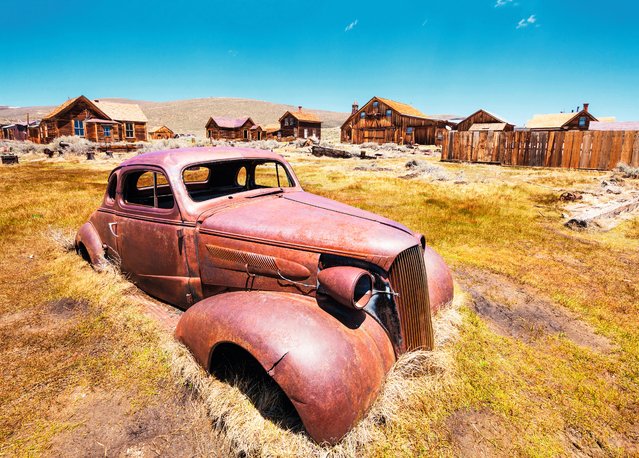
Kieron Connolly’s new book of photographs of more than 100 once-busy and often elegant buildings gives an idea of how the world might look if humankind disappeared. Here: Bodie, Mono County, California. Gold was discovered at Bodie in 1859 (just after the initial California gold rush) and it went from mining camp to boomtown. Its decline began in 1880, when word spread of new boomtowns elsewhere. The Standard Consolidated Mine closed in 1913, and four years later the Bodie Railway was abandoned. By 1940 the population was down to 40. Today, Bodie is maintained in a state of arrested decay as a visitor attraction. (Photo by Alamy Stock Photo)
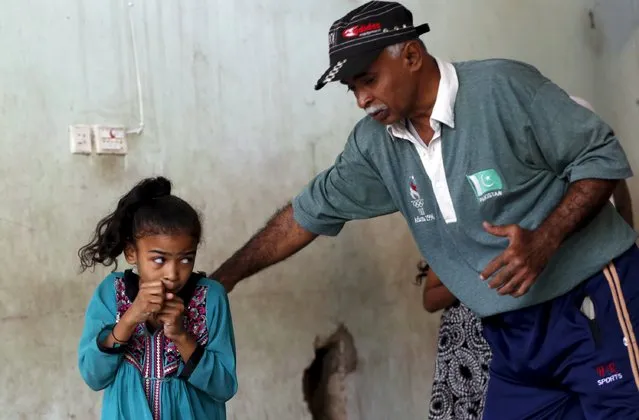
Arisha, 9, takes instructions from coach Younus Qambrani during an exercise session at the first women's boxing coaching camp in Karachi, Pakistan February 19, 2016. For the past six months about a dozen girls, aged 8 to 17, have gone to the Pak Shine Boxing Club after school to practice their jabs, hooks and upper cuts. (Photo by Akhtar Soomro/Reuters)