Loading...
Done
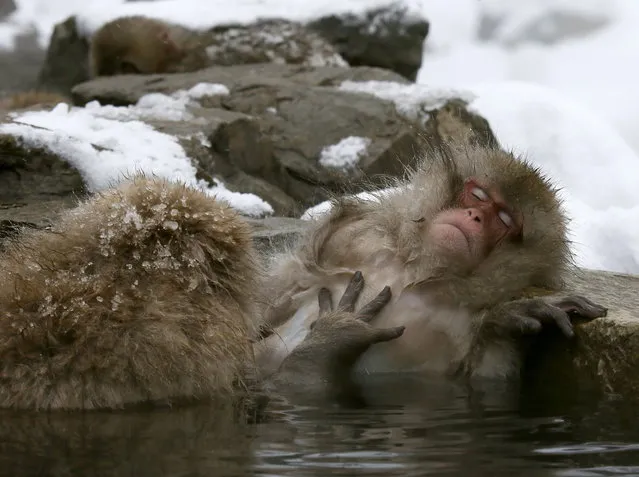
Japanese Macaque monkeys soak in the warmth of mountain hotsprings at Jigokudani Monkey Park, in Yamanouchi, central Japan, 19 January 2014. The Japanese Macaques (Macaca fuscata), also referred to as Snow Monkeys, live freely in this area that is covered by snow one third of the year. (Photo by Kimimasa Mayama/EPA)

Japanese Macaque monkeys soak in the warmth of mountain hotsprings at Jigokudani Monkey Park, in Yamanouchi, central Japan, 19 January 2014. The Japanese Macaques (Macaca fuscata), also referred to as Snow Monkeys, live freely in this area that is covered by snow one third of the year. Jigokudani is the only known place in the world where monkeys bathe in natural hot springs. As a habit, they come down from the mountains where they spend the night and bath during the day. (Photo by Kimimasa Mayama/EPA)
Details
21 Jan 2014 11:36:00
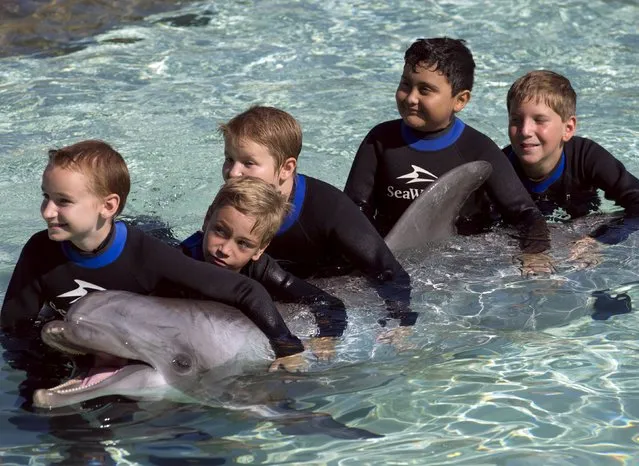
Patients from Rady Children's Hospital hug a bottlenose dolphin after being invited to swim and interact with dolphins at Sea World in San Diego, California  August 27, 2015. (Photo by Mike Blake/Reuters)

Patients from Rady Children's Hospital hug a bottlenose dolphin after being invited to swim and interact with dolphins at Sea World in San Diego, California August 27, 2015. Sea World has hosted Dolphin Interaction Program for seven years. It was started by dolphin trainer Joy Soto who battled and overcame non-Hodgkin’s lymphoma. (Photo by Mike Blake/Reuters)
Details
28 Aug 2015 12:19:00
Japan's delegation gather to sign the formal surrender document on the U.S. Navy battleship USS Missouri in Tokyo Bay in a September 2, 1945 file photo. (Photo by Reuters/US Navy)

Japan's delegation gather to sign the formal surrender document on the U.S. Navy battleship USS Missouri in Tokyo Bay in a September 2, 1945 file photo. (Photo by Reuters/US Navy)
Details
03 Sep 2015 12:43:00
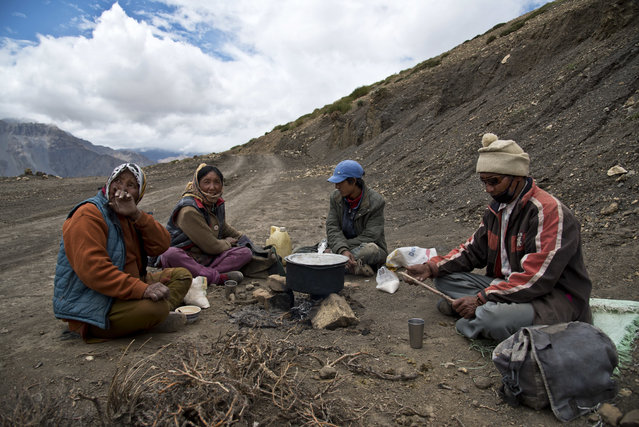
In this August 17, 2016, photo, from left to right, Chhering Chodom, 60, Tashi Yangzom, 50, Lobsang Chhering, 27, and Dorje Tandup, 58, drink milk tea on the side of the road. For centuries, the sleepy valley nestled in the Indian Himalayas remained a hidden Buddhist enclave forbidden to outsiders. Enduring the harsh year-round conditions of the high mountain desert, the people of Spiti Valley lived by a simple communal code – share the Earth's bounty, be hospitable to neighbors, and eschew greed and temptation at all turns. That's all starting to change, for better or worse. Since India began allowing its own citizens as well as outsiders to visit the valley in the early 1990s, tourism and trade have boomed. And the marks of modernization, such as solar panels, asphalt roads and concrete buildings, have begun to appear around some of the villages that dot the remote landscape at altitudes above 4,000 meters (13,000 feet). (Photo by Thomas Cytrynowicz/AP Photo)

In this August 17, 2016, photo, from left to right, Chhering Chodom, 60, Tashi Yangzom, 50, Lobsang Chhering, 27, and Dorje Tandup, 58, drink milk tea on the side of the road. For centuries, the sleepy valley nestled in the Indian Himalayas remained a hidden Buddhist enclave forbidden to outsiders. Enduring the harsh year-round conditions of the high mountain desert, the people of Spiti Valley lived by a simple communal code – share the Earth's bounty, be hospitable to neighbors, and eschew greed and temptation at all turns. That's all starting to change, for better or worse. (Photo by Thomas Cytrynowicz/AP Photo)
Details
15 Sep 2016 09:22:00
In this September 10, 2016 picture, a girl takes pictures of a fellow contestant while warming up backstage before competing in the Romania Miss Pole Dance Contest, ahead of the finals of the Pole Sport&Fitness World Championship 2016 in Bucharest, Romania. (Photo by Vadim Ghirda/AP Photo)

In this September 10, 2016 picture, a girl takes pictures of a fellow contestant while warming up backstage before competing in the Romania Miss Pole Dance Contest, ahead of the finals of the Pole Sport&Fitness World Championship 2016 in Bucharest, Romania. (Photo by Vadim Ghirda/AP Photo)
Details
28 Sep 2016 10:53:00
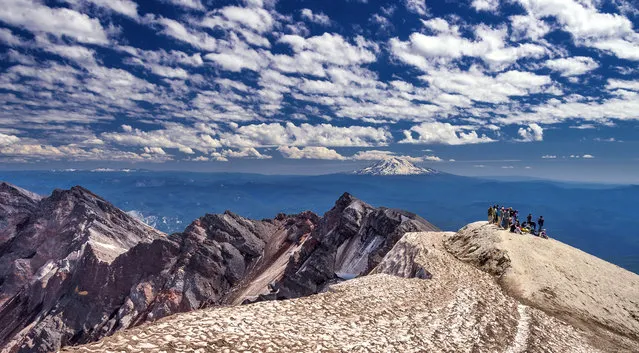
A group of hikers atop Mount St. Helens on July 21, 2016. Mount St. Helens or Louwala-Clough is an active stratovolcano located in Skamania County, Washington, in the Pacific Northwest region of the United States. It is 96 miles south of Seattle, Washington, and 50 miles northeast of Portland, Oregon. (Photo by Raxit Kagalwala)

A group of hikers atop Mount St. Helens on July 21, 2016. Mount St. Helens or Louwala-Clough is an active stratovolcano located in Skamania County, Washington, in the Pacific Northwest region of the United States. It is 96 miles south of Seattle, Washington, and 50 miles northeast of Portland, Oregon. (Photo by Raxit Kagalwala)
Details
01 Oct 2016 11:28:00
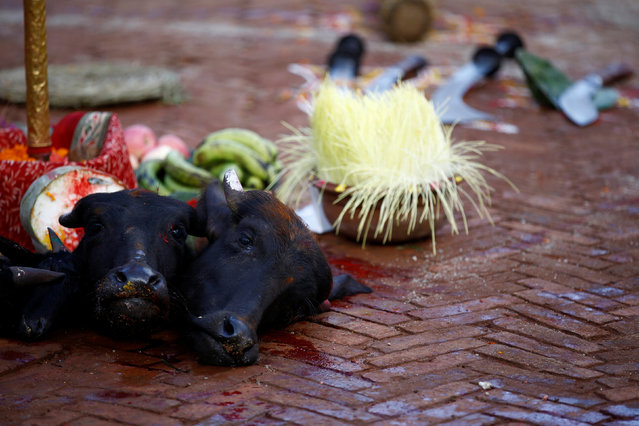
The heads of slaughtered water buffalos and a goat are lined up on the ground after the animals were sacrificed during “Dashain”, a Hindu religious festival in Kathmandu, Nepal October 10, 2016. (Photo by Navesh Chitrakar/Reuters)

The heads of slaughtered water buffalos and a goat are lined up on the ground after the animals were sacrificed during “Dashain”, a Hindu religious festival in Kathmandu, Nepal October 10, 2016. (Photo by Navesh Chitrakar/Reuters)
Details
12 Oct 2016 10:56:00
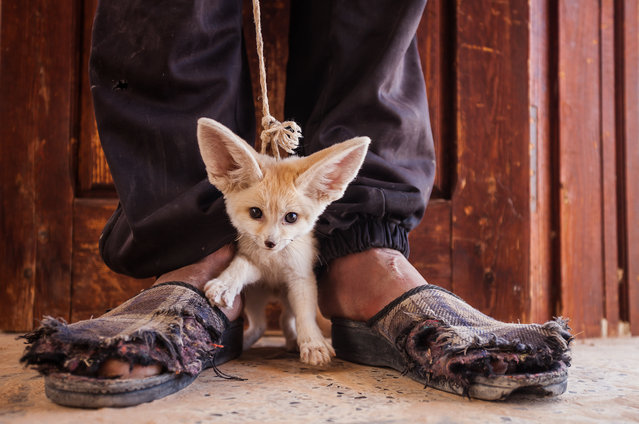
Fennec foxes are captured for the illegal pet trade. This three-month-old pup was for sale in a market in southern Tunisia. (Photo by Bruno D'Amicis/Photographers Against Wildlife Crime/Wildscreen/The Guardian)

In a new project, an international group of photographers have joined forces to use their powerful images to raise awareness and funds to help stop the illegal wildlife trade. Here: Fennec foxes are captured for the illegal pet trade. This three-month-old pup was for sale in a market in southern Tunisia. (Photo by Bruno D'Amicis/Photographers Against Wildlife Crime/Wildscreen/The Guardian)
Details
17 Oct 2017 06:05:00