Loading...
Done
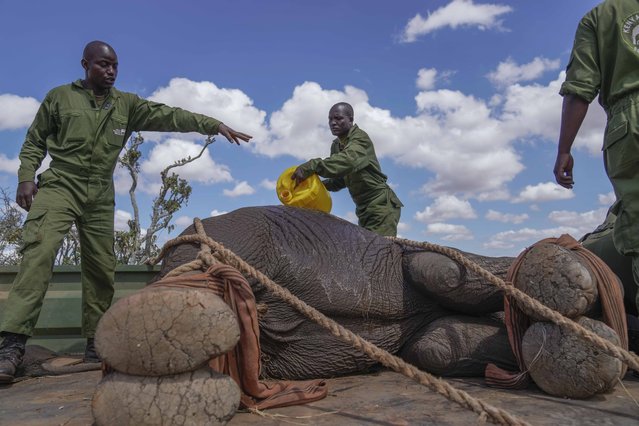
Kenya Wildlife Service rangers and capture team cool down a sedated elephant at Mwea National Park, east of the capital Nairobi, Kenya Monday, October 14, 2024. (Photo by Brian Inganga/AP Photo)

Kenya Wildlife Service rangers and capture team cool down a sedated elephant at Mwea National Park, east of the capital Nairobi, Kenya Monday, October 14, 2024. (Photo by Brian Inganga/AP Photo)
Details
23 Jan 2026 08:44:00
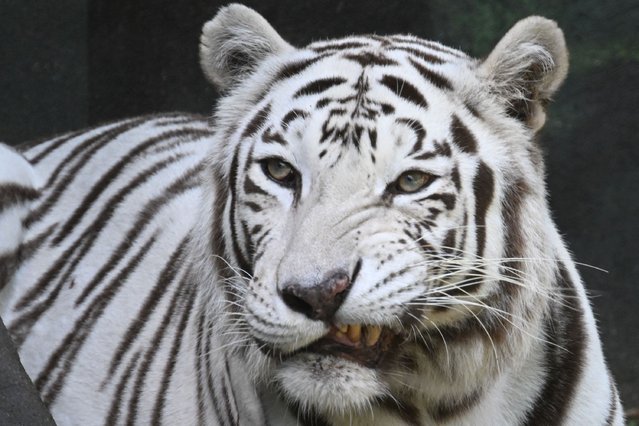
White Bengal tiger named Romina is pictured inside its new enclosure at La Aurora Zoo in Guatemala City on October 24, 2024. (Photo by Johan Ordonez/AFP Photo)

White Bengal tiger named Romina is pictured inside its new enclosure at La Aurora Zoo in Guatemala City on October 24, 2024. (Photo by Johan Ordonez/AFP Photo)
Details
03 Feb 2026 08:18:00
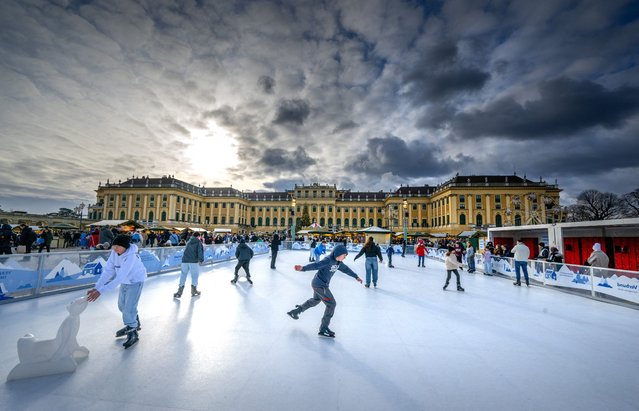
Children enjoy skating at the ice rink built at the Christmas market outside of the Schoenbrunn imperial palace just few days before Christmas in Vienna, Austria on December 20, 2024. Schoenbrunn Palace was the main summer residence of the Habsburg rulers. (Photo by Joe Klamar/AFP Photo)

Children enjoy skating at the ice rink built at the Christmas market outside of the Schoenbrunn imperial palace just few days before Christmas in Vienna, Austria on December 20, 2024. Schoenbrunn Palace was the main summer residence of the Habsburg rulers. (Photo by Joe Klamar/AFP Photo)
Details
31 Mar 2026 12:17:00
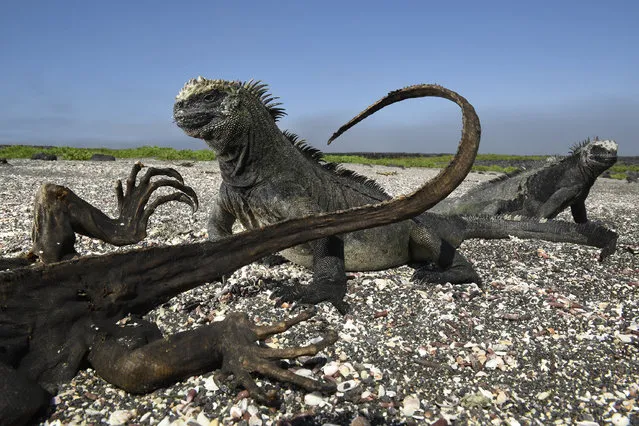
Galapagos – Rocking the Cradle: Four major ocean currents converge along the Galapagos archipelago, creating the conditions for an extraordinary diversity of animal life, April 25, 2016. The islands are home to at least 7,000 flora and fauna species, of which 97 percent of the reptiles, 80 percent of the land birds, 50 percent of the insects and 30 percent of the plants are endemic. The local ecosystem is highly sensitive to the changes in temperature, rainfall and ocean currents that characterize the climatic events known as El Niño and La Niña. These changes cause marked fluctuations in weather and food availability. Many scientists expect the frequency of El Niño and La Niña to increase as a result of climate change, making the Galapagos a possible early-warning location for its effects. (Photo by Thomas P. Peschak for National Geographic/World Press Photo)

Galapagos – Rocking the Cradle: Four major ocean currents converge along the Galapagos archipelago, creating the conditions for an extraordinary diversity of animal life, April 25, 2016. The islands are home to at least 7,000 flora and fauna species, of which 97 percent of the reptiles, 80 percent of the land birds, 50 percent of the insects and 30 percent of the plants are endemic. (Photo by Thomas P. Peschak for National Geographic/World Press Photo)
Details
16 Apr 2018 00:01:00
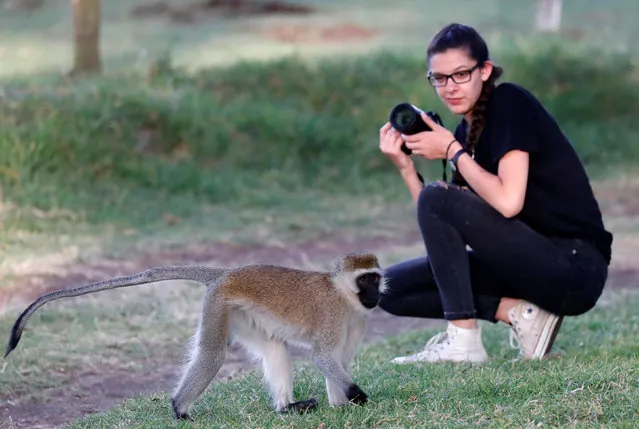
A vervet monkey passes in front of a woman on the shores of lake Naivasha, Kenya January 24, 2017. (Photo by Goran Tomasevic/Reuters)

A vervet monkey passes in front of a woman on the shores of lake Naivasha, Kenya January 24, 2017. (Photo by Goran Tomasevic/Reuters)
Details
25 Jan 2017 11:45:00
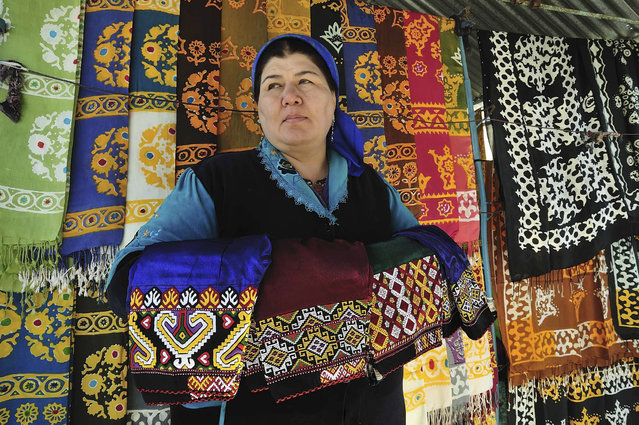
A woman looks out from her stall selling traditional garments and textiles at a market in Ashgabat February 8, 2012. (Photo by Aman Mehinli/Reuters)

A woman looks out from her stall selling traditional garments and textiles at a market in Ashgabat February 8, 2012. (Photo by Aman Mehinli/Reuters)
Details
27 May 2015 00:04:00
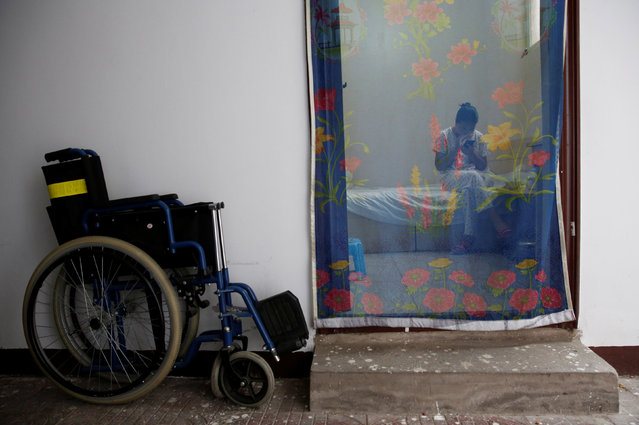
Wang uses a mobile phone as she take a rest in her room at the accommodation where patients and their family members stay while seeking medical treatments in Beijing, China, June 23, 2016. Wang, who suffers from cervical cancer, came from Inner Mongolia to seek treatment at a specialist hospital in Beijing. (Photo by Kim Kyung-Hoon/Reuters)

Wang uses a mobile phone as she take a rest in her room at the accommodation where patients and their family members stay while seeking medical treatments in Beijing, China, June 23, 2016. Wang, who suffers from cervical cancer, came from Inner Mongolia to seek treatment at a specialist hospital in Beijing. (Photo by Kim Kyung-Hoon/Reuters)
Details
30 Sep 2016 09:03:00
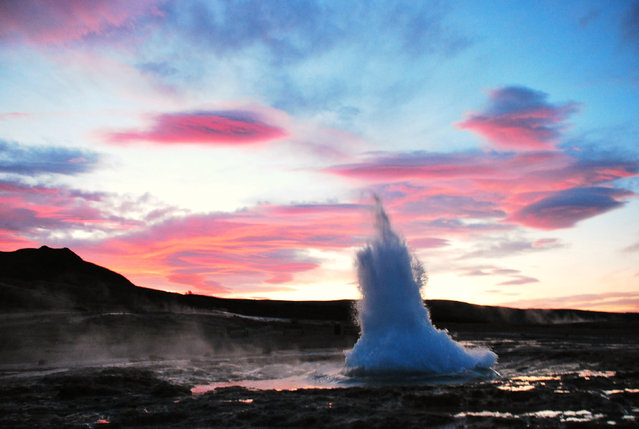
Strokkur geyser against cloudy sky at sunset. Strokkur is a fountain geyser located in a geothermal area beside the Hvítá River in Iceland in the southwest part of the country, east of Reykjavík. It is one of Iceland's most famous geysers, erupting once every 6–10 minutes. Its usual height is 15–20 m, although it can sometimes erupt up to 40 m high. (Photo by Teatsche Dijkhuis/Getty Images/EyeEm)

Strokkur geyser against cloudy sky at sunset. Strokkur is a fountain geyser located in a geothermal area beside the Hvítá River in Iceland in the southwest part of the country, east of Reykjavík. It is one of Iceland's most famous geysers, erupting once every 6–10 minutes. Its usual height is 15–20 m, although it can sometimes erupt up to 40 m high. (Photo by Teatsche Dijkhuis/Getty Images/EyeEm)
Details
18 Oct 2016 12:43:00