Loading...
Done
Monastic Life in Myanmar

Burmese monks take their yearly exam December 13, 2011 in Bago, Myanmar. Around 1,400 monks from Bago province took part . (Photo by Paula Bronstein /Getty Images)
Details
19 Dec 2011 11:50:00
Young Slovaks dressed in traditional costumes throw a bucket of water at a girl as part of Easter celebrations in the village of Trencianska Tepla, Slovakia, April 9, 2012. Slovakia's men splash women with water to symbolize youth, strength and beauty for the upcoming spring season

Young Slovaks dressed in traditional costumes throw a bucket of water at a girl as part of Easter celebrations in the village of Trencianska Tepla, Slovakia, April 9, 2012. Slovakia's men splash women with water to symbolize youth, strength and beauty for the upcoming spring season. (Photo by Samuel Kubani/AFP)
Details
13 Apr 2012 10:38:00
Izhmash (Ижмаш)

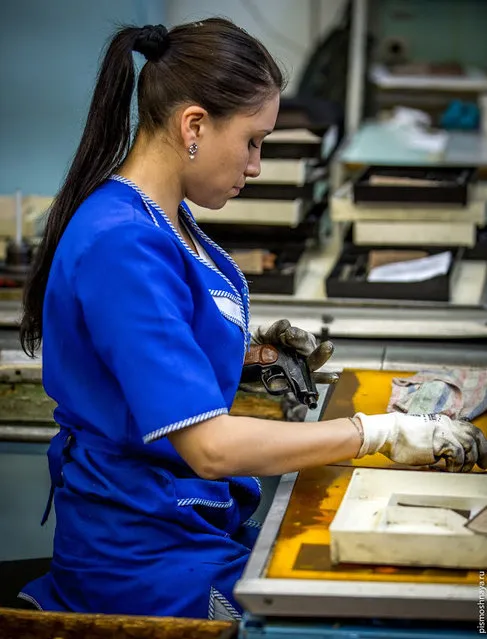
“Izhevsk Machinebuilding Plant (Russian: Ижевский Mашиностроительный Завод) or IZHMASH (ИЖМАШ) is a weapons and motor vehicle manufacturer based in Izhevsk, founded in 1807 at the decree of Tsar Alexander I, and is now one of the largest corporations in its field. It manufactures the famous Kalashnikov series of assault rifle, along with a host of other Russian arms, including medium cannons, missiles, and guided shells”. – Wikipedia. (Photo by Pismoshnaya.ru, 2012)
Details
09 Dec 2012 10:04:00
A member of the Revolutionary Armed Forces of Colombia (FARC) pose for a picture at a camp in the Colombian mountains on February 2005. (Photo by Frank Piasecki Poulsen)

A member of the Revolutionary Armed Forces of Colombia (FARC) pose for a picture at a camp in the Colombian mountains on February 2005. (Photo by Frank Piasecki Poulsen)
Details
29 Sep 2016 08:51:00
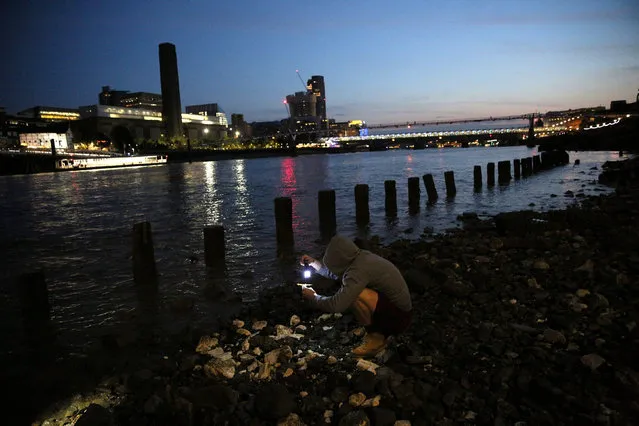
A mudlark uses a torch to look for items on the bank of the River Thames in London, Britain June 06, 2016. Mudlarking is believed to trace its origins to the 18th and 19th century, when scavengers searched the Thames' shores for items to sell. These days, history and archaeology fans are the ones hoping to find old relics such as coins, ceramics, artifacts or everyday items from across centuries. They wait for the low tide and then scour specific areas of exposed shores. "If you're in a field you could be out all day long, with the river you're restricted to about two or three hours," mudlark Nick Stevens said. While many just use the naked eye for their searches, others rely on metal detectors for which a permit from the Port of London Authority is needed. Digging also requires consent. (Photo by Neil Hall/Reuters)

A mudlark uses a torch to look for items on the bank of the River Thames in London, Britain June 06, 2016. Mudlarking is believed to trace its origins to the 18th and 19th century, when scavengers searched the Thames' shores for items to sell. These days, history and archaeology fans are the ones hoping to find old relics such as coins, ceramics, artifacts or everyday items from across centuries. their finds with the Portable Antiquities Scheme. Any item over 300 years old must be recorded. (Photo by Neil Hall/Reuters)

Details
27 Aug 2016 10:43:00
Arctic treasure by Sergey Gorshkov (Russia). An arctic fox carries its egg trophy from a raid on a snow goose nest and heads for a suitable burial spot. Finalist 2017, Animal Portraits. (Photo by  Sergey Gorshkov/2017 Wildlife Photographer of the Year)

Arctic treasure by Sergey Gorshkov (Russia). An arctic fox carries its egg trophy from a raid on a snow goose nest and heads for a suitable burial spot. Finalist 2017, Animal Portraits. (Photo by Sergey Gorshkov/2017 Wildlife Photographer of the Year)
Details
12 Sep 2017 09:33:00
Racegoers in fashionable hats attend Ladies Day at Cheltenham Festival on March 15, 2017 in Cheltenham, England. (Photo by David Davies/PA Wire)

Racegoers in fashionable hats attend Ladies Day at Cheltenham Festival on March 15, 2017 in Cheltenham, England. (Photo by David Davies/PA Wire)
Details
21 Apr 2017 07:45:00
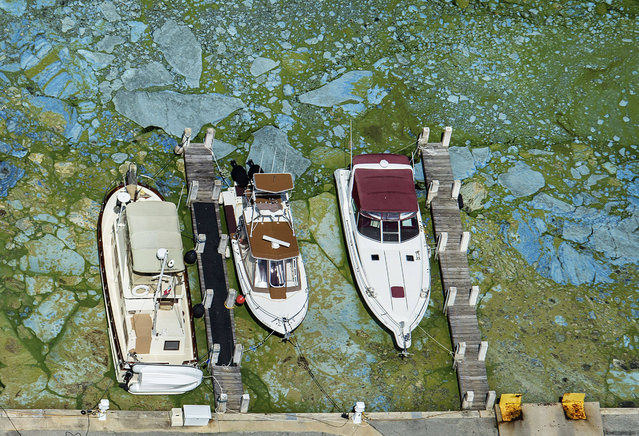
In this June 29, 2016 file photo, boats docked at Central Marine in Stuart, Fla., are surrounded by blue green algae. The 153-mile-long Indian River Lagoon has been plagued by harmful algae blooms. Water quality testing data analyzed by the AP showed the average phosphorous level – a byproduct of fertilizers and human waste that algae thrive on, rose nearly 75 percent between 2000 and 2016. (Photo by Greg Lovett/The Palm Beach Post via AP Photo)

In this June 29, 2016 file photo, boats docked at Central Marine in Stuart, Fla., are surrounded by blue green algae. The 153-mile-long Indian River Lagoon has been plagued by harmful algae blooms. Water quality testing data analyzed by the AP showed the average phosphorous level – a byproduct of fertilizers and human waste that algae thrive on, rose nearly 75 percent between 2000 and 2016. (Photo by Greg Lovett/The Palm Beach Post via AP Photo)
Details
11 May 2017 07:26:00