Loading...
Done
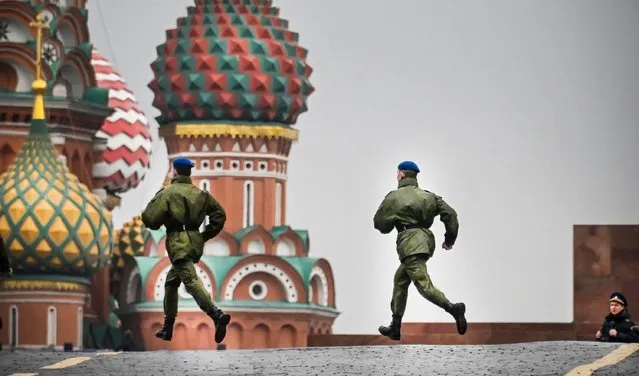
Russian soldiers run along Red Square in central Moscow on September 29, 2022, as the square is sealed prior to a ceremony of the incorporation of the new territories into Russia. Russia will formally annex four territories of Ukraine its troops occupy at a grand ceremony in Moscow on Friday, the Kremlin has announced, after Russia suggested it could to use nuclear weapons to defend the territories. (Photo by Alexander Nemenov/AFP Photo)

Russian soldiers run along Red Square in central Moscow on September 29, 2022, as the square is sealed prior to a ceremony of the incorporation of the new territories into Russia. Russia will formally annex four territories of Ukraine its troops occupy at a grand ceremony in Moscow on Friday, the Kremlin has announced, after Russia suggested it could to use nuclear weapons to defend the territories. (Photo by Alexander Nemenov/AFP Photo)
Details
07 Oct 2022 04:26:00
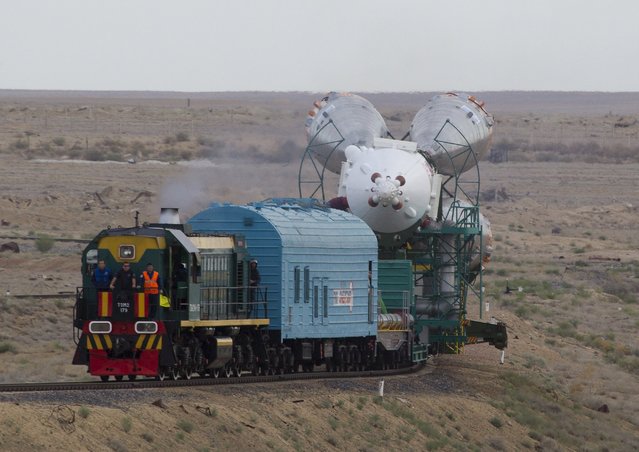
The Soyuz TMA-18M spacecraft is transported from an assembling hangar to its launch pad at the Baikonur cosmodrome, Kazakhstan, August 31, 2015. (Photo by Shamil Zhumatov/Reuters)

The Soyuz TMA-18M spacecraft is transported from an assembling hangar to its launch pad at the Baikonur cosmodrome, Kazakhstan, August 31, 2015. The Soyuz is scheduled to blast off with Aidyn Aimbetov of Kazakhstan, Sergei Volkov of Russia and Andreas Mogensen of Denmark to the International Space Station (ISS) on September 2, 2015. (Photo by Shamil Zhumatov/Reuters)
Details
01 Sep 2015 14:45:00
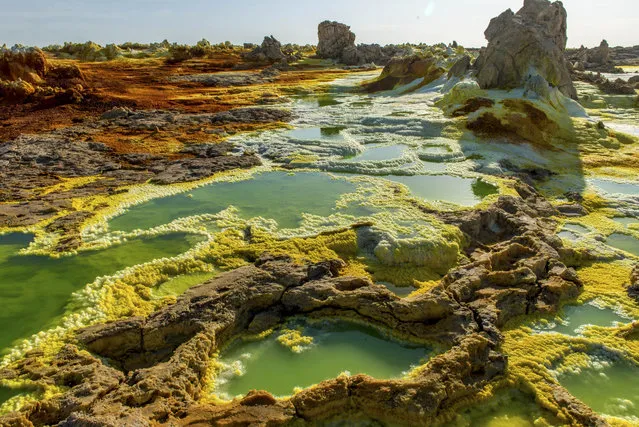
Despite the amazing sight, Netal said that seeing the pools came with a downside. “The smell was horrible, and it was difficult to breath”. (Photo by Neta Dekel/Caters News Agency)

These stunning images show the beauty and drama of Mother Nature at work. Captured deep in heart of the Danakil Desert in East Africa, the images show the acid pools near the Erta Ale volcano. Pools of brightly colored acid can be seen amid the dramatic blast of volcanic ash. The photos were taken by Neta Dekel, an Israeli photographer. He the acid pools were one of the most extraordinary sights he had ever seen. (Photo by Neta Dekel/Caters News Agency)
Details
27 Jun 2018 00:03:00
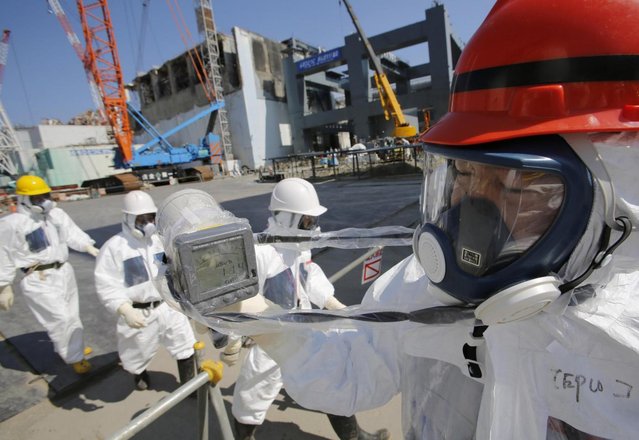
A radiation monitor indicates 114.00 microsieverts per hour near the building housing the plant's No. 4 reactor, center, and an under construction foundation, right, which will store the reactor's melted fuel rods at Tokyo Electric Power Co.'s tsunami-crippled Fukushima Dai-ichi nuclear power plant in Okuma, Fukushima prefecture, Wednesday, March 6, 2013, ahead of the second anniversary of the March 11, 2011 tsunami and earthquake. (Photo by Issei Kato/AP Photo/Pool)

A radiation monitor indicates 114.00 microsieverts per hour near the building housing the plant's No. 4 reactor, center, and an under construction foundation, right, which will store the reactor's melted fuel rods at Tokyo Electric Power Co.'s tsunami-crippled Fukushima Dai-ichi nuclear power plant in Okuma, Fukushima prefecture, Wednesday, March 6, 2013, ahead of the second anniversary of the March 11, 2011 tsunami and earthquake. Some 110,000 people living around the nuclear plant were evacuated after the massive March 11, 2011, earthquake and tsunami knocked out the plant's power and cooling systems, causing meltdowns in three reactors and spewing radiation into the surrounding air, soil and water. (Photo by Issei Kato/AP Photo/Pool)
Details
06 Mar 2013 13:19:00
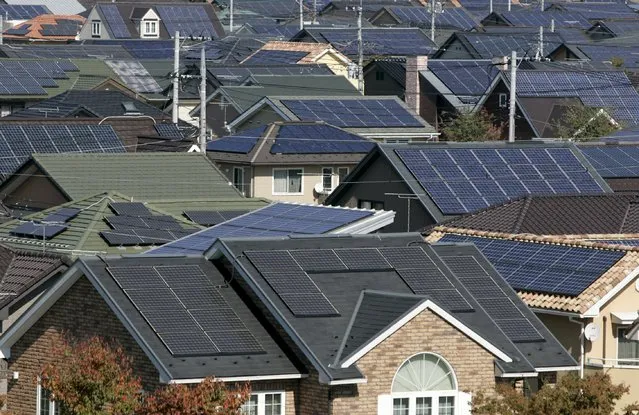
Rooftops of solar powered houses are pictured in Ota, 80 km northwest of Tokyo in this October 28, 2008 file photo. One by one, Japan is turning off the lights at the giant oil-fired power plants that propelled it to the ranks of the world's top industrialised nations. With nuclear power in the doldrums after the Fukushima disaster, it's solar energy that is becoming the alternative. (Photo by Yuriko Nakao/Reuters)

Rooftops of solar powered houses are pictured in Ota, 80 km northwest of Tokyo in this October 28, 2008 file photo. One by one, Japan is turning off the lights at the giant oil-fired power plants that propelled it to the ranks of the world's top industrialised nations. With nuclear power in the doldrums after the Fukushima disaster, it's solar energy that is becoming the alternative. Solar power is set to become profitable in Japan as early as this quarter, according to the Japan Renewable Energy Foundation (JREF), freeing it from the need for government subsidies and making it the last of the G7 economies where the technology has become economically viable. (Photo by Yuriko Nakao/Reuters)
Details
24 Nov 2015 08:04:00


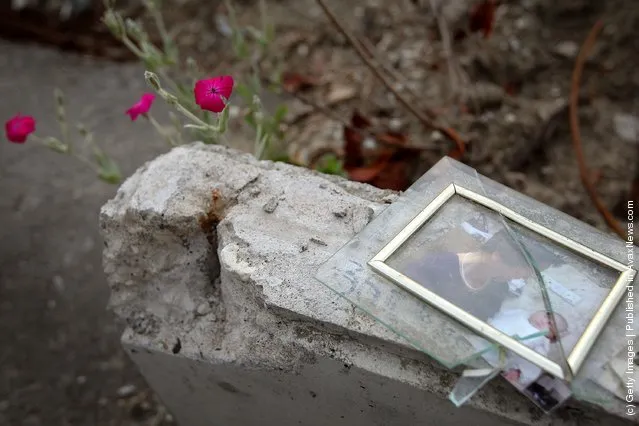
A broken picture frame is left in the tsunami-hit Arahama area, three months and two days after the magnitude 9.0 earthquake and subsequent tsunami on June 13, 2011 in Sendai, Miyagi, Japan. Japanese government has been struggling to deal with the earthquake and tsunami as well as the troubled Fukushima Daiichi Nuclear Power Plant. The fear on outbreak of virus infectious disease are mounting due to the humid rainy season on the corner and delay of the clearing the debris. (Photo by Kiyoshi Ota/Getty Images)
Details
14 Jun 2011 09:23:00


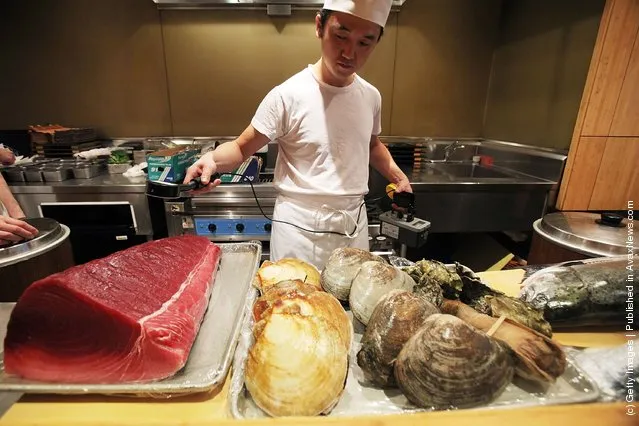
Sushi chef Mitsuru Tamura uses a radiation detector on seafood before it is prepared in Manhattan's Sushi Yasuda restaurant April 8, 2011 in New York City. The restaurant has begun using the detector as a precautionary measure due to consumer concerns over possible radiation contamination in seafood from the nuclear emergency in Japan. Health officials believe contamination is unlikely to threaten the food supply chain and none has been found in this restaurant. (Photo by Mario Tama/Getty Images)
Details
09 Apr 2011 08:52:00
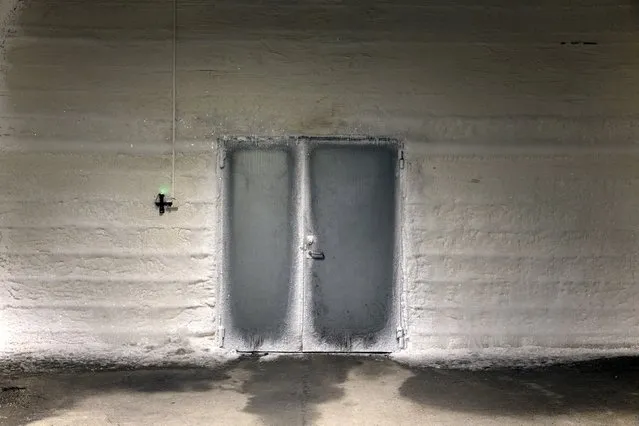
An ice covered entrance door to the international gene bank Svalbard Global Seed Vault (SGSV) near Longyearbyen on Spitsbergen, Norway, October 20, 2015. (Photo by Anna Filipova/Reuters)

An ice covered entrance door to the international gene bank Svalbard Global Seed Vault (SGSV) near Longyearbyen on Spitsbergen, Norway, October 20, 2015. Two consignments of crop seeds will be deposited next year in a “doomsday vault” built in an Arctic mountainside to safeguard global supplies. The vault, which opened on the Svalbard archipelago in 2008, is designed to protect crop seeds, such as beans, rice and wheat against the worst cataclysms of nuclear war or disease. (Photo by Anna Filipova/Reuters)
Details
17 Dec 2015 08:01:00