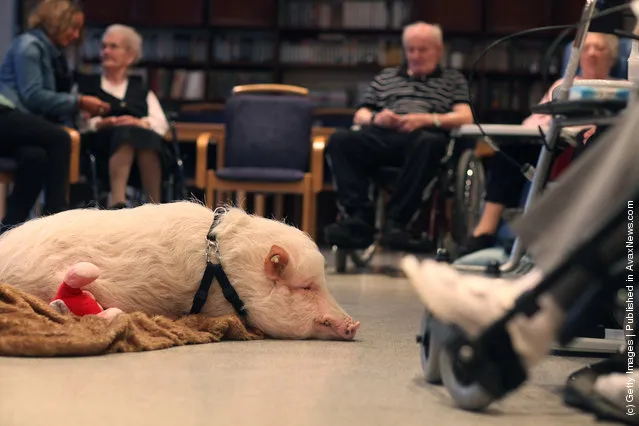
Pig Felix of physiotherapist Daan Vermeulen lies amid elderly people in a senior care facility on April 12, 2011 in Gelsenkirchen, Germany. (Photo by Ralph Orlowski/Getty Images)
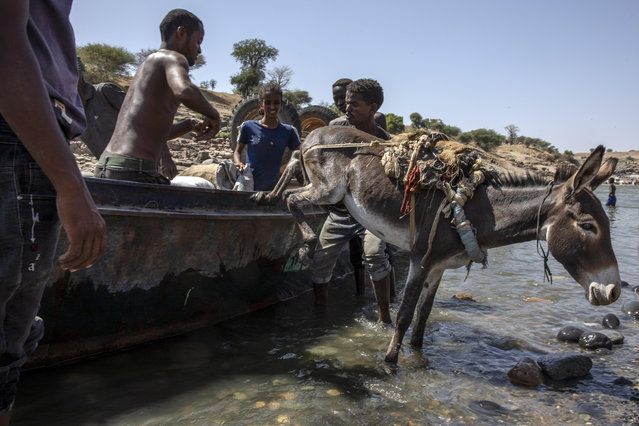
Tigray refugees who fled the conflict in the Ethiopia's Tigray arrive with their donkey on the banks of the Tekeze River on the Sudan-Ethiopia border, in Hamdayet, eastern Sudan, Saturday, November 21, 2020. (Photo by Nariman El-Mofty/AP Photo)
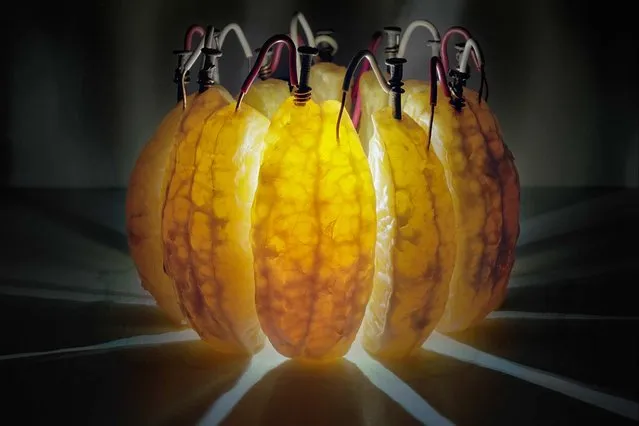
Wedges of an orange generate enough current and electrical juice – 3.5 volts – to power an LED. The fruit’s citric acid helps electrons flow from galvanized nails to copper wire in this 14-hour exposure. This image was published in September’s Visions of Earth, a trio of photos that appear in each issue of National Geographic. (Photo by Caleb Charland/National Geographic)
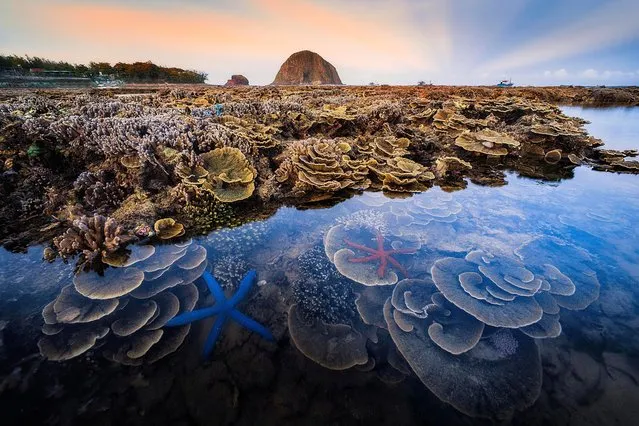
Runner-up; Hon Yen marine ecosystem. Phu Yen, Vietnam. Every year between May and August, the coral of this rich and diverse ecosystem becomes exposed at low tide. (Photo by Truong Hoai Vu/Royal Society of Biology Photography Competition)
Spacewalker Mark Vande Hei took his own photograph during the first spacewalk of 2018, on January 23, 2018. These sky-high pictures are better known as “space-selfies”. (Photo by Mark Vande Hei/NASA)
A little girl wearing a face mask dances in front of a toy panda at a shopping area in Shanghai, following the coronavirus disease (COVID-19) outbreak, China on June 16, 2020. (Photo by Aly Song/Reuters)
A motor taxi driver gets his hands washed at an Ebola screening station on the road between Butembo and Goma on July 16, 2019 in Goma. The first patient to be diagnosed with Ebola in the eastern DR Congo city of Goma has died, the governor of North Kivu province said on July 16, 2019. The case – the first in a major urban hub in the region's nearly year-old epidemic of the disease – has sparked deep concern in neighbouring Rwanda and at the UN. (Photo by John Wessels/AFP Photo)