Loading...
Done
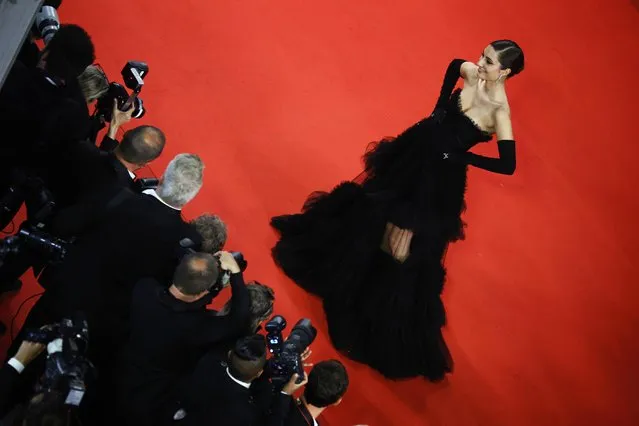
German model Lorena Rae arrives for the screening of the film “Brother And Sister (Frere Et Soeur)” during the 75th edition of the Cannes Film Festival in Cannes, southern France, on May 20, 2022. (Photo by Sarah Meyssonnier/Reuters)

German model Lorena Rae arrives for the screening of the film “Brother And Sister (Frere Et Soeur)” during the 75th edition of the Cannes Film Festival in Cannes, southern France, on May 20, 2022. (Photo by Sarah Meyssonnier/Reuters)
Details
25 May 2022 05:02:00
Photographers: Mandy Rosen

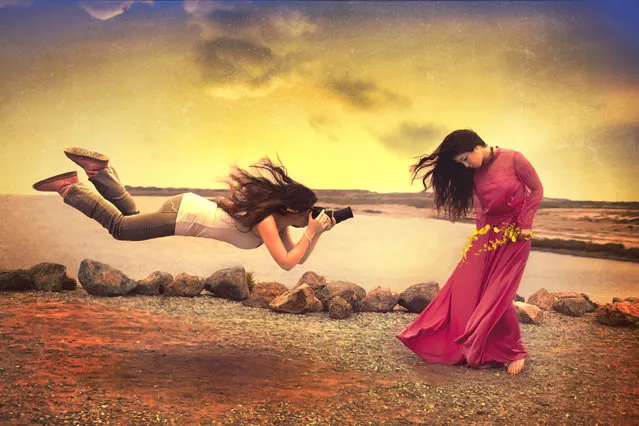
“The girl behind the camera and the girl in front of the camera”, May 2012. (Photo by: Mandy Rosen; Source: Flickr)
Details
19 May 2012 13:33:00
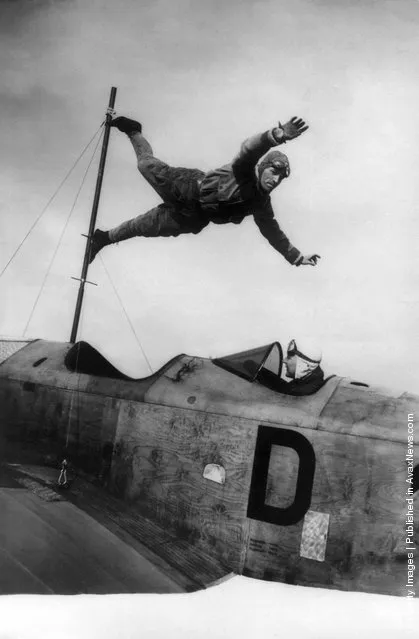
Aerial Acrobat

Aerial acrobat Schindler, notorious for his foolhardy stunts, practising one of his tricks listing out of the vertical, from a Klemp plane piloted by Richard Perlia. (Photo by General Photographic Agency/Getty Images). Circa 1927
Details
22 Aug 2011 12:18:00
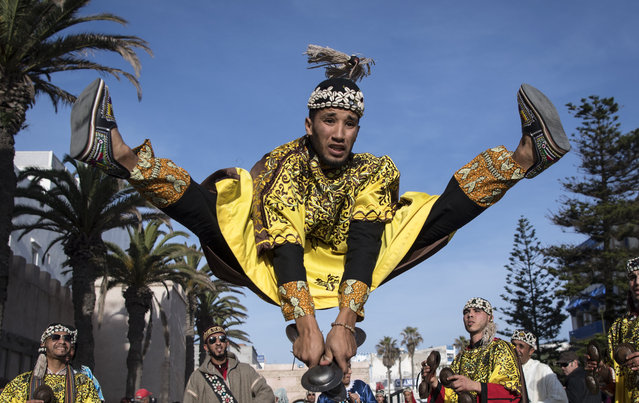
A Gnawa traditional group performs in the city of Essaouira on December 14, 2019, to celebrate the decision of adding the Gnawa culture to UNESCO's list of Intangible Cultural Heritage of Humanity. Gnawa culture, a centuries-old Moroccan practice rooted in music, African rituals and Sufi traditions, was added to UNESCO's list of Intangible Cultural Heritage of Humanity earlier in the week. Gnawa refers to a “set of musical productions, fraternal practices and therapeutic rituals where the secular mixes with the sacred”, according to the nomination submitted by Morocco. Often dressed in colourful outfits, Gnawa musicians play the guenbri, a type of lute with three strings, accompanied by steel castanets called krakebs. (Photo by Fadel Senna/AFP Photo)

A Gnawa traditional group performs in the city of Essaouira on December 14, 2019, to celebrate the decision of adding the Gnawa culture to UNESCO's list of Intangible Cultural Heritage of Humanity. Gnawa culture, a centuries-old Moroccan practice rooted in music, African rituals and Sufi traditions, was added to UNESCO's list of Intangible Cultural Heritage of Humanity earlier in the week. Gnawa refers to a “set of musical productions, fraternal practices and therapeutic rituals where the secular mixes with the sacred”, according to the nomination submitted by Morocco. Often dressed in colourful outfits, Gnawa musicians play the guenbri, a type of lute with three strings, accompanied by steel castanets called krakebs. (Photo by Fadel Senna/AFP Photo)
Details
18 Dec 2019 00:05:00
German carmaker Daimler's new Smart Fortwo car is seen on display during its world premiere in Berlin July 16, 2014. Daimler is betting that cooperation with Renault and the launch of models to tap growing demand for city cars may pave the way for its diminutive Smart brand to become profitable. Smart will add a new four-seater model to its lineup this year and upgrade the two-passenger Fortwo vehicle, raising hopes by the German group of boosting the brand's flagging sales. (Photo by Thomas Peter/Reuters)

German carmaker Daimler's new Smart Fortwo car is seen on display during its world premiere in Berlin July 16, 2014. Daimler is betting that cooperation with Renault and the launch of models to tap growing demand for city cars may pave the way for its diminutive Smart brand to become profitable. Smart will add a new four-seater model to its lineup this year and upgrade the two-passenger Fortwo vehicle, raising hopes by the German group of boosting the brand's flagging sales. (Photo by Thomas Peter/Reuters)
Details
18 Jul 2014 11:42:00
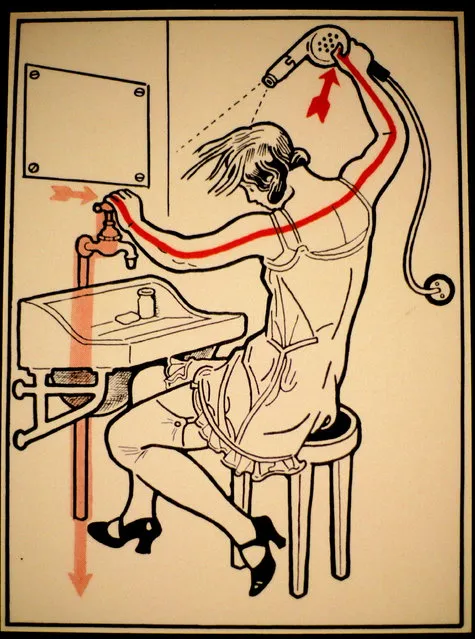
The book “Elektroschutz in 132 Bildern” (Electrical Protection in 132 Pictures) was published in Vienna in the early 1900s by a Viennese physician named Stefan Jellinek (1878-1968, a founder of the Electro-Pathological Museum). The pictures are nice and direct and unambiguous; they teach, graphically, that the surest way to kill yourself with electricity is to form a complete path from source (usually the bright red arrow) to ground (the screened back, pink arrow). Arrowheads provide the path for current flow. (Photo by The Vienna Technical Museum)

The book “Elektroschutz in 132 Bildern” (Electrical Protection in 132 Pictures) was published in Vienna in the early 1900s by a Viennese physician named Stefan Jellinek (1878-1968, a founder of the Electro-Pathological Museum). The pictures are nice and direct and unambiguous; they teach, graphically, that the surest way to kill yourself with electricity is to form a complete path from source (usually the bright red arrow) to ground (the screened back, pink arrow). Arrowheads provide the path for current flow. (Photo by The Vienna Technical Museum)
Details
11 Aug 2014 11:10:00
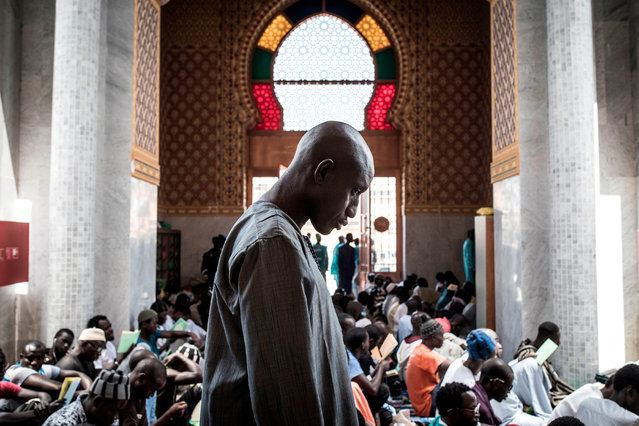
A Muslim worshipper attends a  mass prayer against COVID-19, the new coronavirus, in Dakar on March 4, 2020, after two cases were confirmed in Senegal in the previous days. Across the world, 3,155 people have died from the virus. More than 92,723 have been infected in 78 countries and territories, according to AFP's latest toll based on official sources at 1700 GMT on March 3, 2020. (Photo by John Wessels/AFP Photo)

A Muslim worshipper attends a mass prayer against COVID-19, the new coronavirus, in Dakar on March 4, 2020, after two cases were confirmed in Senegal in the previous days. Across the world, 3,155 people have died from the virus. More than 92,723 have been infected in 78 countries and territories, according to AFP's latest toll based on official sources at 1700 GMT on March 3, 2020. (Photo by John Wessels/AFP Photo)
Details
26 Mar 2020 00:01:00
Tokyo, “Electric City”

Tokyo, “Electric City”. August 24, 2009. (Photo by Caribb; Source: Flickr)
Details
01 May 2012 11:15:00