Loading...
Done
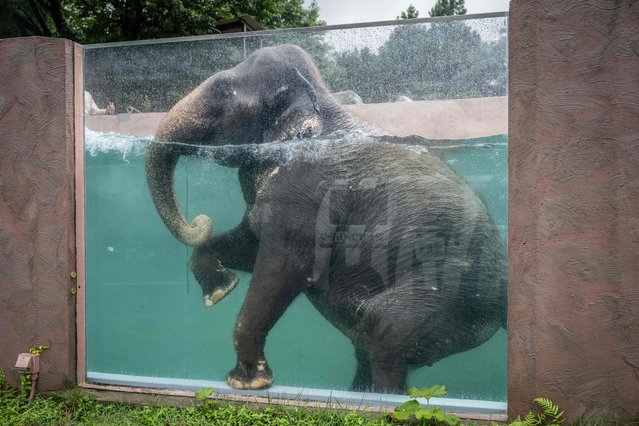
An Asian elephant swims in a pool with transparent sides at Fuji Safari Park in Susono city of Shizuoka Prefecture on August 8, 2024. Paddling with chunky legs and using their trunks as a snorkel, the elephants at Fuji Safari Park in Japan are taking a dip in their summer swimming pool – with each graceful movement visible thanks to a special see-through tank. (Photo by Yuichi Yamazaki/AFP Photo)

An Asian elephant swims in a pool with transparent sides at Fuji Safari Park in Susono city of Shizuoka Prefecture on August 8, 2024. Paddling with chunky legs and using their trunks as a snorkel, the elephants at Fuji Safari Park in Japan are taking a dip in their summer swimming pool – with each graceful movement visible thanks to a special see-through tank. (Photo by Yuichi Yamazaki/AFP Photo)
Details
06 Dec 2025 03:10:00
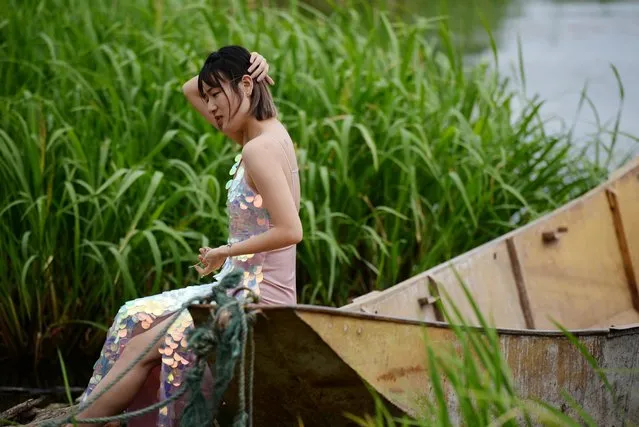
Yan Mengjie sits on a boat as she poses for photos near Erhai Lake in Dali Bai Autonomous Prefecture, Yunnan province, China on June 16, 2019. Erhai is one of China's biggest freshwater lakes and a backdrop to the city of Dali, which drew 47 million visitors last year, more than triple the number in 2010. Hotels and homestays have sprung up along a 31-mile (50-km) stretch of lakeside road to accommodate tourists. But officials ordered some hotels demolished after President Xi Jinping during a 2015 visit called for the lake to be protected. (Photo by Tingshu Wang/Reuters)

Yan Mengjie sits on a boat as she poses for photos near Erhai Lake in Dali Bai Autonomous Prefecture, Yunnan province, China on June 16, 2019. Erhai is one of China's biggest freshwater lakes and a backdrop to the city of Dali, which drew 47 million visitors last year, more than triple the number in 2010. Hotels and homestays have sprung up along a 31-mile (50-km) stretch of lakeside road to accommodate tourists. But officials ordered some hotels demolished after President Xi Jinping during a 2015 visit called for the lake to be protected. (Photo by Tingshu Wang/Reuters)
Details
25 Jun 2019 00:01:00
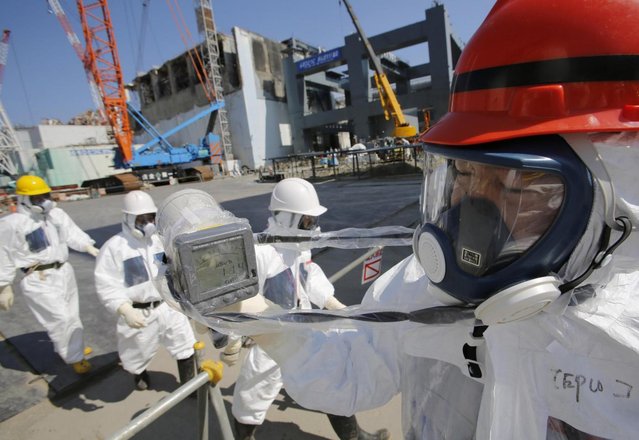
A radiation monitor indicates 114.00 microsieverts per hour near the building housing the plant's No. 4 reactor, center, and an under construction foundation, right, which will store the reactor's melted fuel rods at Tokyo Electric Power Co.'s tsunami-crippled Fukushima Dai-ichi nuclear power plant in Okuma, Fukushima prefecture, Wednesday, March 6, 2013, ahead of the second anniversary of the March 11, 2011 tsunami and earthquake. (Photo by Issei Kato/AP Photo/Pool)

A radiation monitor indicates 114.00 microsieverts per hour near the building housing the plant's No. 4 reactor, center, and an under construction foundation, right, which will store the reactor's melted fuel rods at Tokyo Electric Power Co.'s tsunami-crippled Fukushima Dai-ichi nuclear power plant in Okuma, Fukushima prefecture, Wednesday, March 6, 2013, ahead of the second anniversary of the March 11, 2011 tsunami and earthquake. Some 110,000 people living around the nuclear plant were evacuated after the massive March 11, 2011, earthquake and tsunami knocked out the plant's power and cooling systems, causing meltdowns in three reactors and spewing radiation into the surrounding air, soil and water. (Photo by Issei Kato/AP Photo/Pool)
Details
06 Mar 2013 13:19:00
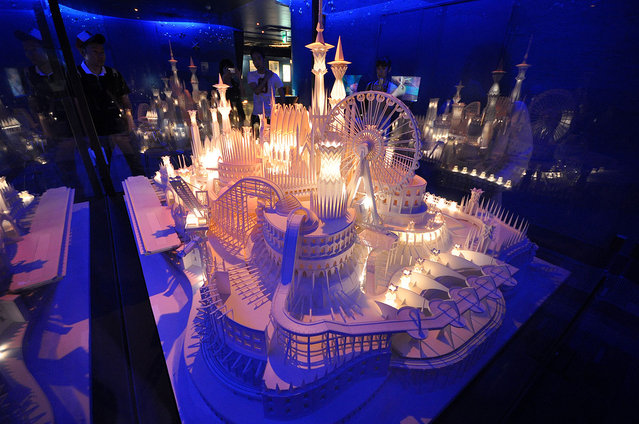
Paper Craft Castle By Wataru Itou

A paper craft art installation by Wataru Itou, a young student of a major art university in Tokyo. The installation is hand made over four years of hard work, complete with electrical lights and a moving train, all made of paper! Clearly, this man must have created one of the most stunning examples of Paper Craft in the world. The exhibition where this masterpiece was exposed was entiteled A Castle On the Ocean. It was exhibited at Umihotaru, a place which in itself is a major attraction: a service area in the middle of the ocean, right between Tokyo City and Chiba Prefecture.
Details
04 Dec 2013 10:13:00
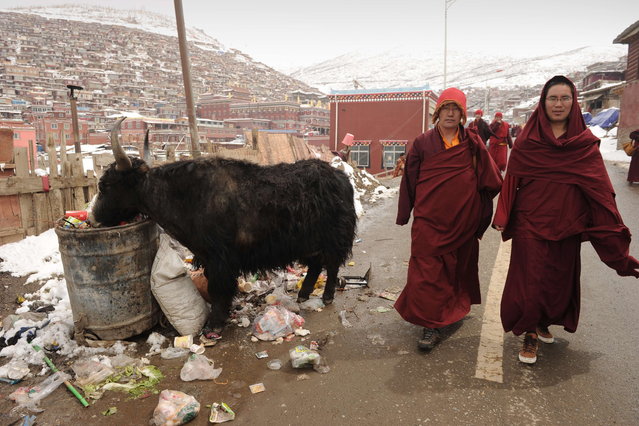
This photo taken on April 5, 2013 shows Buddhist monks passing a yak in Seda Monastery, the largest Tibetan Buddhist school in the world, with up to 40,000 monks and nuns in residence for some parts of the year. (Photo by Peter Parks/AFP Photo)

This photo taken on April 5, 2013 shows Buddhist monks passing a yak in Seda Monastery, the largest Tibetan Buddhist school in the world, with up to 40,000 monks and nuns in residence for some parts of the year. Seda, known to Tibetans as Serthar is located in Ganzi prefecture in the west of China's Sichuan province and has become a hotbed of protests and violence since the Tibetan uprisings of March 2008. (Photo by Peter Parks/AFP Photo)
Details
30 Apr 2013 08:56:00
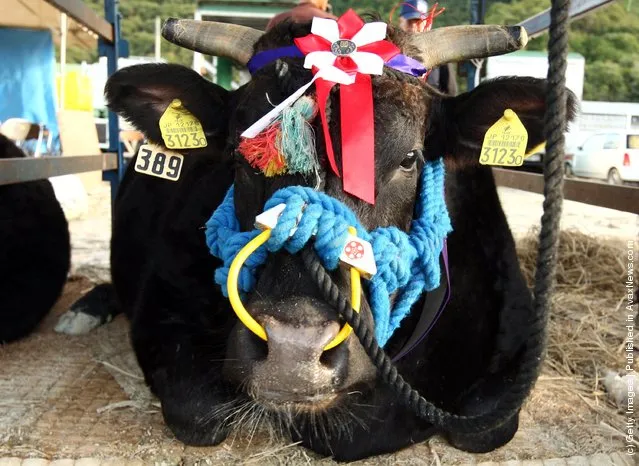
Auction Takes Place To Decide The Most Expensive Beef In Hyogo

A cow rests in a pen during the 93rd Hyogo Prefecture Livestock Industry Promoting Event on October 23, 2011 in Kobe, Japan. Hyogo is the center of producing fine beef such as Kobe beef and Tajima beef, and the highest hammer price of the auction was 5,001,000 Japanese yen (65,578.28 U.S. Dollars). Livestock Industry Promoting Event organizing official said, Fukushima nuclear accident and economy crises affected become les the price of Kobe and Tajima beef in this year. (Photo by Buddhika Weerasinghe/Getty Images)
Details
27 Oct 2011 12:01:00


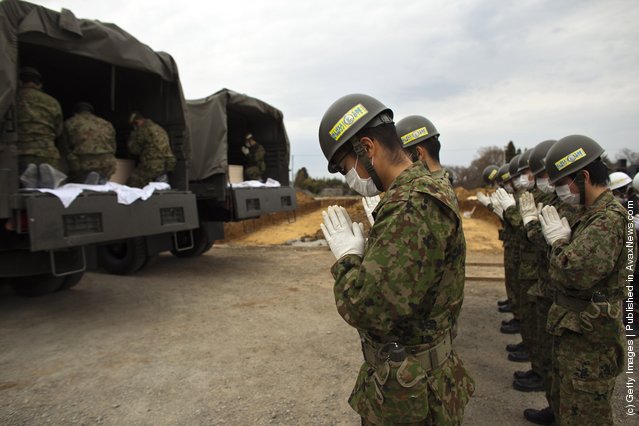
Japan Self-Defense Force members pay their respect to unidentified earthquake victims in vehicles during a mess funeral on April 8, 2011 in Yamamoto, Miyagi Prefecture, Japan. The 9.0 magnitude strong earthquake struck offshore on March 11 at 2:46pm local time, triggering a tsunami wave of up to ten metres which engulfed large parts of north-eastern Japan, and also damaging the Fukushima nuclear plant and threatening a nuclear catastrophe. The death toll continues to rise with numbers of dead and missing exceeding 20,000 in a tragedy not seen since World War II in Japan. (Photo by Athit Perawongmetha/Getty Images)
Details
10 Apr 2011 07:41:00


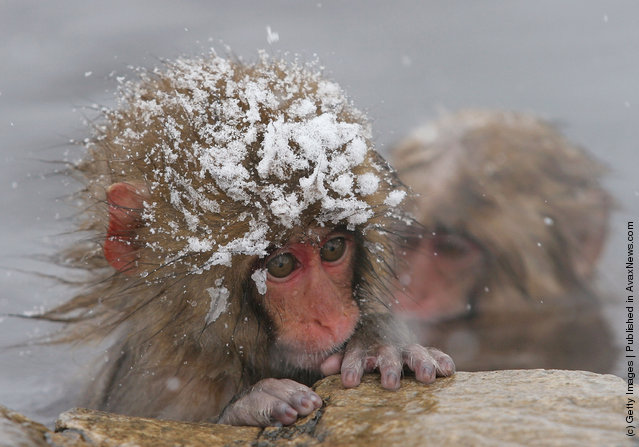
Japanese macaque monkeys enjoy sitting in the hot springs at Jigokudani-Onsen (Hell Valley) on January 23, 2005 in Jigokudani, Nagano-Prefecture, Japan. Japanese Macaques, also known as snow monkeys are the most northerly nonhuman primate in the world. In 1963 a female Macaque ventured into the hot springs to retrieve some soybeans. This behaviour was adopted by other monkeys, and eventually by the entire troop. This Macaque troop regularly visits the Jigokudani-Onsen springs to escape the cold. The hot springs are said to help relieve nerve pain and fatigue. (Photo by Koichi Kamoshida/Getty Images)
Details
20 May 2011 08:04:00