Loading...
Done
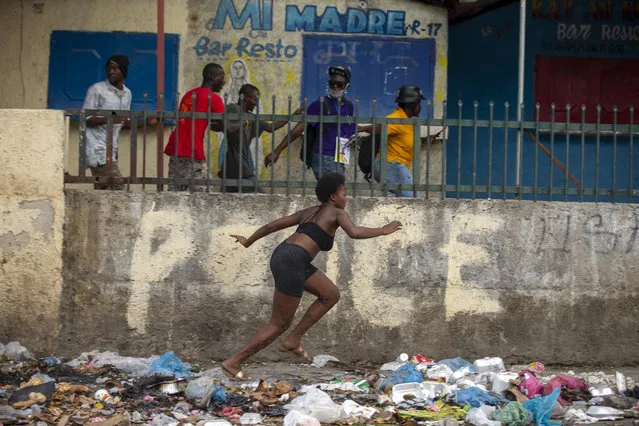
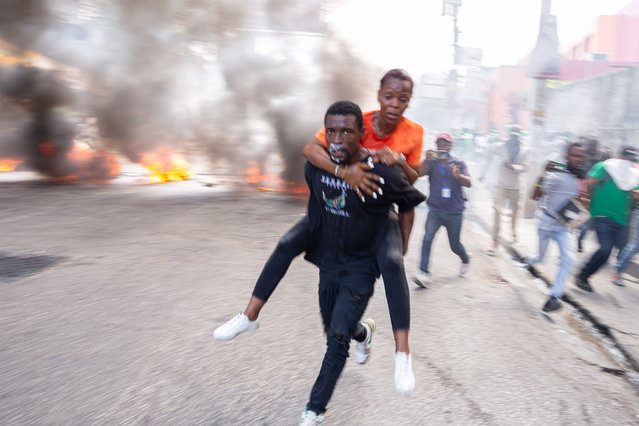
Protesters run away as the police fires tear gas during a nationwide strike demanding the resignation of Haitian President Jovenel Moise in Port-au-Prince, Haiti, Tuesday, February 2, 2021. (Photo by Dieu Nalio Chery/AP Photo)

Protesters run away as the police fires tear gas during a nationwide strike demanding the resignation of Haitian President Jovenel Moise in Port-au-Prince, Haiti, Tuesday, February 2, 2021. (Photo by Dieu Nalio Chery/AP Photo)
Details
10 Feb 2021 10:56:00
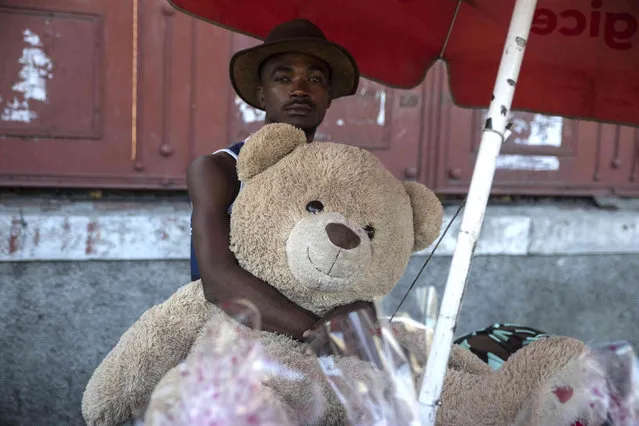
A vendor holds a teddy bear for sale on Valentine's Day in Port-au-Prince, Haiti, Monday, February 14, 2022. (Photo by Joseph Odelyn/AP Photo)

A vendor holds a teddy bear for sale on Valentine's Day in Port-au-Prince, Haiti, Monday, February 14, 2022. (Photo by Joseph Odelyn/AP Photo)
Details
26 Feb 2022 04:49:00
Alex Neal-Bullen during an Adelaide Crows match against Port Adelaide Power at Adelaide Oval in Adelaide, Australia on July 26, 2025. (Photo by Matt Turner/AAP)

Alex Neal-Bullen during an Adelaide Crows match against Port Adelaide Power at Adelaide Oval in Adelaide, Australia on July 26, 2025. (Photo by Matt Turner/AAP)
Details
08 Aug 2025 03:27:00
Magbola Alhadi, 20, and her three children pose for a portrait in Jamam refugee camp in Maban County, South Sudan on August 11th, 2012. Magboola and her family weathered aerial bombing raids for several months, but decided it was time to leave their village of Bofe the night that soldiers arrived and opened fire. (Photo by Brian Sokol/Panos Pictures)

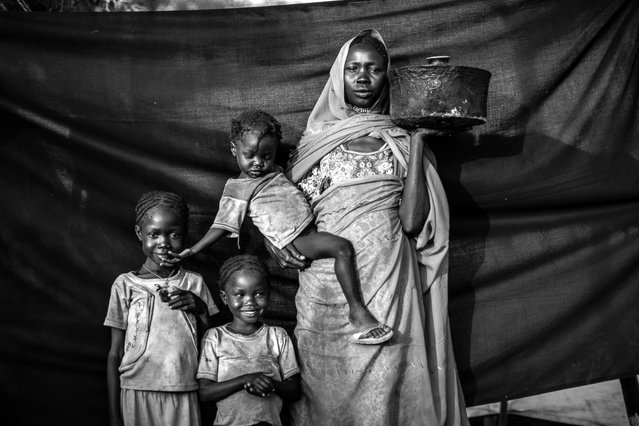
Magbola Alhadi, 20, and her three children pose for a portrait in Jamam refugee camp in Maban County, South Sudan on August 11th, 2012. Magboola and her family weathered aerial bombing raids for several months, but decided it was time to leave their village of Bofe the night that soldiers arrived and opened fire. With her three children, she travelled for 12 days from Bofe to the town of El Fudj, on the South Sudanese border. The most important thing that Magboola was able to bring with her is the saucepan she holds in this photograph. It wasn't the largest pot that she had in Bofe, but it was small enough she could travel with it, yet big enough to cook sorghum for herself and her three daughters (from left: Aduna Omar, 6, Halima Omar, 4, and Arfa Omar, 2) during their journey. (Photo by Brian Sokol/Panos Pictures)

Details
18 Sep 2015 15:04:00
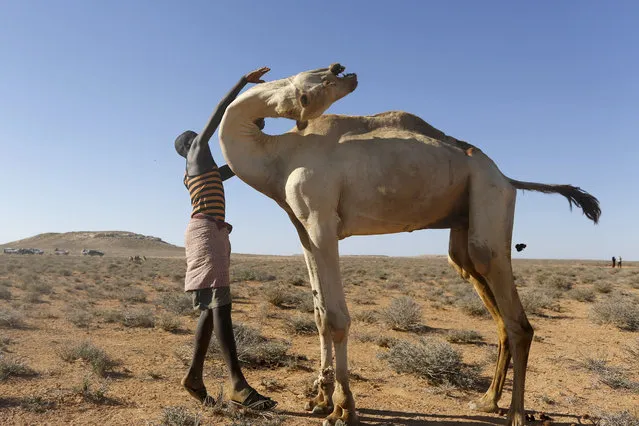
Ali Asair, who has left his family behind and traveled hundreds of kilometers in search for a pasture for his animals, attends to his camel in a pastoralists' settlement in the Bandarbeyla district in Somalia's semi-autonomous region of Puntland, Somalia, 24 March 2017. According to media reports, the United Nations says only 31 percent of 864 million US dollars appeal for a drought-hit Somalia is funded. The UN said the world is facing the largest humanitarian crisis since 1945, adding that more than 20 million people are facing the threat of famine in Somalia, Yemen, South Sudan and Nigeria and 1.4 million children could die from starvation this year. (Photo by Dai Kurokawa/EPA)

Ali Asair, who has left his family behind and traveled hundreds of kilometers in search for a pasture for his animals, attends to his camel in a pastoralists' settlement in the Bandarbeyla district in Somalia's semi-autonomous region of Puntland, Somalia, 24 March 2017. According to media reports, the United Nations says only 31 percent of 864 million US dollars appeal for a drought-hit Somalia is funded. The UN said the world is facing the largest humanitarian crisis since 1945, adding that more than 20 million people are facing the threat of famine in Somalia, Yemen, South Sudan and Nigeria and 1.4 million children could die from starvation this year. (Photo by Dai Kurokawa/EPA)
Details
28 Mar 2017 09:01:00
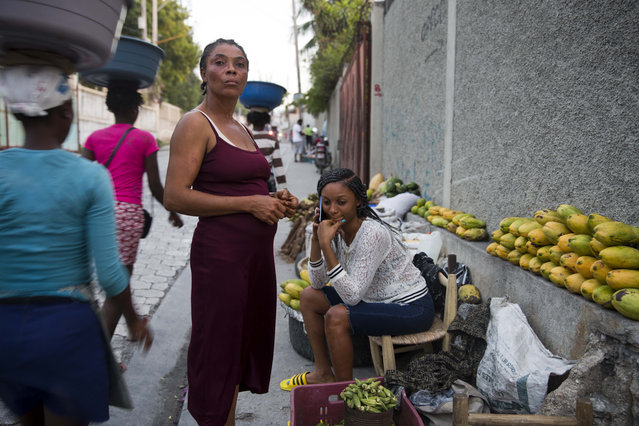
In this November 27, 2019 photo, Wadlande Pierre, right, talks on her mobile phone as she helps her mother, Vanlancia Julien, center, at their fruit and vegetable stand on a sidewalk in Delmas, a district of in Port-au-Prince, Haiti. Pierre, 23, said she temporarily moved in with her aunt in the southwest town of Les Cayes to escape the violent protests in Port-au-Prince. However, she had to move back to the capital because there was no gas, power or water in Les Cayes, and food was becoming scarce. (Photo by Dieu Nalio Chery/AP Photo)

In this November 27, 2019 photo, Wadlande Pierre, right, talks on her mobile phone as she helps her mother, Vanlancia Julien, center, at their fruit and vegetable stand on a sidewalk in Delmas, a district of in Port-au-Prince, Haiti. Pierre, 23, said she temporarily moved in with her aunt in the southwest town of Les Cayes to escape the violent protests in Port-au-Prince. However, she had to move back to the capital because there was no gas, power or water in Les Cayes, and food was becoming scarce. (Photo by Dieu Nalio Chery/AP Photo)
Details
01 Feb 2020 00:05:00
People protest to demand the departure of the Transitional Presidential Council due to insecurity and gang violence in Port-au-Prince, Haiti on March 26, 2025. While authorities, including the National Palace and several ministries have all left downtown to escape the armed gang attacks in Port-au-Prince. Meanwhile, the people continue to fall victim to gang bullets. (Photo by Guerinault Louis/Anadolu via Getty Images)

People protest to demand the departure of the Transitional Presidential Council due to insecurity and gang violence in Port-au-Prince, Haiti on March 26, 2025. While authorities, including the National Palace and several ministries have all left downtown to escape the armed gang attacks in Port-au-Prince. Meanwhile, the people continue to fall victim to gang bullets. (Photo by Guerinault Louis/Anadolu via Getty Images)
Details
21 Apr 2025 03:19:00
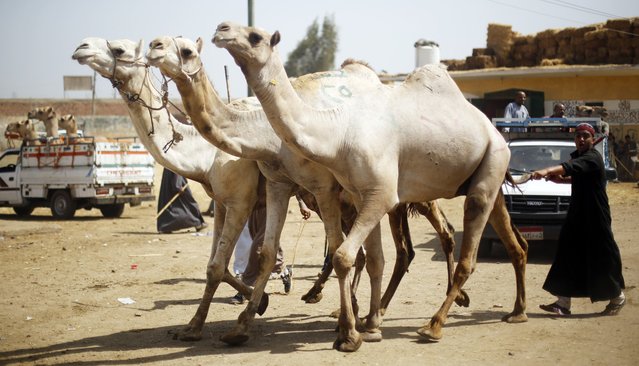
A man walks behind camels at the Birqash Camel Market, ahead of Eid al-Adha or Festival of Sacrifice, on the outskirts of Cairo September 29, 2014. (Photo by Amr Abdallah Dalsh/Reuters)

A man walks behind camels at the Birqash Camel Market, ahead of Eid al-Adha or Festival of Sacrifice, on the outskirts of Cairo September 29, 2014. Birqash Camel Market, one of the biggest markets for camel meat in Africa, draws sellers from Libya, Sudan, Somalia and other regions in Egypt. The camels sold at the market are also used in tourism. Traders say that the selling rate for a camel in 2014 is anywhere between 5,000 and 20,000 Egyptian pounds (700 – 2800 USD). (Photo by Amr Abdallah Dalsh/Reuters)
Details
02 Oct 2014 10:20:00