Loading...
Done
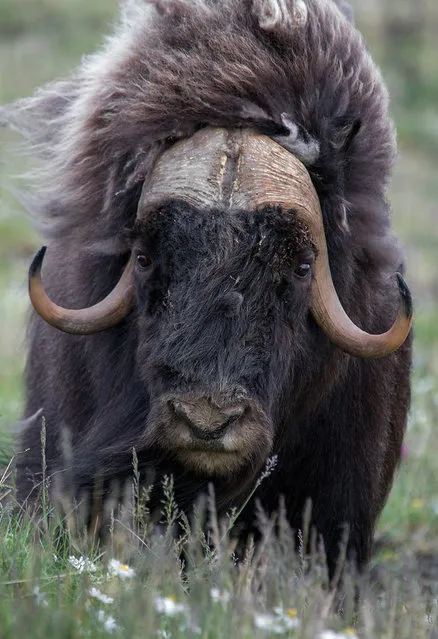
Wild Musk Oxen in Arctic Prairie in Russia

Vitaly Gorshkov, a wildlife photographer, captured these animals in their natural habitat. He says that these animals are so hairy that it is difficult to distinguish the front from the back. The oxen aren’t really afraid of humans that is why it is easy to approach them and take pictures.
Details
25 Apr 2014 12:10:00
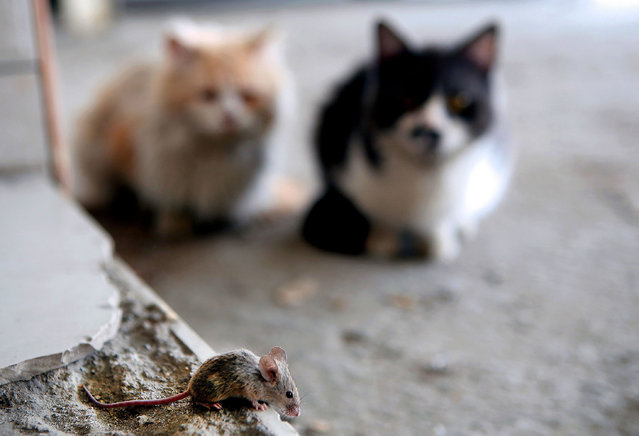
Two cats watch a mouse walking on the pavement in Kuwait City on March 8,2017. (Photo by Yasser Al-Zayyat/AFP Photo)

Two cats watch a mouse walking on the pavement in Kuwait City on March 8,2017. (Photo by Yasser Al-Zayyat/AFP Photo)
Details
12 Mar 2017 00:00:00
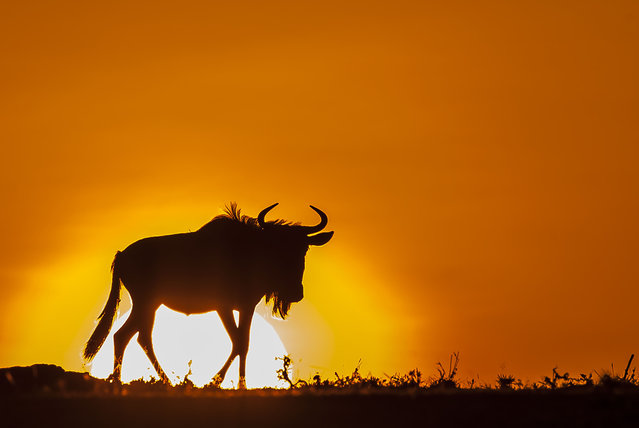
A blue wildebeest moves through grassland at dawn with the sun in the background in Mara Naboisho Conservancy, Kenya, Africa. (Photo by Renato Granieri/Caters News/Ardea)

These images show off some of the world's most majestic creatures silhouetted against the beautiful rising and setting sun. The vibrant pictures feature a variety of animals in the wild and were taken by a host of photographers at locations around the world. The striking images all have one thing in common: the photographers' awe-inspiring ability to perfectly capture the silhouettes of earth's beautiful creatures. Here: a blue wildebeest moves through grassland at dawn with the sun in the background in Mara Naboisho Conservancy, Kenya, Africa. (Photo by Renato Granieri/Caters News/Ardea)
Details
02 Sep 2015 11:12:00
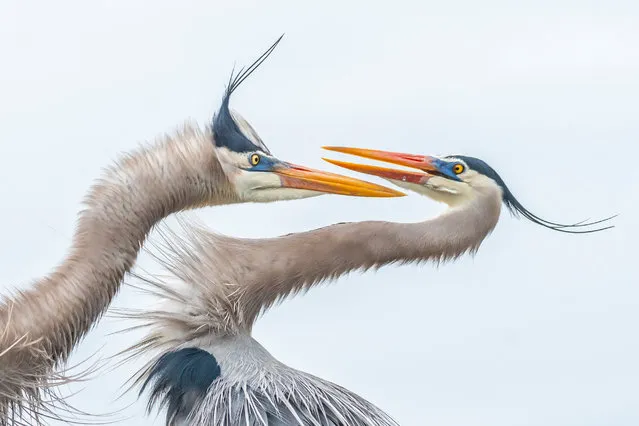
Melissa Rowell, amateur honourable mention. Wakodahatchee wetlands, Delray Beach, Florida, US. Equipped with sinewy necks and spear-like bills, great blue herons can lunge with fearsome speed to strike their aquatic prey. Adults will also employ rapid stabbing motions as one aspect of their complex courtship displays; they’re seemingly dangerous moves, but fitting to the intensity of mating season. (Photo by Melissa Rowell/Audubon photography awards)

Wakodahatchee wetlands, Delray Beach, Florida, US. Equipped with sinewy necks and spear-like bills, great blue herons can lunge with fearsome speed to strike their aquatic prey. Adults will also employ rapid stabbing motions as one aspect of their complex courtship displays; they’re seemingly dangerous moves, but fitting to the intensity of mating season. (Photo by Melissa Rowell/Audubon Photography Awards)
Details
17 Jul 2019 00:03:00
British television presenters Trinny Woodall (centre right) and Susannah Constantine (centre) lead almost 900 women in throwing their old bras into the air in Rothwell town square in Rothwell, Northamptonshire on May 7, 2007. (Photo by Clara Molden – PA Images/PA Images via Getty Images)

British television presenters Trinny Woodall (centre right) and Susannah Constantine (centre) lead almost 900 women in throwing their old bras into the air in Rothwell town square in Rothwell, Northamptonshire on May 7, 2007. (Photo by Clara Molden – PA Images/PA Images via Getty Images)
Details
27 Dec 2020 00:05:00
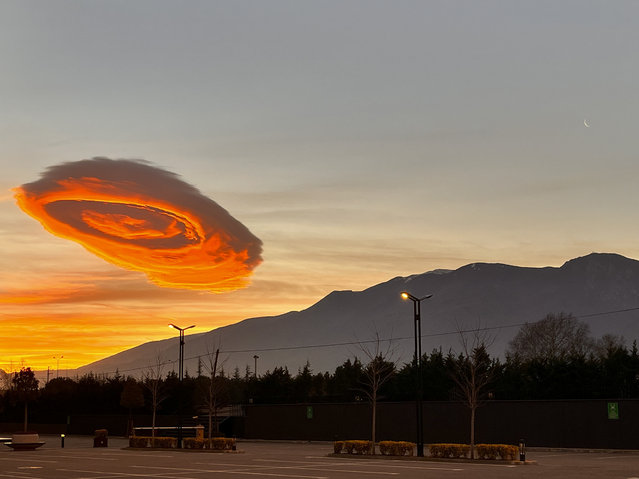
A lenticular cloud is seen during sunrise from Gokmen Aerospace Training Center (GUHEM) in Bursa, Turkiye on January 19, 2023. (Photo by Halit Mirahmetoglu/Anadolu Agency via Getty Images)

A lenticular cloud is seen during sunrise from Gokmen Aerospace Training Center (GUHEM) in Bursa, Turkiye on January 19, 2023. (Photo by Halit Mirahmetoglu/Anadolu Agency via Getty Images)
Details
12 Sep 2023 03:27:00
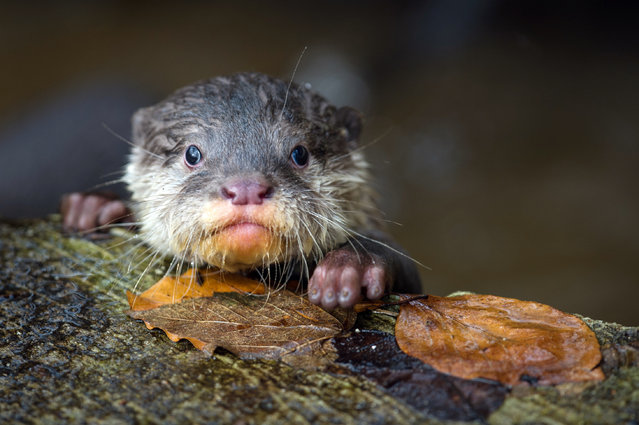
A young oriental small-clawed otter at the zoo in Neumuenster, Germany, March 5, 2014. The six young otters (one male, five female) were born on December 7, 2013. (Photo by Maja Hitij/EPA)

A young oriental small-clawed otter at the zoo in Neumuenster, Germany, March 5, 2014. The six young otters (one male, five female) were born on December 7, 2013. (Photo by Maja Hitij/EPA)
Details
08 Mar 2014 11:28:00
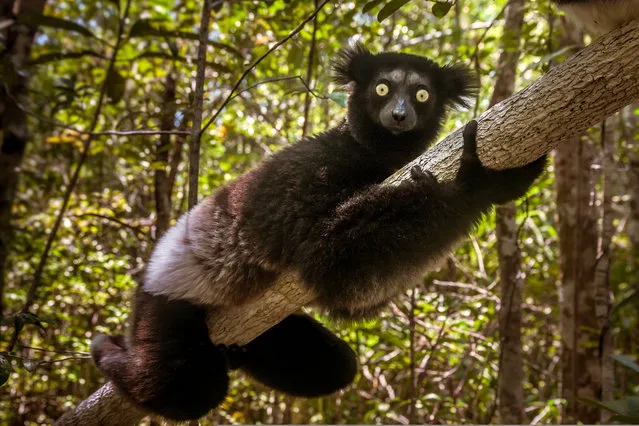
The secretive indri (Indri indri) of Madagascar, the largest living lemur. It is also critically endangered and highly evolutionarily distinct with no close relatives, which makes its branch one of most precarious on the mammal evolutionary tree. In the likely event that the indri goes extinct, we will lose 19m years of unique evolutionary history from the mammal tree of life. (Photo by Pierre-Yves Babelon/Aarhus University)

The secretive indri (Indri indri) of Madagascar, the largest living lemur. It is also critically endangered and highly evolutionarily distinct with no close relatives, which makes its branch one of most precarious on the mammal evolutionary tree. In the likely event that the indri goes extinct, we will lose 19m years of unique evolutionary history from the mammal tree of life. (Photo by Pierre-Yves Babelon/Aarhus University)
Details
18 Nov 2018 00:02:00