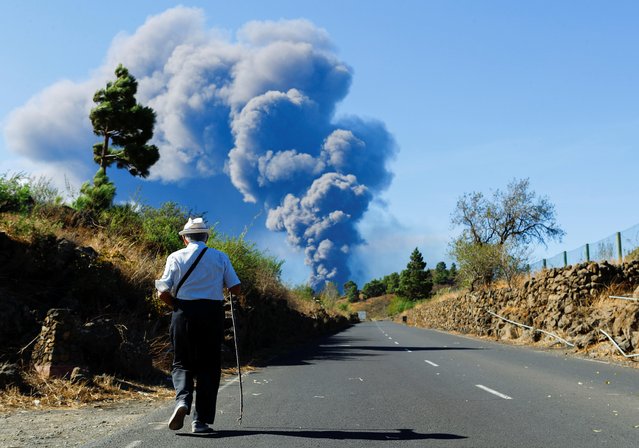
A man walks along an El Paso road while observing a large ash column from the Cumbre Vieja volcano on the Canary Island of La Palma, Spain, October 4, 2021. (Photo by Borja Suarez/Reuters)
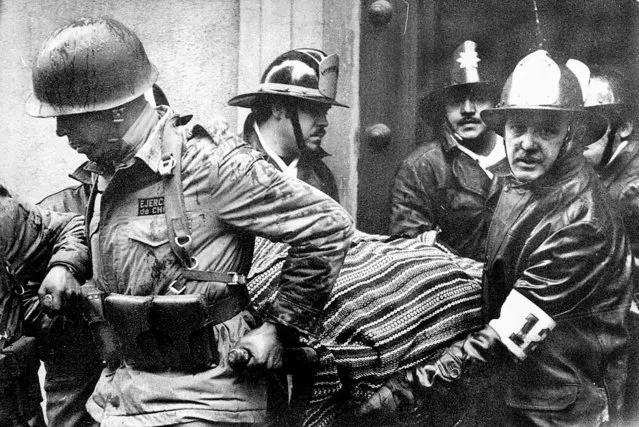
Soldiers and firefighters carry the body of Chilean President Salvador Allende, wrapped in a Bolivian poncho, out of La Moneda presidential palace after it was bombed during a coup by Gen. Augusto Pinochet in Santiago, Chile, September 11, 1973. (Phoot by El Mercurio/AP Photo)
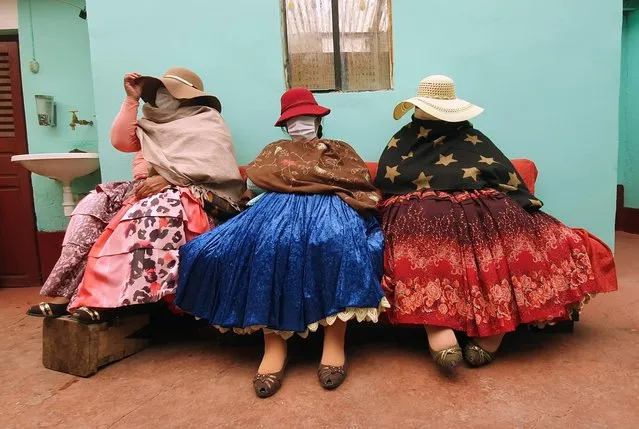
Bolivian sеx workers sit during a Reuters interview before the countrywide, two-week mandatory quarantine to combat the spread of coronavirus disease (COVID-19), decreed by Bolivia's interim government, in El Alto outskirts of La Paz, Bolivia on March 20, 2020. (Photo by Monica Machicao/Reuters)
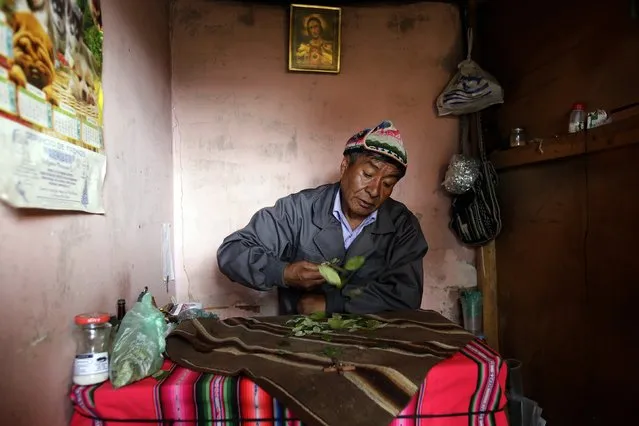
Aymara witchdoctor Ricardo Quispe, also called “Lord of the Lake”, throws coca leaves during a ritual to predict the future, at the witches market of El Alto, on the outskirts of La Paz, December 31, 2014. Dozens of witch doctors tend to a warren of stalls in El Alto, making offerings to give thanks, to promise luck at work or in love, or to call up spirits and banish curses at the end of the year. (Photo by David Mercado/Reuters)
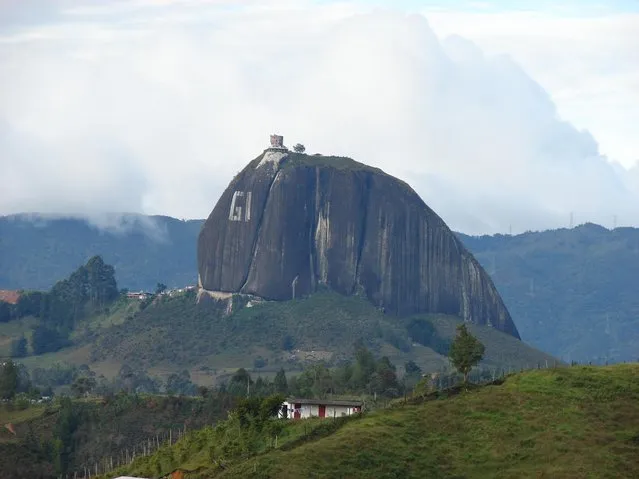
Guatapé is a town and municipality in Antioquia Department, Colombia. Part of the subregion of Eastern Antioquia. Guatapé is located in the outskirts of Medellín, bordering a reservoir created by the Colombian government for a hydro-electric dam, built in the late 1960s. This quaint town is the gathering place for "Las Vegas", or the small farms of the area. It is also a growing area of recreation for citizens of Medellín, and aims to be a tourist destination for foreign travellers.
Guatapé was founded in 1811, by the Spaniard Don Francisco Giraldo y Jimenez. The name "Guatapé", comes from the Quechua language, related to "stones and water". The area was visited by the conquistadors circa 1551.
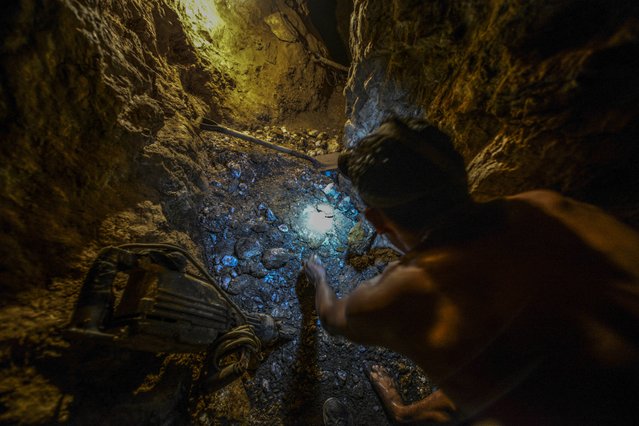
Ender Moreno looks for gold at La Culebra gold mine in El Callao, Bolivar state, southeastern Venezuela on March 1, 2017. Although life in the mines of eastern Venezuela is hard and dangerous, tens of thousands from all over the country head for the mines daily in overcrowded trucks, pushed by the rise in gold prices and by the severe economic crisis affecting the country, aggravated recently by the drop in oil prices. (Photo by Juan Barreto/AFP Photo)
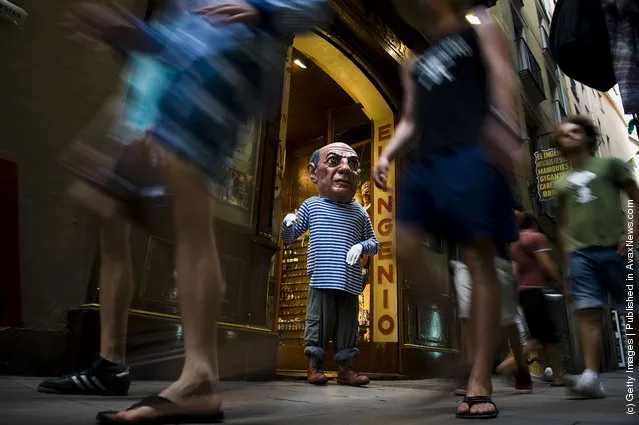
A Pablo Picasso papier mache “huge head” mask, known as “Capgros” in Catalan, is displayed at the entrance of the “El Ingenio” shop on August 23, 2011 in Barcelona, Spain. “El Ingenio” (The Ingenuity) has been making and selling papier mache giant masks and huge heads for Catalan popular festivals since 1838. The “La Merce” festival will be held on September 24 to observe the feast day of Our Lady of Mercy, patron saint of Barcelona. (Photo by David Ramos/Getty Images)
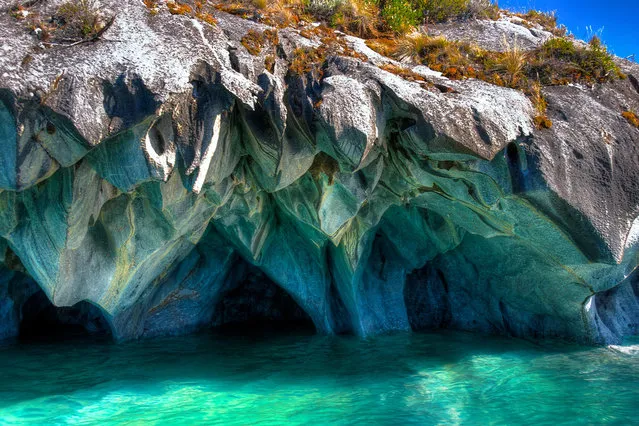
The Marble Caves of Patagonia, Chile, are beautiful vibrant blue caverns, partially submerged in the equally stunning turquoise waters of Carrera Lake. The lake itself is on the border of Argentina and Chile, with the caves located on the Chilean side. The caves are comprised of three main caverns: the Chapel (La Capilla), the Cathedral (El Catedral), and the Cave (La Cueva). Visitors to the caves can explore them in a small boat or kayak, but only when Carrera Lake’s waters are calm and gentle. A rare and invaluable natural wonder, the existence of these caves is currently threatened by plans to build five large dams in the area. If you visit these caves, please treat them with the utmost respect and care.