Loading...
Done
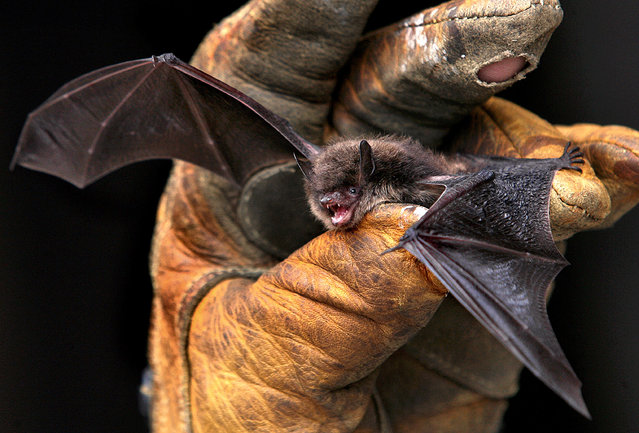
In this September 17, 2010 file photo a little brown bat is photographed in La Crosse Wis. Researchers for the first time found that little brown bats appear to be showing resistance to white-nose syndrome, which has killed millions of bats across North America. (Photo by Peter Thomson/La Crosse Tribune via AP Photo)

In this September 17, 2010 file photo a little brown bat is photographed in La Crosse Wis. Researchers for the first time found that little brown bats appear to be showing resistance to white-nose syndrome, which has killed millions of bats across North America. (Photo by Peter Thomson/La Crosse Tribune via AP Photo)
Details
13 Jan 2017 08:48:00
A bear that wandered into a University of Colorado Boulder dorm complex falls from a tree after being tranquilized by Colorado wildlife officials on April 26

A bear that wandered into a University of Colorado Boulder dorm complex falls from a tree after being tranquilized by Colorado wildlife officials on April 26, 2012. Colorado wildlife official Jennifer Churchill said that the 200-pound male bear was tagged and relocated to a remote Rocky Mountain area. The bear was hit by two cars on May 3 and died. (Photo by Andy Duann)
Details
08 May 2012 12:20:00
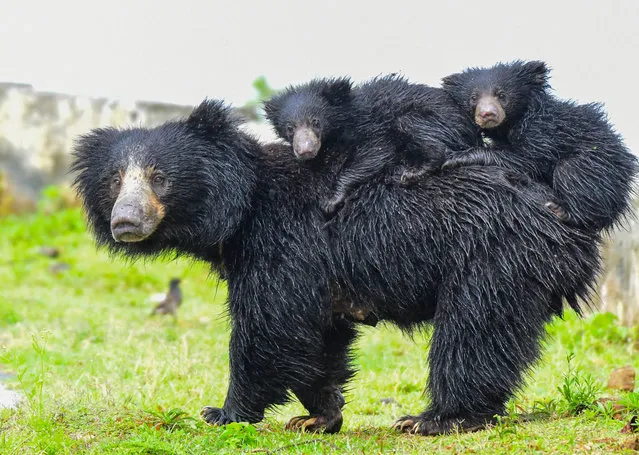
A mother bear acting as a taxi for her cubs and they jump on for a piggyback. Two sloth bear cubs fighting for the best place on mum's back as she carries them across Coonoor, India in July 2022. (Photo by Ranganathan Vasudevan/Media Drum Images)

A mother bear acting as a taxi for her cubs and they jump on for a piggyback. Two sloth bear cubs fighting for the best place on mum's back as she carries them across Coonoor, India in July 2022. (Photo by Ranganathan Vasudevan/Media Drum Images)

Details
24 Jul 2022 09:43:00
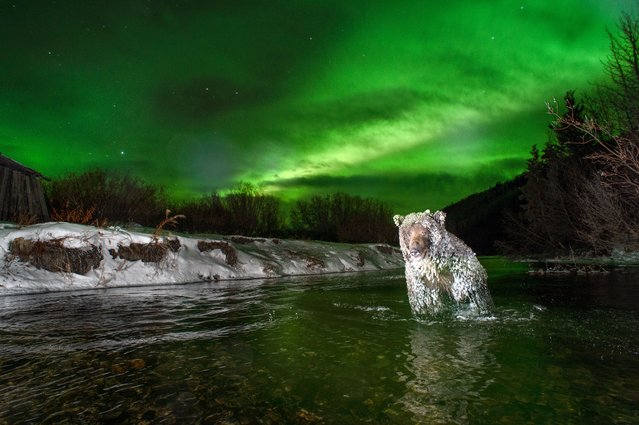
A grizzly bear fishes for salmon under the Northern Lights in Klukshu, Yukon, in the north of Canada on March 3, 2025. The bear makes use of the darkness because the salmon can't see well enough to swim away. (Photo by Peter Mather/Solent News & Photo Agency)

A grizzly bear fishes for salmon under the Northern Lights in Klukshu, Yukon, in the north of Canada on March 3, 2025. The bear makes use of the darkness because the salmon can't see well enough to swim away. (Photo by Peter Mather/Solent News & Photo Agency)
Details
19 Nov 2025 04:56:00
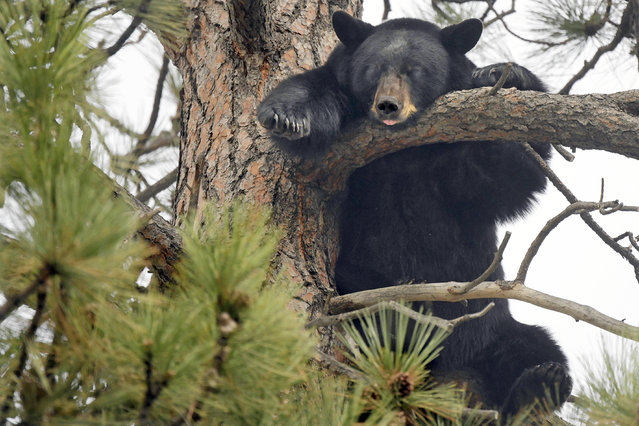
In this Thursday, October 3, 2019 photo, a female black bear sleeps with its tongue out high up in a Ponderosa pine tree near Clark Fork School in the Rattlesnake neighborhood of Missoula, Mont. The bear's cub, not pictured, was snoozing on a nearby branch. (Photo by Tommy Martino/The Missoulian via AP Photo)

In this Thursday, October 3, 2019 photo, a female black bear sleeps with its tongue out high up in a Ponderosa pine tree near Clark Fork School in the Rattlesnake neighborhood of Missoula, Mont. The bear's cub, not pictured, was snoozing on a nearby branch. (Photo by Tommy Martino/The Missoulian via AP Photo)
Details
13 Oct 2019 00:03:00
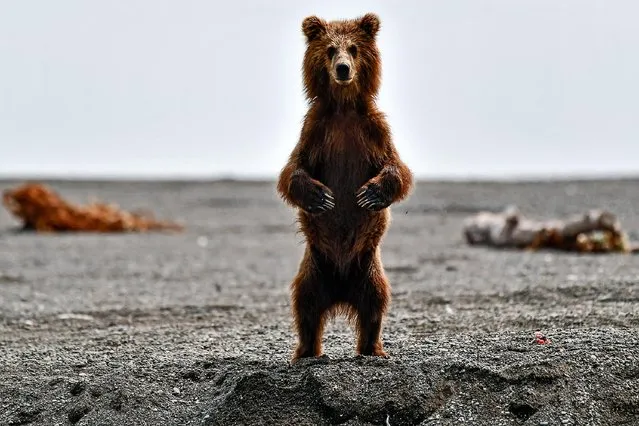
A brown bear cub by the Khailyulya River in north-east Kamchatka, Russia on July 24, 2021. (Photo by Yuri Smityuk/TASS)

A brown bear cub by the Khailyulya River in north-east Kamchatka, Russia on July 24, 2021. (Photo by Yuri Smityuk/TASS)
Details
08 Aug 2021 05:17:00
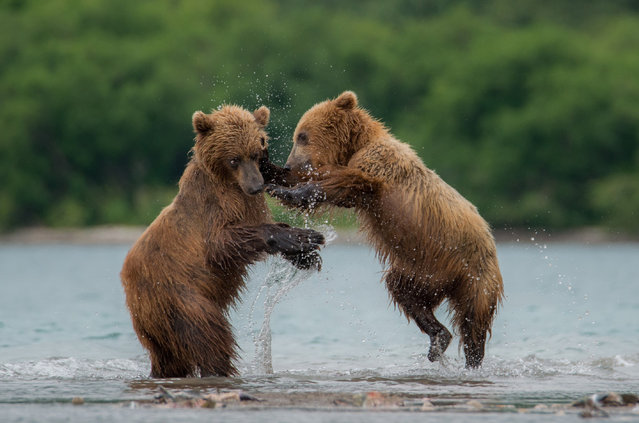
Kamchatka brown bears at Kurile Lake in Kamchatka peninsula’s volcanic terrain, Russia on August, 2017. Kamchatka brown bears are generally not dangerous to humans, and only 1% of encounters result in attack. (Photo by Igor Ivanko/Anadolu Agency/Getty Images)

Kamchatka brown bears at Kurile Lake in Kamchatka peninsula’s volcanic terrain, Russia on August, 2017. Kamchatka brown bears are generally not dangerous to humans, and only 1% of encounters result in attack. (Photo by Igor Ivanko/Anadolu Agency/Getty Images)
Details
03 Sep 2017 07:17:00
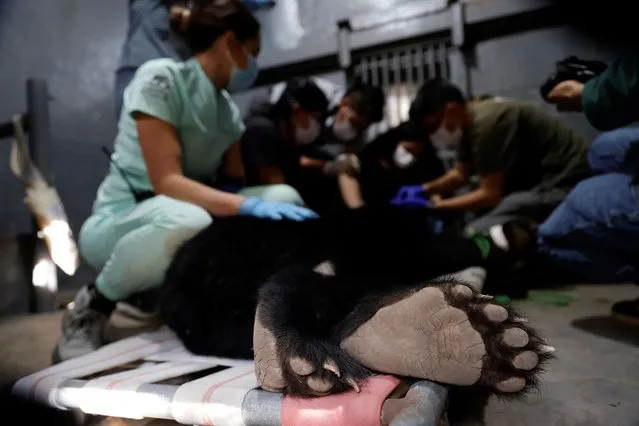
Veterinarians and biologists from the Quito Zoo and the Andean Condor Foundation fit a tracking collar that juvenile Andean bear Tupak will wear for the next four years, prior to his reintroduction into the wild, after the bear's life was deemed in danger due to proximity to humans, in Quito, Ecuador on March 31, 2024. (Photo by Karen Toro/Reuters)

Veterinarians and biologists from the Quito Zoo and the Andean Condor Foundation fit a tracking collar that juvenile Andean bear Tupak will wear for the next four years, prior to his reintroduction into the wild, after the bear's life was deemed in danger due to proximity to humans, in Quito, Ecuador on March 31, 2024. (Photo by Karen Toro/Reuters)
Details
07 Apr 2024 02:58:00