Loading...
Done
A female adult jaguar, which has a cub, growls at the Mamiraua Sustainable Development Reserve in Uarini, Amazonas state, Brazil, June 5, 2017. (Photo by Bruno Kelly/Reuters)

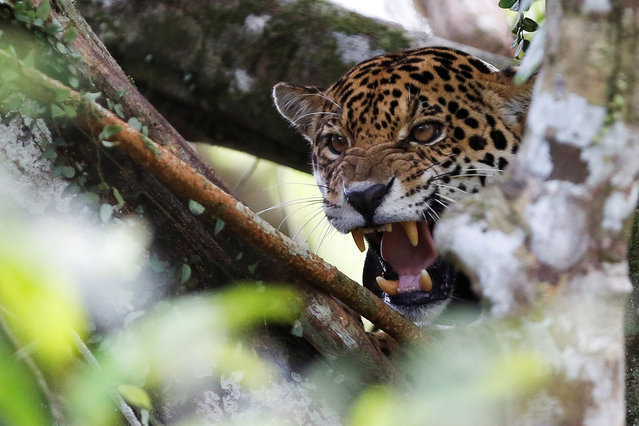
Brazilian jaguars, imperilled by hunters, ranchers and destruction of their habitat, have learned to survive at least one menace – flooding in the Amazon. They take to the trees. Although they can be six feet long and 200 pounds, the largest South American cats nimbly navigate treetops where they stay from April to July when the rainforest floor is under meters-deep water. Here: A female adult jaguar, which has a cub, growls at the Mamiraua Sustainable Development Reserve in Uarini, Amazonas state, Brazil, June 5, 2017. (Photo by Bruno Kelly/Reuters)
Details
07 Apr 2018 00:03:00
Albertus in the church of St George in Burgrain, Germany. Incredibly, some of the skeletons, which took up to five years to decorate, were even found hidden away in lock-ups and containers. (Photo by Paul Koudounaris/BNPS)

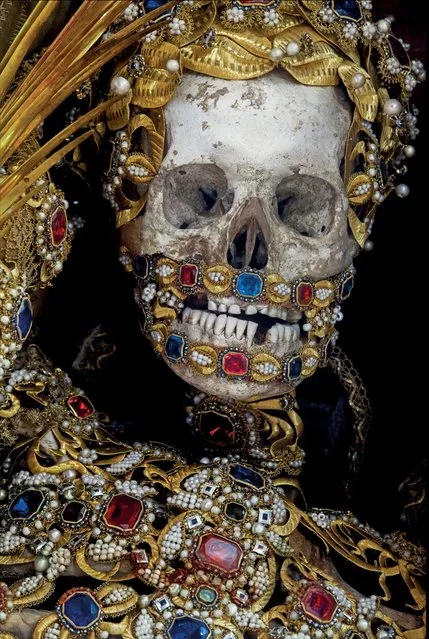
A relic hunter dubbed “Indiana Bones” has lifted the lid on a macabre collection of 400-year-old jewel-encrusted skeletons unearthed in churches across Europe. Art historian Paul Koudounaris has hunted down and photographed dozens of gruesome skeletons in some of the world's most secretive religious establishments. Photo: Albertus in the church of St George in Burgrain, Germany. Incredibly, some of the skeletons, which took up to five years to decorate, were even found hidden away in lock-ups and containers. (Photo by Paul Koudounaris/BNPS)
Details
08 Sep 2013 07:20:00
Commended. In late May, about a quarter of a million snow geese arrive from North America to nest on Wrangel Island, in northeastern Russia. They form the world's largest breeding colony of snow geese. Photographer Sergey Gorshkov spent two months on the remote island photographing the unfolding dramas. (Photo by Sergey Gorshkov/Veolia Environnement Wildlife Photographer)

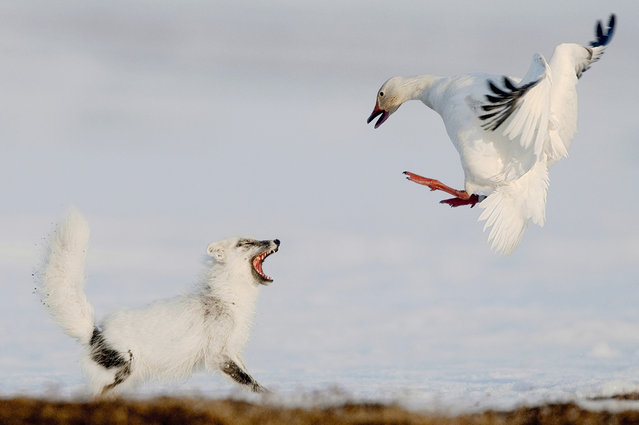
Commended. In late May, about a quarter of a million snow geese arrive from North America to nest on Wrangel Island, in northeastern Russia. They form the world's largest breeding colony of snow geese. Photographer Sergey Gorshkov spent two months on the remote island photographing the unfolding dramas. Arctic foxes take advantage of the abundance of eggs, caching surplus eggs for leaner times. But a goose (here the gander) is easily a match for a fox, which must rely on speed and guile to steal eggs. “The battles were fairly equal”, notes Sergey, “and I only saw a fox succeed in grabbing an egg on a couple of occasions, despite many attempts”. Surprisingly, “the geese lacked any sense of community spirit”, he adds, “and never reacted when a fox harassed a neighboring pair nesting close by”. (Photo by Sergey Gorshkov/Veolia Environnement Wildlife Photographer)
Details
16 Jun 2015 12:30:00
A truffle is seen on a table in Alba, north-western Italy November 11, 2013. Located in the heart of the Langhe – the hilly southern area of Italy's northwestern Piedmont region – Alba is the country's capital of white truffles, a variety of the prized fungus which grows underground. Truffles are found two to eight inches (5-20cm) below the ground near the roots of trees. (Photo by Stefano Rellandini/Reuters)

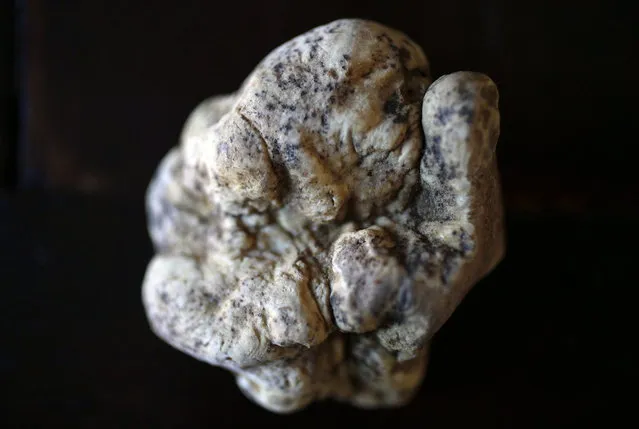
A truffle is seen on a table in Alba, north-western Italy November 11, 2013. Located in the heart of the Langhe – the hilly southern area of Italy's northwestern Piedmont region – Alba is the country's capital of white truffles, a variety of the prized fungus which grows underground. Truffles are found two to eight inches (5-20cm) below the ground near the roots of trees. They give off an odour which lasts for a limited period of time and can be detected with the assistance of well-trained dogs and experienced hunters. Output of white truffles, which are not cultivated and only grow naturally in forests, has fallen in Italy over the past few years, largely because climate change has brought a damaging mix of drought and torrential rains. (Photo by Stefano Rellandini/Reuters)
Details
31 Dec 2013 11:22:00
A tamed hawk attacks a rabbit during the traditional hunting contest outside the village of Nura, east from Almaty, Kazakhstan, February 13, 2016. (Photo by Shamil Zhumatov/Reuters)

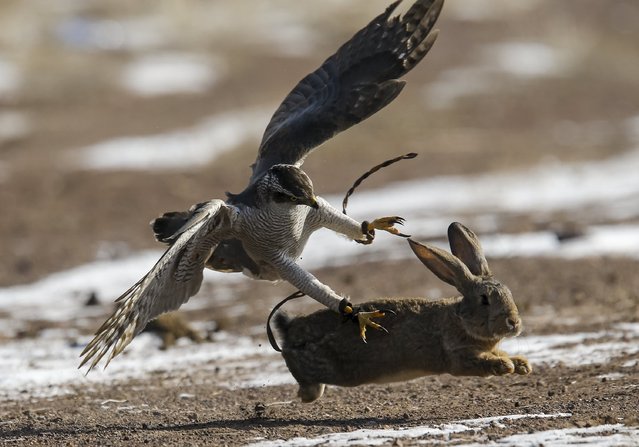
A tamed hawk attacks a rabbit during the traditional hunting contest outside the village of Nura, east from Almaty, Kazakhstan, February 13, 2016. (Photo by Shamil Zhumatov/Reuters)
Details
14 Feb 2016 11:44:00
A butterfly flies into the jaws of a crocodile inhabiting the Tarcoles River, the most polluted basin in Central America and one of the most polluted in Latin America, in the place of Tarcoles, province of Puntarenas, Costa Rica, 05 June 2018. Costa Rica, a country recognized worldwide for its environmental policies, seeks to be a leader in the replacement of single-use plastic with renewable and compostable alternatives, despite its lag in terms of recycling and integrated waste management. (Photo by Jeffrey Arguedas/EPA/EFE)

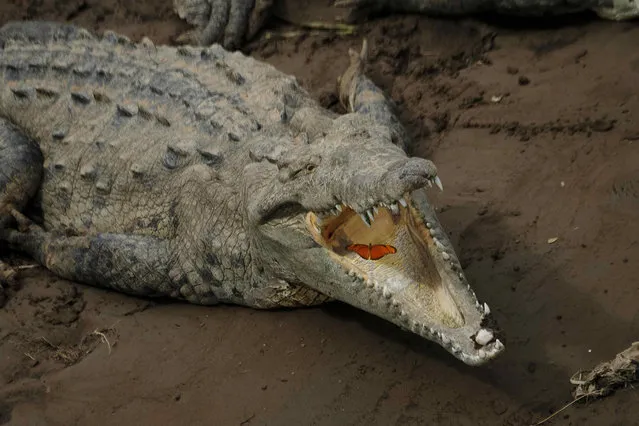
A butterfly flies into the jaws of a crocodile inhabiting the Tarcoles River, the most polluted basin in Central America and one of the most polluted in Latin America, in the place of Tarcoles, province of Puntarenas, Costa Rica, 05 June 2018. Costa Rica, a country recognized worldwide for its environmental policies, seeks to be a leader in the replacement of single-use plastic with renewable and compostable alternatives, despite its lag in terms of recycling and integrated waste management. (Photo by Jeffrey Arguedas/EPA/EFE)
Details
17 Jun 2018 00:03:00
“Secrets of the Whales”. Skerry’s photographs celebrate the lives and culture of whales, illuminating recent research and their diverse behaviours. His latest work focuses on four key species: sperm whales, humpbacks, orca and beluga whales. Humpback whales bubble-net feeding off the coast of Alaska. They work cooperatively to feed on herring by blowing a perfect ring of bubbles underwater to form a net encircling the fish. The whales then swim up through the centre of the bubble net with their mouths open. (Photo by Brian Skerry/National Geographic Photo/Visa pour l'Image)

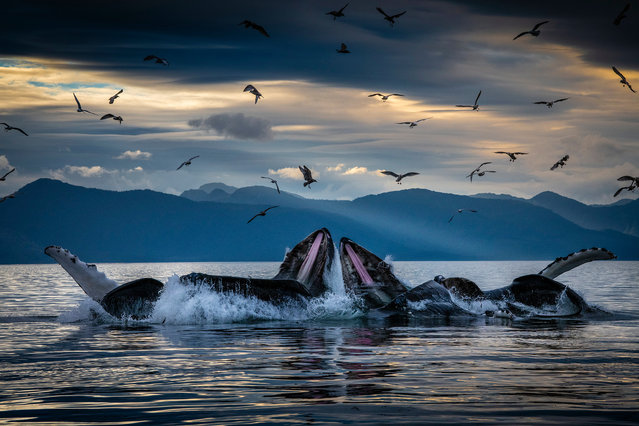
“Secrets of the Whales”. Skerry’s photographs celebrate the lives and culture of whales, illuminating recent research and their diverse behaviours. His latest work focuses on four key species: sperm whales, humpbacks, orca and beluga whales. Humpback whales bubble-net feeding off the coast of Alaska. They work cooperatively to feed on herring by blowing a perfect ring of bubbles underwater to form a net encircling the fish. The whales then swim up through the centre of the bubble net with their mouths open. (Photo by Brian Skerry/National Geographic Photo/Visa pour l'Image)
Details
04 Sep 2021 09:02:00
Wayne McMahon from “The Wolfhound Experience” walking alongside four Irish Wolfhounds: Connell, Mac, Brendan, and Barra, accompanied by an Irish Terrier Lady MacBeth, at St. Stephen's Green in Dublin, Ireland, on May 16, 2024. The Wolfhound Experience offers a one-hour walking tour in Dublin's St. Stephens' Green, where visitors can meet and learn about Irish Wolfhounds, the gentle giants of the canine world. (Photo by Artur Widak/NurPhoto/Rex Features/Shutterstock)

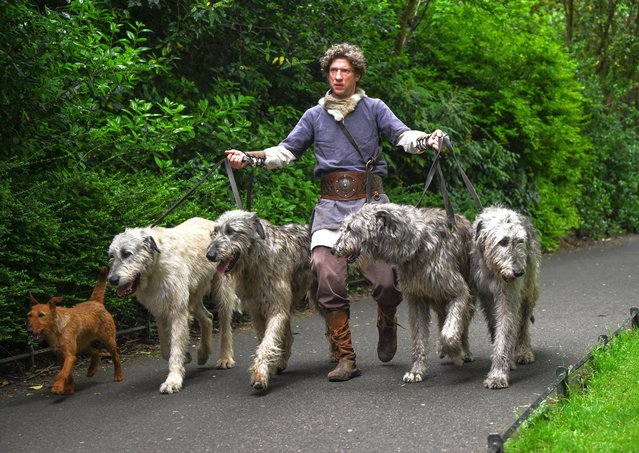
Wayne McMahon from “The Wolfhound Experience” walking alongside four Irish Wolfhounds: Connell, Mac, Brendan, and Barra, accompanied by an Irish Terrier Lady MacBeth, at St. Stephen's Green in Dublin, Ireland, on May 16, 2024. The Wolfhound Experience offers a one-hour walking tour in Dublin's St. Stephens' Green, where visitors can meet and learn about Irish Wolfhounds, the gentle giants of the canine world. (Photo by Artur Widak/NurPhoto/Rex Features/Shutterstock)
Details
26 May 2024 03:48:00