Loading...
Done
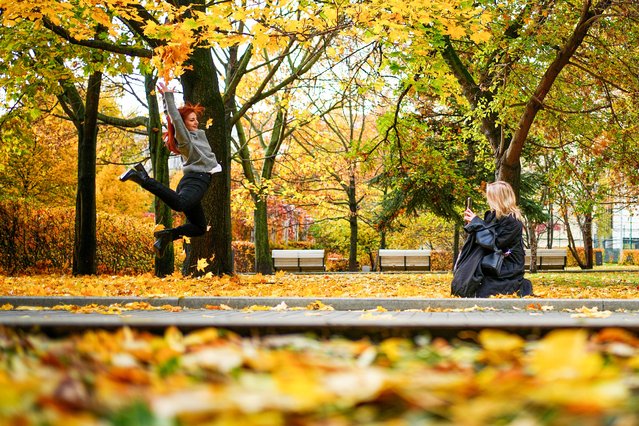
A woman throws fallen leaves and jumps while posing for a photo at the Bauman garden in Moscow, Russia, Tuesday, October 14, 2025. (Photo by Pavel Bednyakov/AP Photo)

A woman throws fallen leaves and jumps while posing for a photo at the Bauman garden in Moscow, Russia, Tuesday, October 14, 2025. (Photo by Pavel Bednyakov/AP Photo)
Details
10 Nov 2025 04:50:00
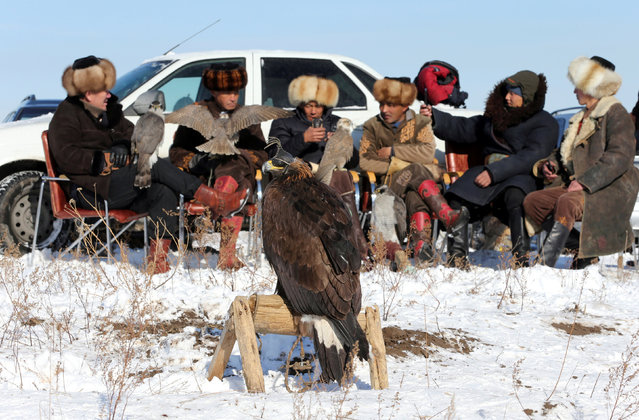
Participants gather during a traditional hunting contest, involving tamed golden eagles and hawks, in Almaty, Kazakhstan on December 1, 2018. (Photo by Pavel Mikheyev/Reuters)

Participants gather during a traditional hunting contest, involving tamed golden eagles and hawks, in Almaty, Kazakhstan on December 1, 2018. (Photo by Pavel Mikheyev/Reuters)
Details
04 Dec 2018 00:16:00
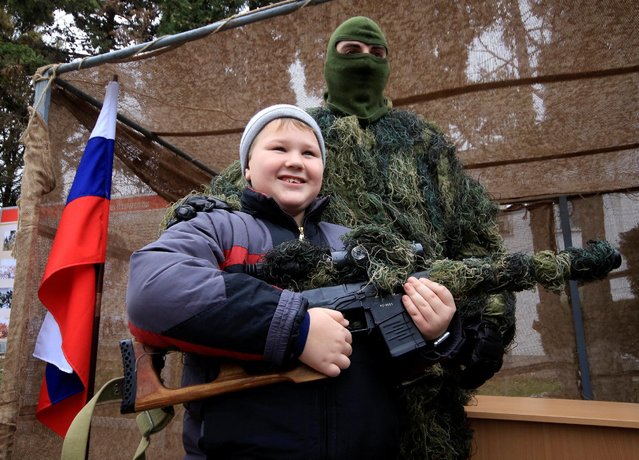
A boy and a serviceman pose for a picture during Marines Day celebration in the Black Sea port of Sevastopol, Crimea, November 27, 2016. (Photo by Pavel Rebrov/Reuters)

A boy and a serviceman pose for a picture during Marines Day celebration in the Black Sea port of Sevastopol, Crimea, November 27, 2016. (Photo by Pavel Rebrov/Reuters)
Details
28 Nov 2016 12:24:00
Competitors drive their homemade vehicle without an engine during the Red Bull Soapbox Race in Almaty, Kazakhstan on September 11, 2022. (Photo by Pavel Mikheyev/Reuters)

Competitors drive their homemade vehicle without an engine during the Red Bull Soapbox Race in Almaty, Kazakhstan on September 11, 2022. (Photo by Pavel Mikheyev/Reuters)
Details
30 Nov 2023 00:11:00
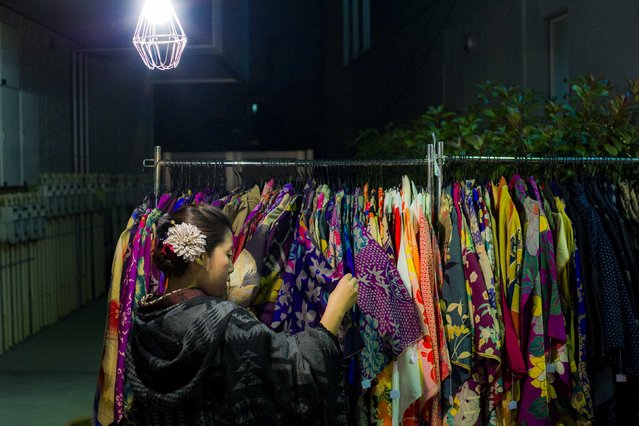
A woman browses through kimonos for sale at Boroichi flea market in Tokyo December 15, 2014. In the 16th century, Boroichi was a place for farmers to buy and sell rags, known as boro, for mending clothes and weaving sandals. Now in its 436th year, the original spirit lingers, with about 700 stands hawking fabric, used clothes and piles of rags. Others sell kitchen tools, pottery, seaweed and spices. (Photo by Thomas Peter/Reuters)

A woman browses through kimonos for sale at Boroichi flea market in Tokyo December 15, 2014. In the 16th century, Boroichi was a place for farmers to buy and sell rags, known as boro, for mending clothes and weaving sandals. Now in its 436th year, the original spirit lingers, with about 700 stands hawking fabric, used clothes and piles of rags. Others sell kitchen tools, pottery, seaweed and spices. About 200,000 people flock to the market, which is only open for four mid-winter days a year – two in December and two in January. (Photo by Thomas Peter/Reuters)
Details
19 Dec 2014 12:50:00
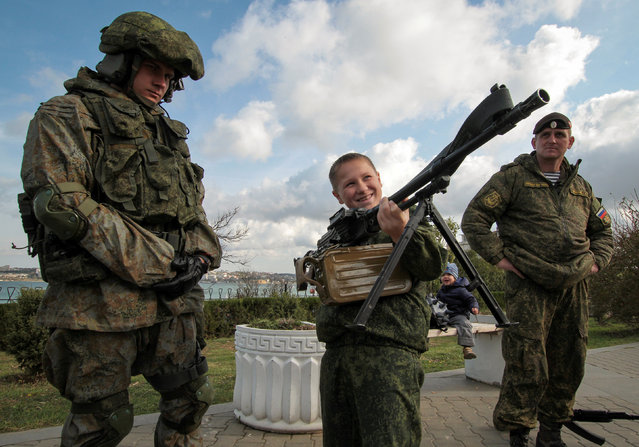
A boy holds a machine gun at a military hardware exhibition during a swear-in ceremony for new recruits of the Russian military-patriotic club “Yunarmia” (Young army) in the Black Sea port of Sevastopol, Crimea, October 27, 2018. (Photo by Pavel Rebrov/Reuters)

A boy holds a machine gun at a military hardware exhibition during a swear-in ceremony for new recruits of the Russian military-patriotic club “Yunarmia” (Young army) in the Black Sea port of Sevastopol, Crimea, October 27, 2018. (Photo by Pavel Rebrov/Reuters)
Details
30 Oct 2018 00:05:00
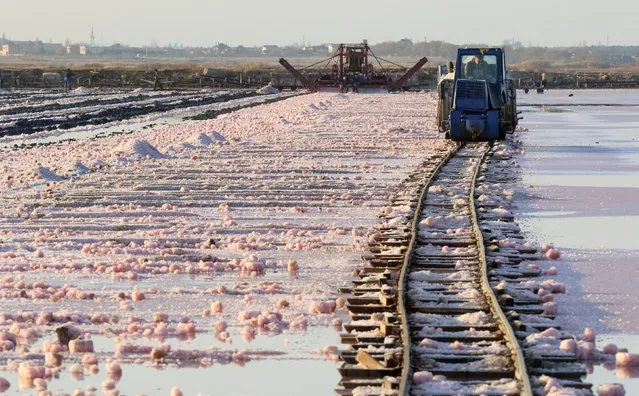
A train drives along a field at a salt production site at the Sasyk-Sivash lake near the city of Yevpatoria, Crimea, November 14, 2017. (Photo by Pavel Rebrov/Reuters)

A train drives along a field at a salt production site at the Sasyk-Sivash lake near the city of Yevpatoria, Crimea, November 14, 2017. A saltwater lagoon known as Lake Sasyk-Sivash on Ukraine's Crimea peninsula is the source of a rare resource: pink salt. The mineral is tinted by tiny algae that produce the pigment beta-carotene. Each autumn, seasonal workers collect thousands of tons of pink salt for processing and export. (Photo by Pavel Rebrov/Reuters)
Details
16 Nov 2017 08:18:00
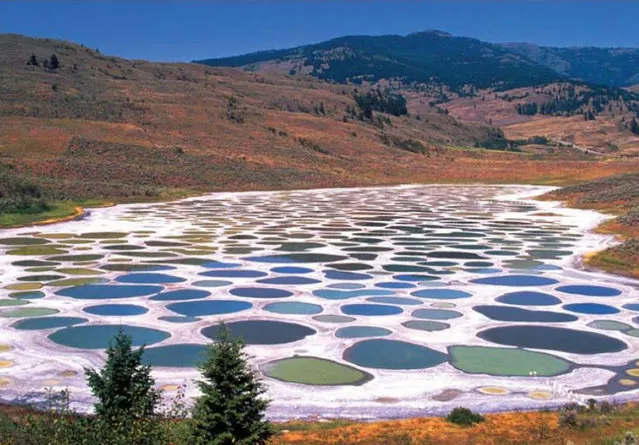
Kliluk, the Spotted Lake, Canada

Originally known to the First Nations of the Okanagan Valley as Khiluk, which was- and remains today revered as a sacred site producing therapeutic waters. During World War I the minerals of Spotted Lake were used in manufacturing ammunition. Later the area came under the control of the Ernest Smith Family, for a term of about 40 years. In 1979 Smith attempted to create interest in a spa at the lake. The First Nations responded with an effort to buy the lake; in October 2001 they finally struck a deal. First Nations arranged the purchase of 22 hectares of land for a total of $720,000, and contributed about 20% of the cost. The Indian Affairs Department paid the remainder.
Details
06 Mar 2015 12:59:00