Loading...
Done
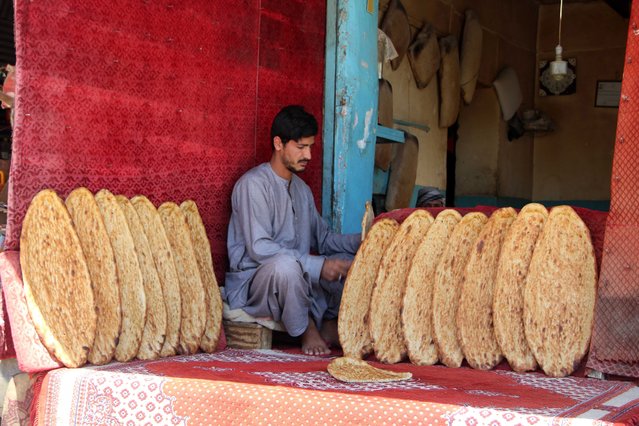
An Afghani man sells bread on a roadside in Kandahar, Afghanistan, 23 April 2024.  A recent World Bank report reveals a 26% decrease in Afghanistan's gross output over the past year, primarily attributed to a 1.3 billion USD income reduction for farmers due to the ban on drug cultivation. Although tax revenue saw a modest increase of 13% in 2023, exports experienced a 15% decline specifically to Pakistan. Afghan officials highlighted efforts to spur domestic production, improve trade, stabilize the national currency, and initiate key economic projects. (Photo by Qudratullah Razwan/EPA/EFE)

An Afghani man sells bread on a roadside in Kandahar, Afghanistan, 23 April 2024. A recent World Bank report reveals a 26% decrease in Afghanistan's gross output over the past year, primarily attributed to a 1.3 billion USD income reduction for farmers due to the ban on drug cultivation. Although tax revenue saw a modest increase of 13% in 2023, exports experienced a 15% decline specifically to Pakistan. Afghan officials highlighted efforts to spur domestic production, improve trade, stabilize the national currency, and initiate key economic projects. (Photo by Qudratullah Razwan/EPA/EFE)
Details
22 May 2024 03:16:00
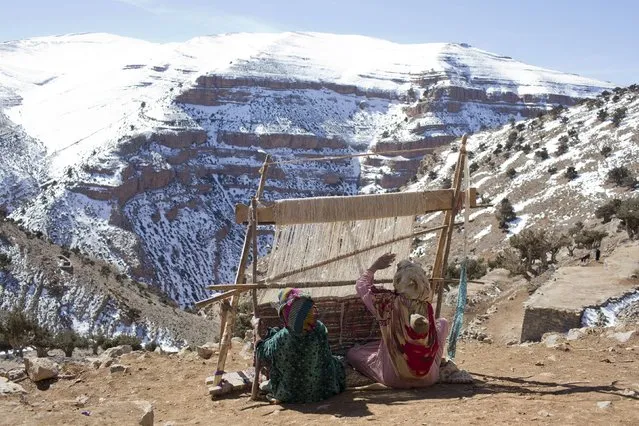
Berber women weave traditional carpets in the village of Ait Sghir in the High Atlas region of Morocco February 15, 2015. The snowy foothills of the High Atlas mountains in Morocco are home to several Berber villages where the inhabitants make their living by farming, baking bread in traditional ovens, herding cattle, and the making and selling of honey, olive oil and pottery. Extreme weather fluctuations and erosion that causes flooding and landslides have led to a drop in agricultural productivity, the United Nations said. (Photo by Youssef Boudlal/Reuters)

Berber women weave traditional carpets in the village of Ait Sghir in the High Atlas region of Morocco February 15, 2015. The snowy foothills of the High Atlas mountains in Morocco are home to several Berber villages where the inhabitants make their living by farming, baking bread in traditional ovens, herding cattle, and the making and selling of honey, olive oil and pottery. Extreme weather fluctuations and erosion that causes flooding and landslides have led to a drop in agricultural productivity, the United Nations said. (Photo by Youssef Boudlal/Reuters)
Details
26 Feb 2015 06:07:00
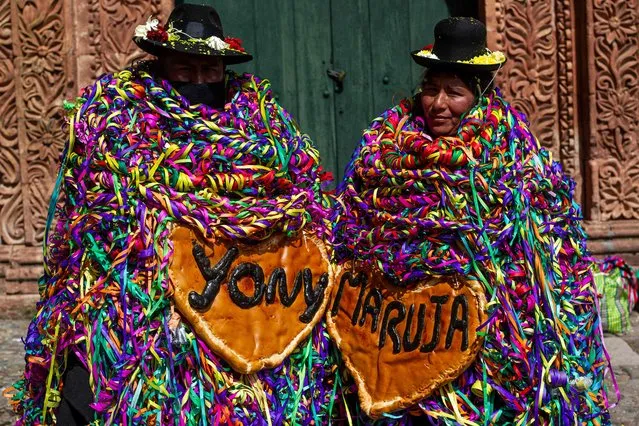
Aymara indigenous people celebrate the “Roscasiri”, the change of command of local authorities, in Pomata District, one of seven districts of the Chucuito Province in the Puno Region, southern Peru, on January 1, 2022. This ancient Aymara event, in which people adorn themselves with breads and fruits that represent abundance for the new year, celebrates the change of command of local authorities. (Photo by Carlos Mamani/AFP Photo)

Aymara indigenous people celebrate the “Roscasiri”, the change of command of local authorities, in Pomata District, one of seven districts of the Chucuito Province in the Puno Region, southern Peru, on January 1, 2022. This ancient Aymara event, in which people adorn themselves with breads and fruits that represent abundance for the new year, celebrates the change of command of local authorities. (Photo by Carlos Mamani/AFP Photo)
Details
03 Jan 2022 08:44:00


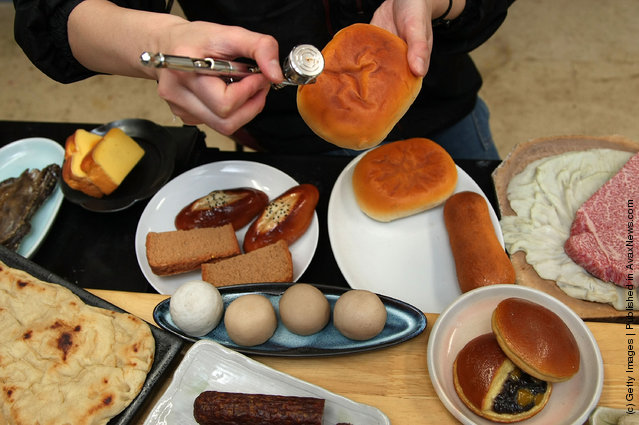
A craftsman makes imitation bread samples at The Sample Factory on February 25, 2008 in Gujo, Gifu, Japan. Gujo City has more than a 50 percent share of the imitation vinyl chloride samples industry. Replica foods are used in most restaurant window displays in Japan, and are popular as souvenirs for tourists. (Photo by Koichi Kamoshida/Getty Images)
Details
08 Apr 2011 09:07:00
How swimming, and lots of love, saved Harper the puppy’s life

On August 31, 2011, a puppy was rescued from a garbage bag in Central Florida. She was afflicted by a condition dubbed “swimmer puppy syndrome”, formally, pectus excavatum. It's rare in puppies, but when it happens it causes them to lie flat on their chests with their legs perpetually splayed out. It's usually a symptom of serious neurological problems that most puppies cannot survive. Veterinarians recommended putting her to sleep... (Photo by Flyin Fur Pet Photography)
Details
23 Jun 2012 09:10:00
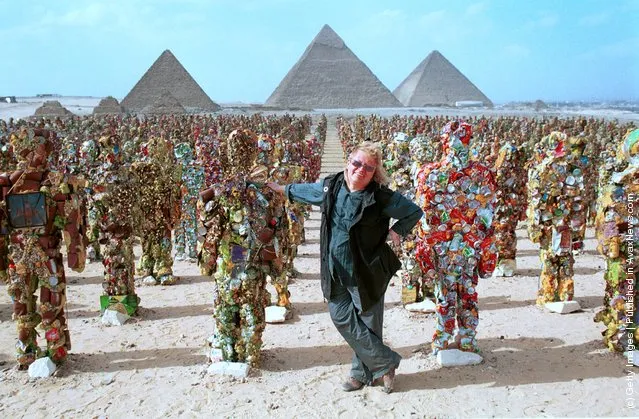
German artist Ha Schult stands with his trash people below the pyramids May 15, 2002 in Giza, Egypt

“HA Schult, born Hans-Jürgen Schult on June 24, 1939 in Parchim, Mecklenburg is a German installation, happening and conceptual artist known primarily for his object and performance art and more specifically his work with garbage”. – Wikipedia

Photo: German artist Ha Schult stands with his “trash people” below the pyramids May 15, 2002 in Giza, Egypt. Inspired by the statues of the terracotta army of Chinese Emperor Quin Shi Huangdi (247–206 B.C.), the thousand piece sulpture has stood in Red Square in Moscow, La Defense in Paris and the Great Wall in China. Schult, born in 1939 wants to bring the “trash war” to the world's attention beause trash is the greatest battle facing mankind. (Photo by Norbert Schiller/Getty Images)
Details
31 Jul 2011 13:37:00
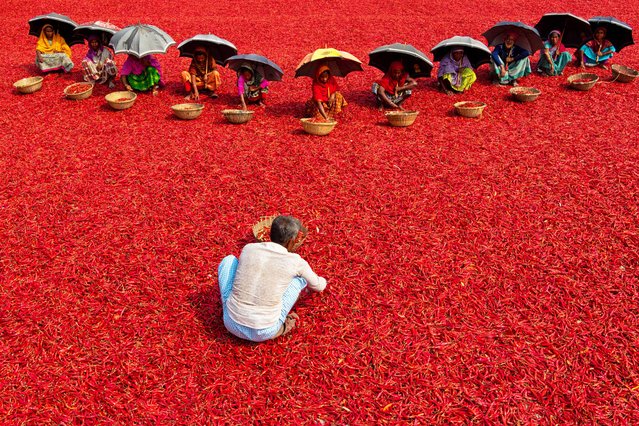
Rows of workers shelter under umbrellas from the scorching heat as they painstakingly sort through a red carpet of millions of chilli peppers in Bogra, Bangladesh on October 3, 2023. They sort the rotten and broken chilli peppers out to separate the poor quality ones which won't sell. In a line, the pickers who are paid less than £3 for a 10-hour shift slowly move forward with their baskets to separate the bad from the good after the chilies have been dried in the sun for a week. The dried & sorted chillies are then packaged and taken to the local market where they are brought mainly by companies to be made into chilli powder. The workers sort them in a warm environment, with temperatures reaching up to 45°C. More than 5,000 people work in almost 100 chilli farms in the Bogra district of Bangladesh to supply local spice companies with chillies for their recipes. Known as “Lal Morich” to the locals, chilli peppers are a major part of Bengali cuisine and are used as part of a combination of spices for various meat dishes, including chicken and beef. (Photo by Joy Saha/Rex Features/Shutterstock)

Rows of workers shelter under umbrellas from the scorching heat as they painstakingly sort through a red carpet of millions of chilli peppers in Bogra, Bangladesh on October 3, 2023. They sort the rotten and broken chilli peppers out to separate the poor quality ones which won't sell. In a line, the pickers who are paid less than £3 for a 10-hour shift slowly move forward with their baskets to separate the bad from the good after the chilies have been dried in the sun for a week. (Photo by Joy Saha/Rex Features/Shutterstock)
Details
21 Oct 2023 04:04:00
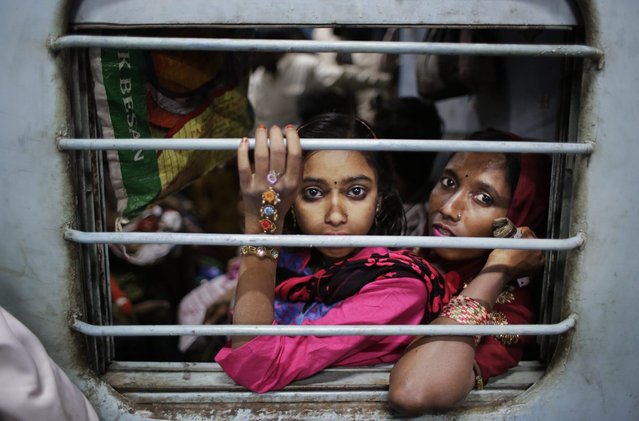
In this November 18, 2014 photo, Murshida, 12, sits on the lap of her mother Marjina as the train leaves for their village in West Bengal, at a railway station in New Delhi, India. Six months ago, Marjina stepped off a train in New Delhi with her two children, hoping to find a better life after her husband abandoned them without so much as a goodbye. (Photo by Altaf Qadri/AP Photo)

In this November 18, 2014 photo, Murshida, 12, sits on the lap of her mother Marjina as the train leaves for their village in West Bengal, at a railway station in New Delhi, India. Six months ago, Marjina stepped off a train in New Delhi with her two children, hoping to find a better life after her husband abandoned them without so much as a goodbye. The family spent their days at a landfill picking through other people’s garbage to find salvageable bits to resell or recycle. After six months of poverty, illness and shame, they returned to that train station in New Delhi, headed back to an uncertain future to their hometown in West Bengal. (Photo by Altaf Qadri/AP Photo)
Details
09 Dec 2014 09:47:00