Loading...
Done
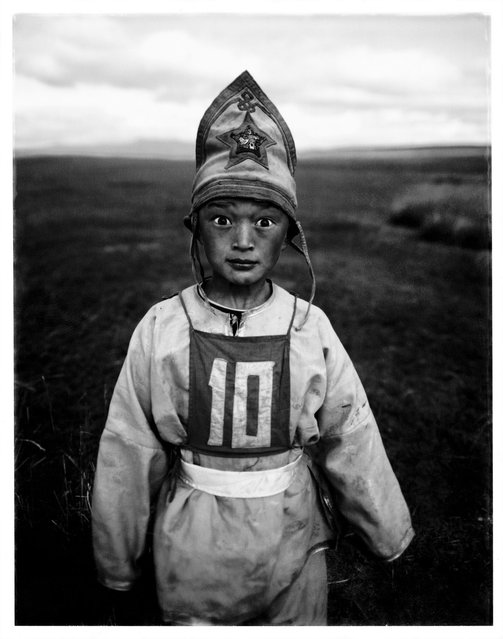
Mongolian Child Jockeys

Horse racing is part of Naadam, a festival organized every July in Mongolia to celebrate the People’s Revolution. Using children as jockeys in such races has a centuries-long tradition. Boys and girls as young as 5 (although the law imposes a minimum age limit of 7) ride in races that can be dangerous, with hundreds of horses running across the steppe at distances of 12 to 28 kilometres at great speeds. (Photo by Tomasz Gudzowaty)
Details
30 Apr 2012 11:02:00
Rally Masters Show 2012, Moscow, Russia

There has been a huge work to be done on the basis of the 1st Rally Masters Show. Organizers have put a lot of efforts to make this great event even more attractive for the participants & spectators. Following the last year’s tradition we will find a pleasant surprise for every Rally Masters Show guest. Invitations for participation in this competition will be sent to the leading Russian & foreign rally crews.
Details
13 Jun 2012 04:54:00
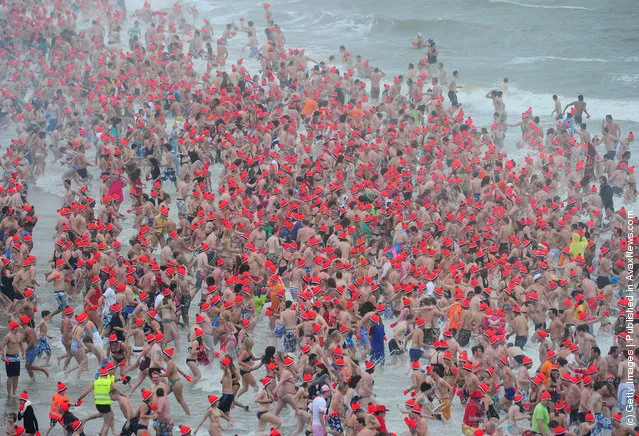
Dutch Swimmers Brave The North Sea For New Years Day Dip

Hardy Dutch swimmers brave the icy North Sea on January 1, 2012 in Scheveningen, Netherlands. A record number of 10,000 people took the plunge in this year's traditional New Year's dip. The high turnout was attributed to the mild weather with a sea temperature of 8 degrees compared to 4 degrees last year. (Photo by Jasper Juinen/Getty Images)
Details
02 Jan 2012 11:44:00
Living In A Shell – Nautilus House

The Nautilus, designer Javier Senosiain’s bizarre, snail-shaped dwelling, is a mind-bending union of artistic experimentation and simplified living. Inspired by the work of Gaudí and Frank Lloyd Wright, Senosiain has brought to Mexico City another sparkling example of what he calls “Bio-Architecture” — the idea that buildings based on the natural principles of organic forms bring us back to local history, tradition and cultural roots, in turn creating harmony with nature.
Details
07 Jun 2013 10:15:00
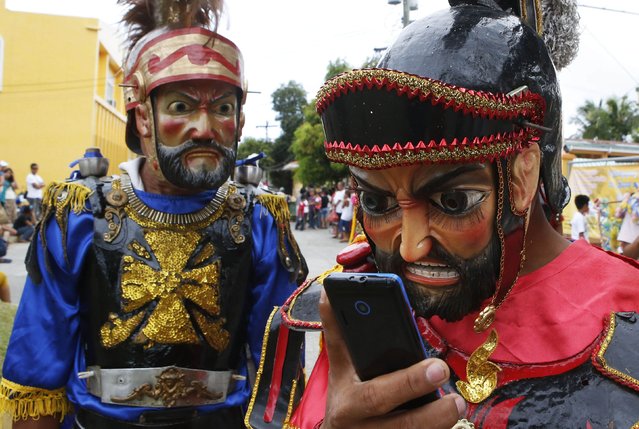
A penitent called “Morion” checks his mobile phone in Mogpog town on Marinduque island in central Philippines April 14, 2014. During the annual festival, masked and costumed penitents called “Moriones” dress in attire that is the local interpretation of what Roman soldiers wore during biblical times. Holy Week is celebrated in many Christian traditions during the week before Easter. (Photo by Erik De Castro/Reuters)

A penitent called “Morion” checks his mobile phone in Mogpog town on Marinduque island in central Philippines April 14, 2014. During the annual festival, masked and costumed penitents called “Moriones” dress in attire that is the local interpretation of what Roman soldiers wore during biblical times. Holy Week is celebrated in many Christian traditions during the week before Easter. (Photo by Erik De Castro/Reuters)
Details
19 Apr 2014 11:52:00
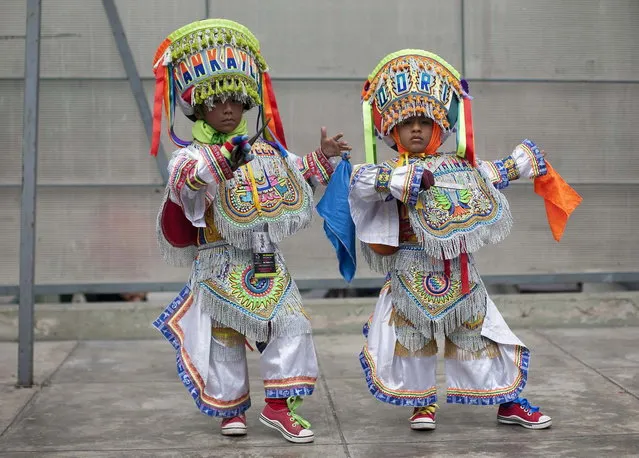
Young “scissors” dancers pose after performing in a national scissors dance competition at Lima's Exposition Park, May 18, 2014. The Danza de las tijeras, or scissors dance, is a traditional dance from the Peruvian southern region of the Andes, in which two or more performers take turns dancing while accompanied with music from a harp and a violin. Dancers would display various skills and moves, which include cutting the air with the use of a scissors. (Photo by Enrique Castro-Mendivil/Reuters)

Young “scissors” dancers pose after performing in a national scissors dance competition at Lima's Exposition Park, May 18, 2014. The Danza de las tijeras, or scissors dance, is a traditional dance from the Peruvian southern region of the Andes, in which two or more performers take turns dancing while accompanied with music from a harp and a violin. Dancers would display various skills and moves, which include cutting the air with the use of a scissors. (Photo by Enrique Castro-Mendivil/Reuters)
Details
20 May 2014 10:54:00


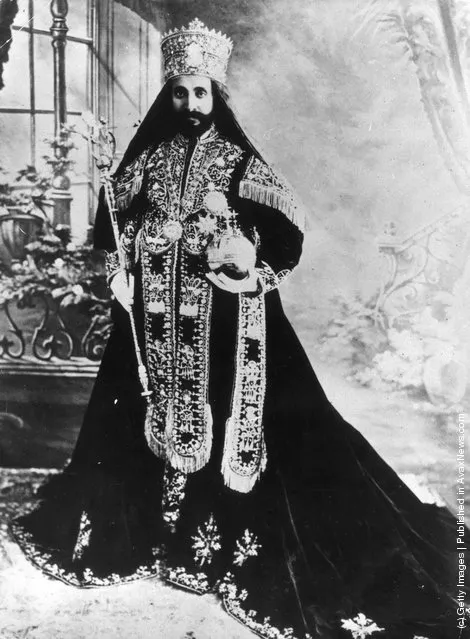
“Haile Selassie I (23 July 1892 – 27 August 1975), born Tafari Makonnen, was Ethiopia's regent from 1916 to 1930 and Emperor of Ethiopia from 1930 to 1974. The heir to a dynasty that traced its origins to the 13th century, and from there by tradition back to King Solomon and Queen Makeda, Empress of Axum, known in the Abrahamic tradition as the Queen of Sheba. Haile Selassie is a defining figure in both Ethiopian and African history.

Haile Selassie is revered as the returned Messiah of the Bible, God incarnate, among the Rastafari movement, the number of followers of which is estimated between 200,000 and 800,000. Begun in Jamaica in the 1930s, the Rastafari movement perceives Haile Selassie as a messianic figure who will lead a future golden age of eternal peace, righteousness, and prosperity. He himself remained an Ethiopian Orthodox Christian throughout his life”. – Wikipedia

Photo: Negusa Negasti, Emperor of Ethiopia Haile Selassie I, known as “Lord of Lords”, “The Conquering Lion of the tribe of Judah”, “Light of the world”, “Elect of God”, in full ceremonial regalia following his coronation. (Photo by Hulton Archive/Getty Images)

Details
21 Jun 2011 11:04:00
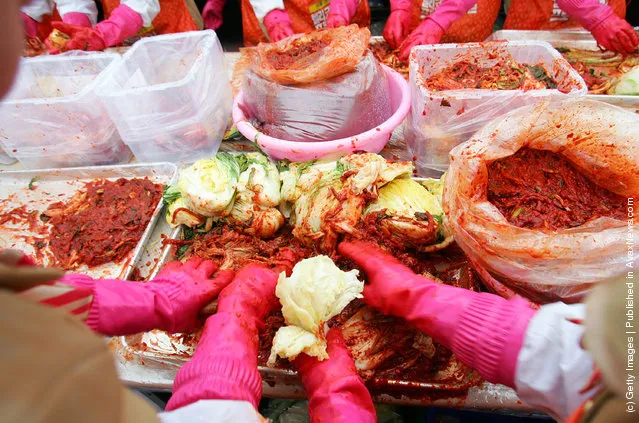
Kimchi

“Kimchi, also spelled gimchi, kimchee, or kim chee, is a traditional fermented Korean dish made of vegetables with varied seasonings. There are hundreds of varieties of kimchi made with a main vegetable ingredient such as napa cabbage, radish, green onions or cucumber. It is the most common banchan, or side dish, in Korean cuisine. Kimchi is also a main ingredient for many popular Korean dishes such as kimchi stew (kimchi jjigae), kimchi soup (kimchiguk), and kimchi fried rice (kimchi bokkeumbap)”. – Wikipedia

Photo: South Korean housewives, among more than two thousand who gathered for an event sponsored by state officials to help the needy, make kimchi, the traditional pungent vegetable dish on the grounds in front of Seoul City Hall on November 20 in Seoul, South Korea. (Photo by Chung Sung-Jun/Getty Images)
Details
21 Dec 2011 13:24:00