Loading...
Done
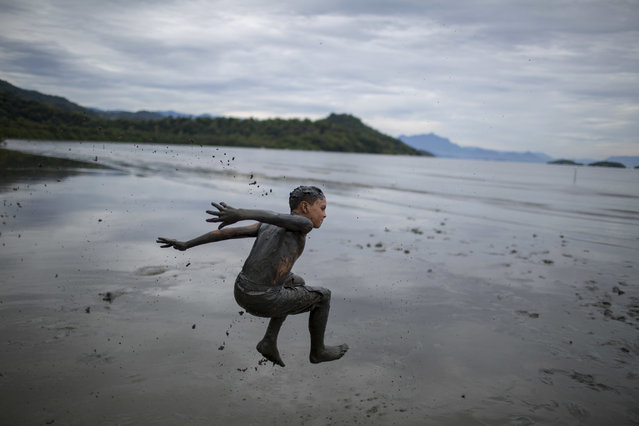
A boy jumps into a pool of mud during the traditional “Bloco da Lama” or “Mud Street” carnival party, in Paraty, Brazil, Saturday, February 25, 2017. Legend has it the “bloco” was born in 1986 after local teens hiking in a nearby mangrove forest smeared themselves with mud to discourage mosquitoes and then wandered through Paraty. The party grew year after year, but revelers eventually were banned from parading in the colonial downtown after shopkeepers complained pristine white walls were stained with the hard-to-remove mud. (Photo by Mauro Pimentel/AP Photo)

A boy jumps into a pool of mud during the traditional “Bloco da Lama” or “Mud Street” carnival party, in Paraty, Brazil, Saturday, February 25, 2017. Legend has it the “bloco” was born in 1986 after local teens hiking in a nearby mangrove forest smeared themselves with mud to discourage mosquitoes and then wandered through Paraty. The party grew year after year, but revelers eventually were banned from parading in the colonial downtown after shopkeepers complained pristine white walls were stained with the hard-to-remove mud. (Photo by Mauro Pimentel/AP Photo)
Details
28 Mar 2017 09:07:00
Couple getting intimate on couch. (Photo by Vincent Besnault/Getty Images)

Couple getting intimate on couch. (Photo by Vincent Besnault/Getty Images)
Details
09 Jan 2017 12:38:00
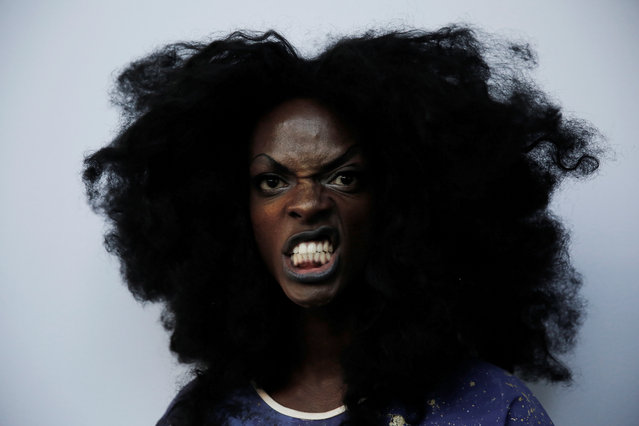
A visitor poses for a picture during Sao Paulo Fashion Week in Sao Paulo, Brazil, March 16, 2017. (Photo by Nacho Doce/Reuters)

A visitor poses for a picture during Sao Paulo Fashion Week in Sao Paulo, Brazil, March 16, 2017. (Photo by Nacho Doce/Reuters)
Details
06 Jan 2018 09:10:00
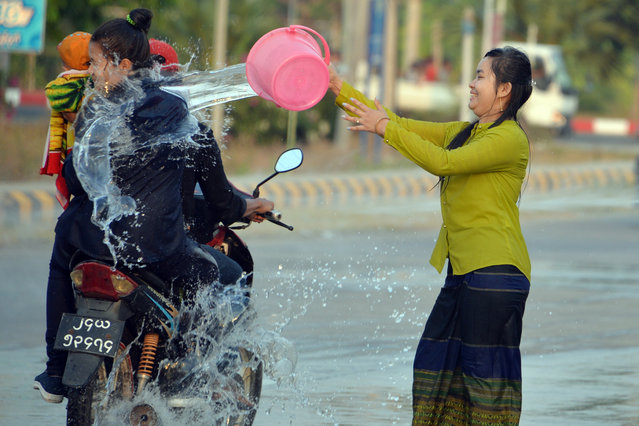
A woman throws water at passing motorists during celebrations for the Thingyan festival, also known as the Buddhist New Year, in Naypyidaw, Myanmar on April 16, 2019. (Photo by Thet Aung/AFP Photo)

A woman throws water at passing motorists during celebrations for the Thingyan festival, also known as the Buddhist New Year, in Naypyidaw, Myanmar on April 16, 2019. (Photo by Thet Aung/AFP Photo)
Details
19 Apr 2019 00:01:00
1936: A Penarth dance hall has banned chewing gum on the premises because dancers have complained that their feet keep sticking to the floor

A Penarth dance hall has banned chewing gum on the premises because dancers have complained that their feet keep sticking to the floor. (Photo by Richards/Fox Photos/Getty Images). 16th July 1936
Details
30 Sep 2011 11:15:00
Australian Cage Fighting Championships CFC 18 Sydney

Andrew Profilli of Australia bleeds from the head during his 93kg bout against Priscus Fogagnolo of Australia during CFC 18 at Luna Park on August 26, 2011 in Sydney, Australia. (Photo by Ryan Pierse/Getty Images)
Details
01 Sep 2011 12:30:00
People move through a waterlogged street in Gauhati, India, Tuesday, July 16, 2013.  Heavy showers flooded some areas in the city on Tuesday. (Photo by Anupam Nath/AP Photo)

People move through a waterlogged street in Gauhati, India, Tuesday, July 16, 2013. Heavy showers flooded some areas in the city on Tuesday. (Photo by Anupam Nath/AP Photo)
Details
17 Jul 2013 10:16:00
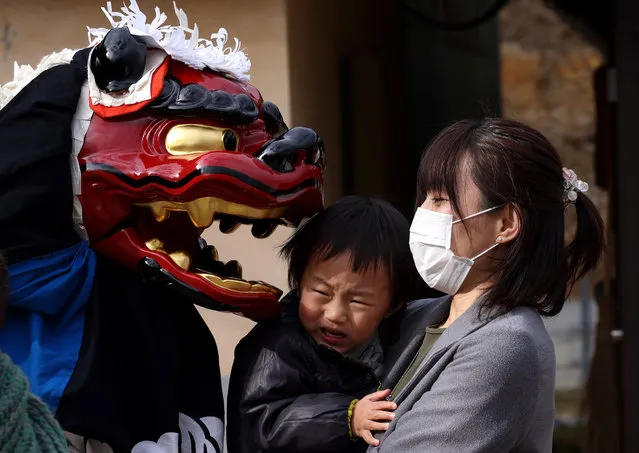
A performer wearing a lion mask performs the Ise Daikagura lion dance at the remote village of Yamanawa on February 08, 2021 in Ryuo, Japan. Ise Daikagura is a group of traditional Lion Dance performers who pray in front of farmers houses and businesses for good grain harvests and disease-free lives. Performers play sacred music using drums and flutes with two lion mask dancers. A lion mask is considered a symbol of God, who enters the house and performs in front of the Shinto God, a statue placed inside the house, mostly in the kitchen. These prayers are called “Kamodo Barai”. After the prayers, they are gifted with money, rice, sake and Japanese sweets from the householders. A group can travel for more than one hundred days to thousands of households and businesses throughout rural-villages in western Japan, and pray to those who are unable to visit the country’s most sacred shrine, the Grand Ise Shrine in Mie Prefecture. The group started its performance in the Edo era between 1603 to 1868 according to Japanese history. The Japanese government designated it as an important folk cultural national property in 1981. (Photo by Buddhika Weerasinghe/Getty Images)

A performer wearing a lion mask performs the Ise Daikagura lion dance at the remote village of Yamanawa on February 08, 2021 in Ryuo, Japan. Ise Daikagura is a group of traditional Lion Dance performers who pray in front of farmers houses and businesses for good grain harvests and disease-free lives. (Photo by Buddhika Weerasinghe/Getty Images)
Details
18 Feb 2021 09:27:00